


Myanmar’s Lingering Ghost: The Unmaking of a Democracy Icon
POLICY WIRE — Naypyidaw, Myanmar — It isn’t merely the protracted confinement of Aung San Suu Kyi that unnerves observers; it’s the meticulous, almost surgical, dismantling of her very...

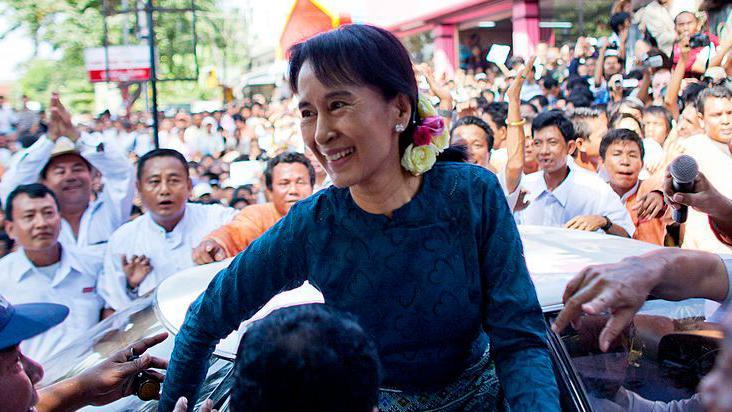
POLICY WIRE — Naypyidaw, Myanmar — It isn’t merely the protracted confinement of Aung San Suu Kyi that unnerves observers; it’s the meticulous, almost surgical, dismantling of her very narrative—the slow-motion erasure of a global democracy icon. Her latest incarceration isn’t a fresh outrage so much as another grim chapter in an ongoing saga of judicial theatre, each act designed to delegitimise, dehumanise, and ultimately, render irrelevant, a figure who once embodied Myanmar’s fragile democratic aspirations. They’re not just holding a woman; they’re interring a symbol.
For decades, Daw Suu Kyi, Nobel Peace laureate and daughter of independence hero General Aung San, represented a beacon of hope—an uncomfortable truth for the generals who’ve historically preferred absolute control. Her journey from house arrest to brief, albeit flawed, leadership was a testament to enduring popular will, even if her administration later stumbled on the treacherous ethical terrain of the Rohingya crisis. Now, following the February 2021 coup, she’s disappeared back into the opaque labyrinth of junta justice, serving terms for a dizzying array of charges—everything from incitement to corruption, election fraud, and even violating COVID-19 rules. It’s a bureaucratic crucifixion, isn’t it?
Her latest prison transfer, a move from the special facility where she’d been held, casts a fresh pall over what little international engagement persists. It feels like an act of deliberate obscurity, a calculated maneuver to further isolate her from the outside world and, crucially, from her dwindling supporters within Myanmar. This isn’t just about punishment; it’s about control of information, of perception. And it’s working, mostly.
Major General Zaw Min Tun, a spokesperson for Myanmar’s State Administration Council (SAC), shot back at international criticism recently, asserting, “These are purely internal matters of national security and justice. Daw Suu Kyi faced legitimate charges through proper legal channels, — and the courts have ruled. International interference, steeped in misunderstanding, only serves to embolden destabilising elements.” His tone was predictably defiant, dismissing any notion of political persecution, a familiar refrain from the junta’s heavily fortified echo chamber.
But the facade of legality wears thin under scrutiny. Many of the charges against Suu Kyi are widely viewed as trumped-up—concocted to prevent her return to politics. Human rights organisations and democratic governments worldwide have consistently condemned her conviction as politically motivated. Daniel Kritenbrink, U.S. Assistant Secretary of State for East Asian and Pacific Affairs, opined just last week, “Her continued detention isn’t just a travesty of justice; it’s a stark reminder that authoritarian regimes fear the power of popular legitimacy above all else. The international community mustn’t avert its gaze, for democratic principles are at stake.”
Still, for millions of ordinary Burmese, the image of their leader, now 78, confined and ill, is a visceral reminder of what they’ve lost. The junta’s iron fist has crushed dissent with brutal efficiency; according to the Assistance Association for Political Prisoners (AAPP), over 26,000 people have been arrested since the coup, with more than 4,800 civilians killed by the military. This isn’t just statistical background noise; it’s a blood-soaked tapestry.
📄 POLICY WIRE WHITEPAPER PUBLISHED: PAKISTAN'S NATIONAL SECURITY POLICY PRIORITIES
👉 READ BY CLICKING HEREWhat This Means
At its core, Suu Kyi’s continued detention represents a profound inflection point for Southeast Asian democracy—or its absence. Her symbolic power, even diminished, remains a thorn in the junta’s side, hence the lengths they’re going to keep her out of sight, out of mind. The regional bloc, ASEAN, finds itself increasingly impotent, its famed ‘non-interference’ principle looking more like polite indifference in the face of widespread atrocities. Its five-point consensus, negotiated with the junta, has been all but ignored. This institutional fragility doesn’t just undermine ASEAN’s credibility; it emboldens other authoritarian actors in the region.
Economically, Myanmar is spiralling. Foreign investment has evaporated, replaced by a shadow economy and increasing dependence on neighbouring China, which prefers stability over democracy. The human cost is immense, with millions displaced — and facing severe humanitarian crises. This destabilisation echoes through South Asia; Pakistan, for instance, a nation grappling with its own complex trust’s perilous breach between civilian governments and powerful military establishments, watches Myanmar’s descent with a mixture of concern and perhaps, a chilling sense of déjà vu. The plight of the Rohingya, a Muslim minority group, remains unresolved, a stark blot on Myanmar’s conscience and a continued humanitarian challenge for the broader Muslim world, particularly Bangladesh, which hosts nearly a million refugees.
And what of Suu Kyi’s legacy management? It’s becoming a case study in how a charismatic leader’s image can be both weaponised by foes and tarnished by her own past failings, notably her silence on the Rohingya crisis. The junta’s strategy isn’t to simply silence her, but to render her story—and thus, the story of Myanmar’s democratic experiment—unpalatable, convoluted, and ultimately, forgettable. That, unfortunately, might be their most consequential victory yet.