


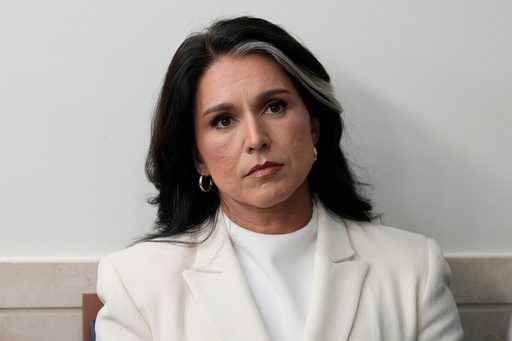
The Exit Stage Right: Gabbard’s DNI Departure Reveals Deeper Cracks
WASHINGTON, D.C. — In Washington, the revolving door of presidential appointments has a certain theatrical flair, but rarely does it spin with such telling velocity. The resignation of Tulsi Gabbard...

WASHINGTON, D.C. — In Washington, the revolving door of presidential appointments has a certain theatrical flair, but rarely does it spin with such telling velocity. The resignation of Tulsi Gabbard as President Donald Trump’s Director of National Intelligence on Friday is being chalked up to a family matter – her husband’s battle with a rare bone cancer, a truly somber circumstance. But behind the formal pronouncements, the capital’s seasoned observers are reading the tea leaves, noting this exit as the latest sign of an administration perpetually engaged in high-stakes drama.
It’s a peculiar thing, isn’t it? Gabbard, the fourth Cabinet official to depart during Trump’s second term, wasn’t exactly a natural fit for the DNI role. A former Democratic Congresswoman from Hawaii, who later left the party to campaign for Trump, she became the nation’s top intelligence official without a whisper of prior intelligence experience. But she’s leaving now, just as the fault lines within the administration over the contentious strikes on Iran have widened into palpable rifts. A curious coincidence, some might say, considering her past outspoken opposition to foreign interventions. Or perhaps, no coincidence at all.
Her stint at the Office of the Director of National Intelligence (ODNI), which, for the uninitiated, supervises America’s 18 intelligence agencies, was short but eventful. She quickly found herself in a tight spot, juggling her established anti-war principles with the realities of an aggressive White House foreign policy. You could see the tension playing out in public, like a bad improv skit. Early this year, after Trump’s decision to pound Iran, sources hinted at a real clash. Former policy analyst Aaron Lukas, her principal deputy, will now step into the acting director role – a rather neat progression.
During a congressional hearing just last month, Gabbard’s careful choice of words—or rather, her pointed evasions—spoke volumes. When pressed on the wisdom of hitting Iran, she simply sidestepped, refusing to endorse the White House’s bellicosity. Instead, she offered a clinical assessment in written remarks to the Senate Intelligence Committee: that Iran’s nuclear capabilities were “obliterated” by last year’s attacks, with no signs of reconstitution. That starkly contradicted Trump’s persistent claim that the strikes were a preemptive measure against an “imminent threat.”
And what did Gabbard say about that perceived threat? She drew a clear, if perhaps exasperated, line. “It’s not the intelligence community’s responsibility to determine what’s — and is not an imminent threat,” she stated. That, right there, sounds like the IC saying, ‘Hey, we provide the data, you make the choices, but don’t blame us for the political spin.’ The White House, predictably, chose to double down on its narrative, making her position untenable.
The timing, too, is a thorny bush. Gabbard’s announcement comes on the heels of several high-profile departures. There’s been Homeland Security Secretary Kristi Noem, out in March over immigration — and disaster response failures. Attorney General Pam Bondi, who left over the Justice Department’s handling of Jeffrey Epstein files. And then Labor Secretary Lori Chavez-DeRemer, embroiled in misconduct investigations, who quit in April. The common thread here isn’t merely bad luck; it’s an increasing sense of internal strain under a president who doesn’t tolerate dissent easily.
📄 POLICY WIRE WHITEPAPER PUBLISHED: PAKISTAN'S NATIONAL SECURITY POLICY PRIORITIES
👉 READ BY CLICKING HEREFor a former Democratic presidential candidate who once endorsed Joe Biden, then shifted to endorse Trump and embrace a largely conservative media role, Gabbard’s trajectory has been anything but conventional. She spent her year in office making waves – consolidating power, politicizing some intelligence assessments, and facing a whistleblower complaint alleging she withheld intelligence for political ends. But her consistent anti-interventionist stance, a cornerstone of her identity, proved to be an inconvenient truth when push came to saber-rattling with Iran. Even as Trump praised her as doing an “incredible job,” the undertones of political divergence are too loud to ignore. It’s hard to imagine she’ll be staying out of the political spotlight for long. A veteran Pakistani diplomat, speaking on background from Islamabad, quipped, “In this geopolitical game, leaders’ health and resignations often have footnotes in smaller print that describe a bigger chess match.” Such observations reflect a broader South Asian perspective on the intricacies of global power plays.
What This Means
Gabbard’s departure isn’t merely another name crossing off the Cabinet roster; it’s a bellwether for the internal stability of the Trump administration, particularly concerning national security doctrine. It spotlights the continuing friction between intelligence assessments — and presidential prerogative. For observers, it reinforces the perception of a White House struggling to maintain a unified front on crucial foreign policy decisions, especially those as volatile as confrontations with Iran.
Economically, this kind of internal discord could ripple outwards, exacerbating uncertainty for international markets and energy prices, particularly given the stakes in the Persian Gulf. Renewed US-Iran tensions have previously led to volatile oil prices, and the apparent lack of intelligence consensus within Washington does little to calm investor nerves. From a geopolitical standpoint, the constant churn of key intelligence personnel—especially after just a year—undermines American credibility on the world stage, especially for allies seeking clarity on Washington’s long-term strategic commitments. When top intelligence officials like Gabbard publicly contradict the Commander-in-Chief on matters of “imminent threat,” it begs serious questions about decision-making at the highest levels, potentially emboldening adversaries. It’s another data point in the global assessment of US leadership, — and one that doesn’t necessarily inspire confidence. These persistent internal conflicts within the administration risk contributing to global aid fatigue, as resources and attention are diverted by internal struggles rather than concerted international efforts, as seen in complex situations abroad. The very fabric of coherent foreign policy seems frayed when such high-profile departures coincide with critical global flashpoints.