


The Whispering Game: How Europe’s Elite Shadow Hunt for Football’s Next Fortune
POLICY WIRE — London, UK — The floodlights dim, the roar of the crowd fades, and for Noahkai Banks, just another 90 minutes have ticked by in the unforgiving machinery of European football. But...

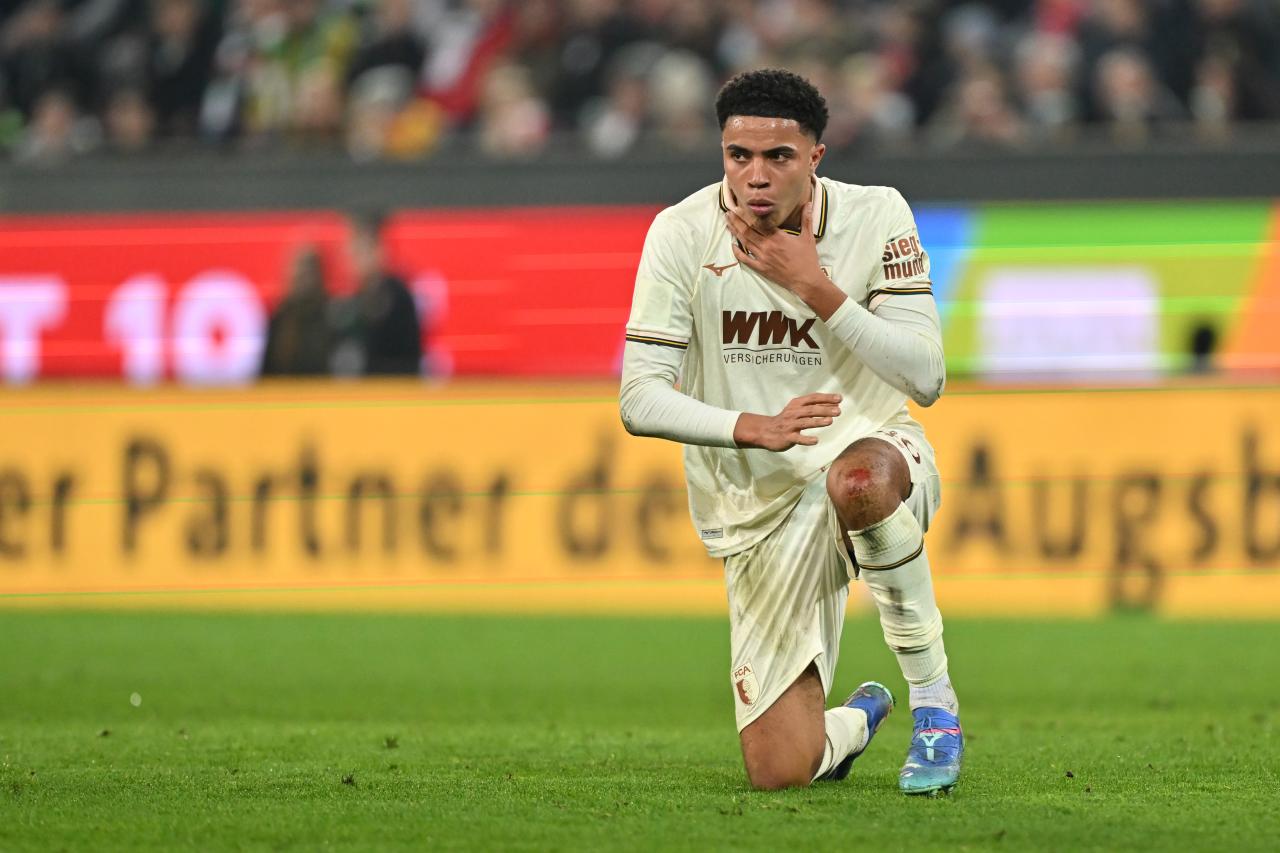
POLICY WIRE — London, UK — The floodlights dim, the roar of the crowd fades, and for Noahkai Banks, just another 90 minutes have ticked by in the unforgiving machinery of European football. But somewhere in the upper tiers of Augsburg’s WWK-Arena, the silence is thick with intent. Arsenal scouts, it turns out, haven’t just been attending matches; they’ve been performing the most ancient ritual in football’s modern bazaar: watching. Not just the ball, mind you. They’re watching the slight shrug, the grimace after a missed header, the subtle repositioning on a corner kick. It’s the whispering game, a protracted audition playing out under the indifferent gaze of thousands, determining futures for millions. And for a young center-back, still finding his feet, it’s everything.
Banks, barely 19, spent the good chunk of the 2025/26 Bundesliga season cementing his place in Augsburg’s starting XI. He was the fresh face, the name whispered with guarded optimism in local taverns. Then, the inevitable dip. Towards the tail end of the campaign, his name started slipping down the team sheet, an all too familiar trajectory for talent teetering on the cusp. But this oscillation, this raw inconsistency, it’s precisely what makes him an interesting mark. Top clubs, you see, they aren’t always after the polished product. They’re looking for the potential, the raw material they believe they can mold into something magnificent—and astronomically valuable.
And when Bulinews.com cornered him in February, asking the age-old question of childhood dreams, Banks didn’t hedge. “It’s difficult to say. I really enjoy playing in the Bundesliga to be honest. But there are a lot of great leagues, such as the Premier League, Serie A and La Liga,” he told them, predictably enough. Then came the true confession, the kind of slip-up PR handlers wince over. “One of the clubs I idolized while growing up was Barcelona. I think I can say that’s my favorite club. So yeah, maybe one day it would be a dream to play for them, but let’s see what happens.” A dream of Catalunya, an inspection from North London. The irony isn’t lost on those who make careers tracking such things.
Edu Gaspar’s office, or perhaps a close associate — someone in the labyrinthine hierarchy at Arsenal responsible for the next generation of talent — likely viewed Banks’ honesty with a mix of appraisal and cold calculation. “We’re always monitoring the continental leagues for players who fit our ethos, especially young defenders who’ve seen first-team action at this level,” a source within Arsenal’s scouting network, speaking on condition of anonymity due to the sensitivity of early-stage recruitment, confided to Policy Wire. “Raw talent, tactical intelligence, — and a demonstrated ability to perform under pressure are non-negotiable. His youth gives him time to grow into our system, should he demonstrate he possesses those attributes consistently.” A standard answer, perhaps, but it points to the methodical scrutiny underlying these fleeting whispers.
His 31 senior appearances for Augsburg, while not a world-beating tally, speak to a player already integrated into the high-stakes world of top-flight European football. But consistency, as German football pundit Uli Steiner notes, is the true hurdle. “He’s got the raw tools, no doubt,” Steiner muses, reflecting on Banks’ fluctuating form. “But consistency, especially at his age, it’s the brass ring, isn’t it? English clubs, they pay for potential, but they expect the finished product, too.” And often, they’ll pay handsomely for the privilege of refining it.
Because the Premier League, even in a quieter transfer window, operates on a financial plane most clubs in the world can only dream of. In 2023, Deloitte reported that the Premier League’s revenue stood at a staggering €6.4 billion ($6.9 billion), dwarfing every other European league and cementing its place as football’s true financial powerhouse. This isn’t just about winning games; it’s about brand dominance, a global spectacle watched religiously by billions across continents, from the crowded cafes of Istanbul to the passionate, makeshift fan parks of Karachi. A young talent like Banks, even a largely unheralded one, represents not just a defensive reinforcement, but a potential marketing asset, a future transfer profit, a tiny, almost imperceptible cog in a truly colossal machine.
But does this constant monitoring, this almost predatory gaze from wealthier clubs, help or hinder development? It’s a perennial question for mid-table Bundesliga sides like Augsburg. They’re effectively training academies for the continent’s titans. They groom, they polish, — and then they sell. And the cycle starts anew. This isn’t merely about one player, Noahkai Banks; it’s about a vast, interconnected ecosystem, a high-stakes, perpetual talent trade-off that fuels the insatiable appetite of global football. Like so many global narratives, the individual player’s journey becomes a microcosm of larger, far more impactful financial currents. And often, trust becomes another casualty of the pursuit.
What This Means
The quiet surveillance of Noahkai Banks by a club with Arsenal’s global reach isn’t just a scouting anecdote; it’s a peek behind the curtain of modern football’s political economy. For clubs like Augsburg, developing young talent represents a core economic strategy: invest cheaply, develop efficiently, and sell expensively. This creates a supply chain of athletes, largely from smaller leagues, who feed the bottomless financial pits of the Premier League or La Liga. Politically, the flow of talent reflects a soft power dynamic, where success on the pitch in a few dominant leagues commands the attention of billions worldwide, influencing cultural consumption and even national pride. When a kid from Lahore or Dhaka follows Arsenal, they’re not just watching a game; they’re engaging with a global brand, a powerful cultural entity, whose future hinges on the astute identification of potential in places like Augsburg. The implications stretch beyond sport: it speaks to the interconnectedness of global markets, the disproportionate distribution of wealth in certain industries, and the continuous search for leverage—human or otherwise—that defines much of our geopolitical landscape. It’s a reminder that even the humblest football match has ripples that extend far, far beyond the pitch.