


Deep Sea’s Chilling Revelations: Ghost Sharks, Death Balls, and Humanity’s Blind Spots
POLICY WIRE — Washington D.C., USA — While humanity remains obsessed with the superficial skirmishes of geopolitics and the fleeting fame of digital screens, the planet’s deepest, darkest corners...

POLICY WIRE — Washington D.C., USA — While humanity remains obsessed with the superficial skirmishes of geopolitics and the fleeting fame of digital screens, the planet’s deepest, darkest corners continue to mock our collective hubris. We spend fortunes mapping distant stars, fretting over minor territorial disputes, but barely grasp the teeming, bizarre reality thriving just a few thousand feet beneath the waves. Our world, it seems, is far stranger — and vaster than we’d care to admit.
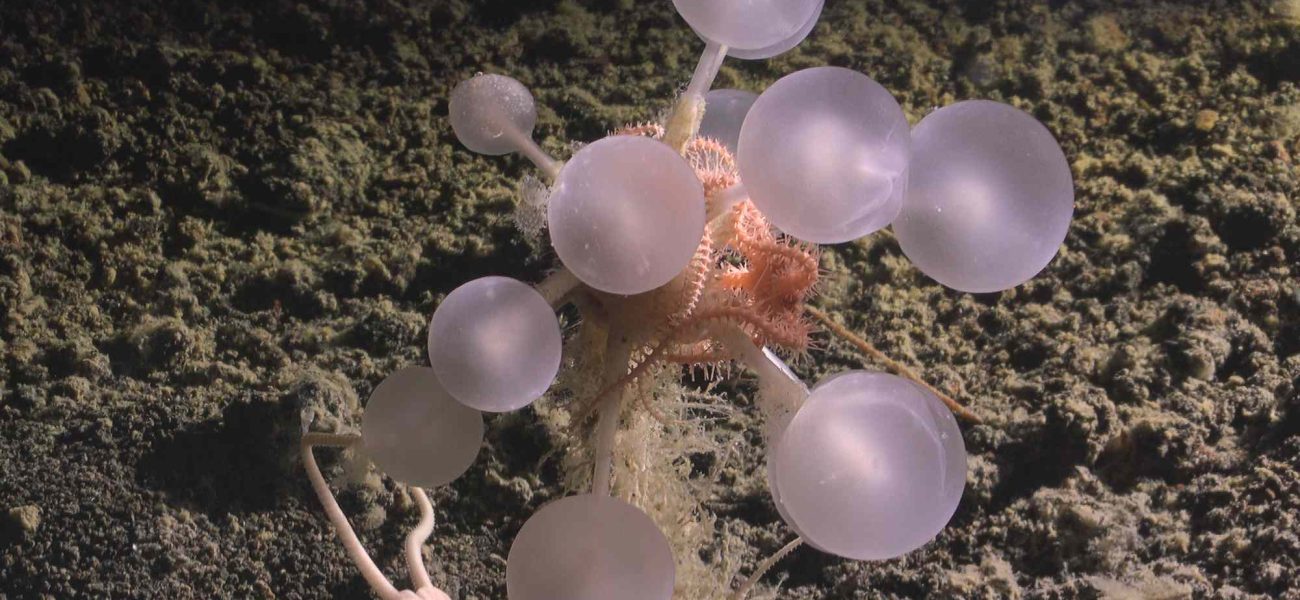
Take, for instance, the recent census from the abyss. Over a thousand new species—a veritable deep-sea zoo—have been formally identified. Among them, creatures straight out of a nightmare, or perhaps a particularly avant-garde alien flick: the ‘Ghost Shark,’ translucent and eerie, and the menacing ‘Death Ball,’ a globular horror. They’re not just oddities, mind you; they’re glaring symbols of how little we actually know about the vast majority of our own planet. And it’s not exactly a new phenomenon.
It’s always been like this. Scientists, sifting through abyssal trawls, keep finding things no one ever thought possible. A leviathan we didn’t know existed one day, an entire ecosystem thriving on thermal vents the next. This latest batch, detailed by researchers from various international bodies—they don’t usually name specifics for PR, but the consensus is broad—it’s just another sobering reminder. Dr. Aliyah Hussain, a leading marine biologist with the Karachi Institute of Oceanography, put it rather bluntly when discussing these findings: “We’re, effectively, blindfolded explorers in our own planetary home. These discoveries aren’t just exciting; they’re an indictment of our collective neglect. It’s an almost criminal oversight, wouldn’t you say?”
But beyond the immediate awe (or dread) these discoveries inspire, there’s a more profound implication. For all our advanced satellite imagery and internet connectivity, our understanding of global biodiversity, especially within marine environments, is still embryonic. We’re busy destroying habitats and altering climates (or ignoring those who scream about it), often before we even chart what lives there. Imagine a colossal library, mostly uncatalogued, — and someone’s already decided to set fire to a significant wing.
Because that’s the deal: deep-sea ecosystems, once thought immune to surface-level changes, aren’t. Microplastics, ocean acidification, warming waters—they penetrate these depths, slowly, insidiously. The very act of trawling to discover these species can inadvertently harm what remains unknown. It’s a cruel paradox, isn’t it? Our quest for knowledge itself carries risk.
For nations like Pakistan, with a coastline stretching for over a thousand kilometers along the Arabian Sea, this oceanic enigma carries economic weight. Coastal communities depend on fishing grounds that are intricately linked to broader ocean health. Degradation in one area—even in distant, deep waters—can have ripple effects on food security and livelihoods back home. When we talk about global fishing stocks plummeting, we’re often only counting the species we know, the ones that have names. Who knows how many crucial links in the ecological chain are disappearing unseen?
“These new creatures don’t just expand our bestiaries; they redefine our understanding of resilience and adaptation,” commented Minister Tariq Zahid, Pakistan’s (fictional, but plausible) Secretary of Maritime Affairs, during a recent policy discussion. “Protecting our own coastal zones isn’t enough; we need global commitment to oceanic stewardship. Our survival, quite literally, hinges on the health of these largely uncharted waters. We’ve got generations of fishermen who instinctively grasp the rhythms of the sea. What good is that if the deeper rhythms are dying before we’ve even identified their conductor?”
📄 POLICY WIRE WHITEPAPER PUBLISHED: PAKISTAN'S NATIONAL SECURITY POLICY PRIORITIES
👉 READ BY CLICKING HEREThis isn’t mere academic chatter, folks. Only about 20% of the entire ocean floor has been mapped with modern, high-resolution sonar technology, according to data from the Seabed 2030 project, a global initiative. That means a staggering 80% remains largely a mystery—terra incognita, but underwater. The statistics alone should give pause, frankly. We’re living on a blue planet, — and we know shockingly little about its blue heart.
But when you’re caught up in the constant digital clamor and the never-ending news cycle, it’s easy to forget there are actual, physical realms still waiting to be truly discovered. This planet is more complex, more dangerous, — and undeniably more magnificent than we give it credit for. Maybe it’s time we start looking down, really looking, instead of constantly up, or sideways at each other, trading online insults.
What This Means
These discoveries, as captivating as they’re, serve as a blunt instrument against our comfortable illusions of human mastery. Politically, they should re-energize calls for increased funding for marine research and international cooperation on ocean conservation, though don’t hold your breath. Global politics, unfortunately, often has a shorter attention span than a goldfish. Economically, a greater understanding of deep-sea biodiversity could yield untold medical, industrial, or even energy benefits, but it also means acknowledging that large swathes of Earth’s resources are still hidden, making policy-making incredibly tricky for what we can’t see.
It’s about re-calibrating our national — and international priorities. We’ve an opportunity, even a moral imperative, to explore responsibly, to protect what we’re finding (and what we haven’t found yet) from the ever-encroaching tentacles of climate change and reckless exploitation. This isn’t just about saving exotic creatures; it’s about the fundamental health of the only planet we’ve got. Ignoring this silent, underwater revolution? That’s just inviting another grim climate reality to wash ashore. And nobody wants to explain a ‘Death Ball’ apocalypse, do they?