


Empire’s Bane: The Persistent Thorns in Pinstriped Dominance
POLICY WIRE — Bronx, New York — Empire’s don’t just crumble; sometimes, they fray at the edges, picked apart by persistent, seemingly insignificant forces. You’d think a franchise...

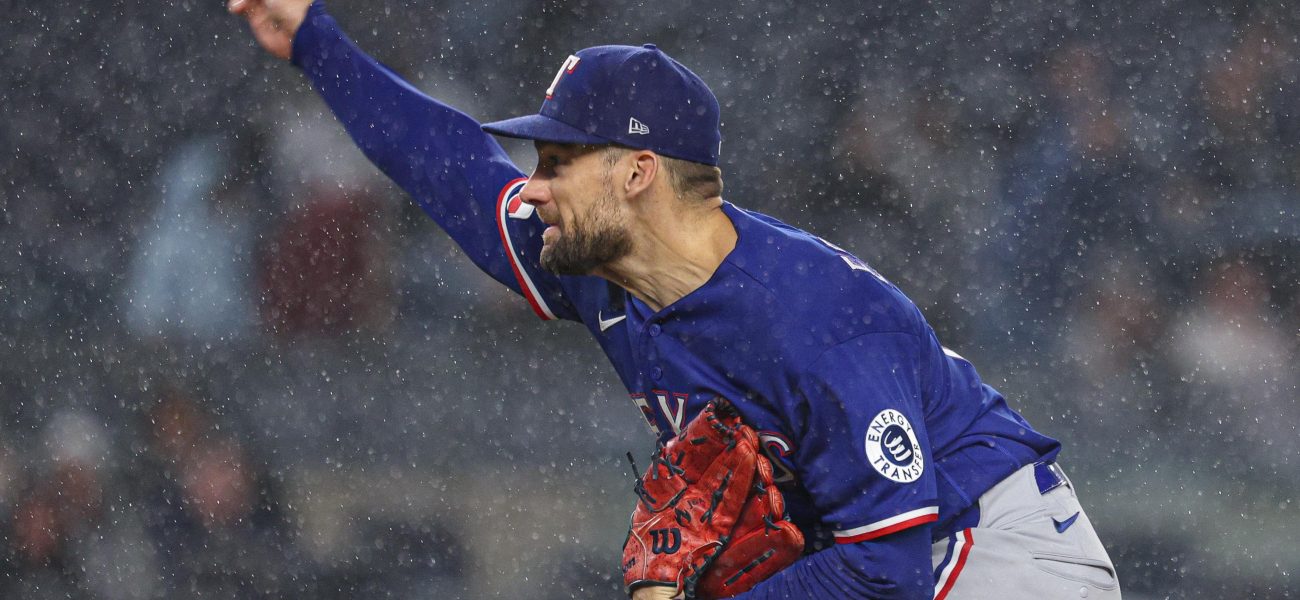
POLICY WIRE — Bronx, New York — Empire’s don’t just crumble; sometimes, they fray at the edges, picked apart by persistent, seemingly insignificant forces. You’d think a franchise with the New York Yankees’ legendary pedigree, with their boundless coffers and unparalleled historical dominance, wouldn’t lose much sleep over a single pitcher on a mid-season Tuesday. But here we’re, watching Nathan Eovaldi, a Texas Ranger, yet again transform the Pinstripes into patsies. It’s not about the individual loss—it’s the insidious, repeated chipping away at an institution’s perceived invincibility, a sort of economic attrition playing out in nine-inning acts. A problem, frankly, they just can’t seem to shake.
It was only a few weeks back when news surfaced of Garret Anderson’s passing, prompting reverent nods to a player who regularly left the Yankees confounded. Now, the cycle repeats itself. And it does. Eovaldi isn’t some fresh face, a flash in the pan. He’s been an annoyance for what feels like eons, consistently confounding one of baseball’s most feared lineups. He just finished another performance that had grown men in the dugout looking bewildered. Think about it: the Yanks have dropped only two games in their last nine outings. Both fell victim to Eovaldi’s wicked arm. Talk about a specific kind of hex.
This isn’t some fluke. According to official MLB statistical archives, Eovaldi boasts a career ERA of 2.94 across 140.2 innings pitched against New York. That’s not a blip; that’s a pattern. A glaring, frustrating pattern for Yankees faithful, an almost perverse delight for everyone else. Especially lately, he’s been on another level, letting in just two runs in four starts covering 29 innings since the 2025 season kicked off. That’s a paltry 0.63 ERA. He’s made their star-studded batting order look about as potent as a wet match. It’s less a baseball game and more a psychological chess match, and Eovaldi, for some reason, holds all the critical moves.
Many pitchers have etched their names into the ‘Yankee Killer’ lore—the larger-than-life Randy Johnson, the gritty Luis Tiant, even the artful Curt Schilling. These weren’t just great pitchers; they were, at various points, specific nightmares for the Bronx Bombers. And it goes further back to midcentury All-Star Frank Lary. But this isn’t simply a historical anecdote. It’s a very present, nagging irritation. When a manager watches a team like New York, full of potential Hall of Famers, shrink in the presence of one man, well, it sparks some internal dialogues.
“It’s a riddle, frankly. We prepare, we analyze, but some days, some pitchers… they just have your number,” lamented a senior Yankees front-office executive, who requested anonymity to speak candidly about persistent performance issues. “We respect his talent, of course, but it stings. It really does. Because when you’re building an empire, you expect to conquer. Not concede the same battle over — and over.”
The opposing dugout, predictably, offers a different tune. “He’s just built differently against certain lineups. It isn’t just about his stuff; it’s his temperament, his focus when the stakes are high,” remarked Rangers Manager Bruce Bochy after one such Eovaldi masterpiece. “And with the Yankees, well, the stakes are always high. You love seeing a guy rise to that moment consistently.” This isn’t just about baseball statistics; it’s about the theater of competition, about narratives that transcend the game itself.
What This Means
The recurring narrative of the ‘Yankee Killer’ might seem trivial, but it subtly chips away at the brand’s mystique. This kind of consistent, specific vulnerability translates into more than just losses; it impacts fan engagement, merchandise sales, even potential player acquisitions. Nobody wants to join a team that perpetually struggles against a certain adversary, regardless of their overall record. For a behemoth like the Yankees, each such defeat, especially one with a historical precedent like Eovaldi’s, sends subtle ripples through the economic fabric of their enterprise. Think about how unexpected upsets, or underdog stirs in the market, can shake established giants in global sports. It’s a mirror, albeit a skewed one, to larger political or economic systems, where a dominant power faces an unwavering, almost mythic resistance. These localized challenges can disrupt projected revenues, challenge the carefully cultivated image of infallibility, and spark broader, uncomfortable economic questions beyond the playing field. Because, in the end, it’s not just about a game; it’s about control, perception, and power dynamics, both on the diamond and in the market.
This persistent individual challenge, this single ‘thorn’ in the side of a massive entity, isn’t unlike the protracted, sometimes frustrating, dynamics seen in international relations—for instance, the resilient yet volatile regional struggles often observed across the Middle East or South Asia, where an unexpected insurgent force or a determined adversary can consistently thwart the projections of more powerful actors. It’s a reminder that even the mightiest establishments can possess specific, maddening Achilles’ heels, exploited by those with a knack for identifying and repeatedly striking at precisely the right nerve. And sometimes, that’s what makes the game, or geopolitics, worth watching.