


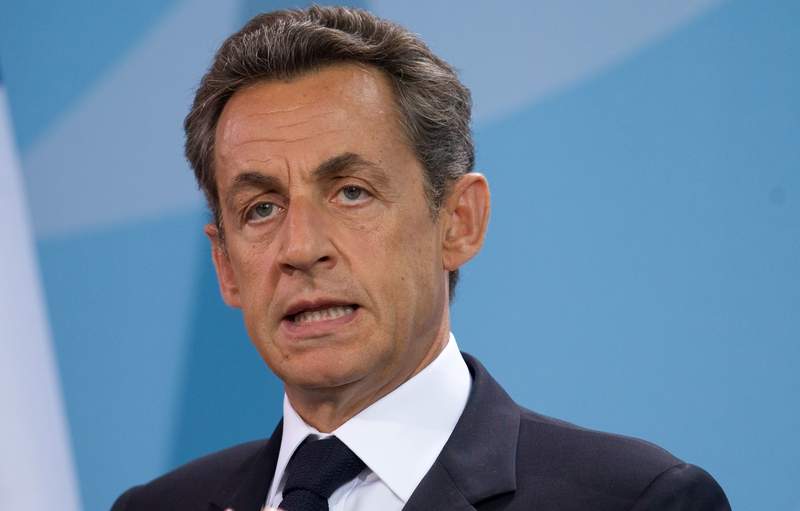
Sarkozy’s Last Stand: A Legacy on Trial, Ghost of Qaddafi Haunts French Courts
POLICY WIRE — Paris, France — The grand avenues of Paris, typically bustling with the easy confidence of a capital city, hold a secret tension these days. It’s not just the upcoming elections or the...

POLICY WIRE — Paris, France — The grand avenues of Paris, typically bustling with the easy confidence of a capital city, hold a secret tension these days. It’s not just the upcoming elections or the latest social spat; it’s the spectral echo of a fallen dictator—Muammar Gaddafi—and a former French president fighting tooth and nail for his honor. Nicolas Sarkozy, once the self-proclaimed ‘hyper-president,’ now finds himself back in the familiar, uncomfortable glare of a courtroom, battling allegations that money from Libya, funneled by Gaddafi’s regime, oiled his 2007 presidential campaign machine.
It’s a peculiar spectacle, isn’t it? A man who once stood on the world stage, brokering deals and launching interventions, reduced to defending himself against charges of illicit financing and corruption. The very nature of political memory is on trial here, shaping how France—and frankly, the world—remembers a leader who, for a time, seemed almost invincible. This isn’t just about cash transfers; it’s about the accountability of power, and whether old scores, especially those with bloody origins in the Arab Spring, ever truly settle.
Sarkozy, never one for understated performances, maintains a defiant front. “They’re trying to rewrite history, aren’t they?” he reportedly snapped, eyes narrowed, outside the Palais de Justice after a session. “I’ve given my life to France, its dignity, its place in the world. And this—this is nothing less than a political assassination by legal means.” His legal team, well-versed in the intricate dance of French jurisprudence, frames the entire affair as a vengeful pursuit, bereft of concrete, undeniable proof. But prosecutors insist otherwise.
And so, the appellate court hears the well-worn accusations, revisits the hazy memory of briefcases stuffed with euros, and tries to piece together a narrative spanning continents and cultures. The alleged amounts involved are staggering: estimates, gathered from multiple press reports citing French judicial sources, indicate alleged transfers ranged upwards of 50 million euros – a sum that could swing many a campaign. But getting proof of such shadow dealings, well, that’s where the difficulty lies.
The case serves as a jarring reminder that political corruption isn’t just a phenomenon of nascent democracies or developing nations. It’s a global virus. While we often fixate on graft in, say, certain South Asian republics—where systems can seem perpetually entangled—this trial shows that even the most established Western democracies aren’t immune. In some parts of the Muslim world, watching such a high-profile figure dragged through the courts in a European capital might even evoke a certain cynical satisfaction—a perception that accountability, however late, can indeed bite even the most powerful.
This whole convoluted saga began nearly a decade ago, sparked by former Libyan prime minister Baghdadi al-Mahmoudi’s claims and a leaked document that Gaddafi’s son, Saif al-Islam, mentioned an agreement for campaign funds. But details, you know, they’re always tricky things when power — and memory collide. The prosecution’s argument, while meticulously detailed, often rests on circumstantial evidence and witness testimony, some of which has wavered over time. That’s the trouble with digging up skeletons—they don’t always stay neatly articulated.
📄 POLICY WIRE WHITEPAPER PUBLISHED: PAKISTAN'S NATIONAL SECURITY POLICY PRIORITIES
👉 READ BY CLICKING HERE“The system’s grinding away, slow but insistent. It isn’t just about Mr. Sarkozy anymore; it’s about whether leaders, even former ones, are truly above the law, regardless of their past achievements or current popularity,” remarked Marianne Dubois, a seasoned political analyst with expertise in French law, during a recent television appearance. It’s a point that resonates, especially as France — and Europe — grapples with declining trust in public institutions. If Sarkozy is acquitted, many will see it as a triumph of legal strategy over truth. If he’s convicted, well, it’s another crack in the edifice of French presidential grandeur.
Because ultimately, this trial isn’t merely about legal technicalities; it’s a proxy battle for the very soul of a political era. Sarkozy’s involvement in Libya, culminating in the 2011 NATO intervention that led to Gaddafi’s downfall—a decision many in policy circles still debate—casts a long, dark shadow over these proceedings. That military action fundamentally reshaped the Maghreb and Sahel, unleashing chaos that persists to this day, with repercussions for everything from migration patterns to regional security.
What This Means
The outcome of Sarkozy’s appeal, whatever it may be, carries significant weight beyond the man himself. For France, it will either reaffirm the principle that justice applies to everyone—even former presidents—or fuel cynicism about an elite that seems to navigate a different moral playing field. Economically, while not a direct financial drain, prolonged legal battles involving high-profile figures can chip away at investor confidence and signal underlying institutional fragilities, which isn’t great for a country already facing myriad challenges. Politically, a conviction could permanently mar Sarkozy’s legacy, preventing any future—however remote—re-engagement in public life and emboldening his detractors. But an acquittal? That’s a vindication his allies would seize upon, likely framing it as a heroic triumph against political persecution. Either way, this judicial drama is hardly a trivial matter; it’s a deep incision into France’s collective memory and its perception of governmental integrity.
Beyond France’s borders, the trial continues to influence the perception of Western interventions, particularly in nations within the Muslim world. The ghosts of Libya—a once-stable (albeit autocratic) state now a shattered proxy battleground—hover over every court hearing. For leaders in the Middle East and South Asia, this saga likely reinforces lessons about foreign interference and the tangled web of patronage that can bind and then break international relationships. It’s a stark reminder that even powerful players can find themselves caught in the very systems they once sought to manipulate.