


Beyond the Bleachers: Pittsburgh’s Diamond Revival Sparks Deeper Economic Questions
POLICY WIRE — PITTSBURGH, U.S. — The script was predictable. Another baseball season, another middling performance for the Pittsburgh Pirates. But then, something shifted. It wasn’t the steel...

POLICY WIRE — PITTSBURGH, U.S. — The script was predictable. Another baseball season, another middling performance for the Pittsburgh Pirates. But then, something shifted. It wasn’t the steel mills clanging back to life, nor was it a new tech giant planting its flag in the storied hills of Western Pennsylvania. No, this time, it was a baseball team—yes, baseball—unexpectedly charting a course above mediocrity, and suddenly, everyone’s asking: what does this tell us about the city itself?
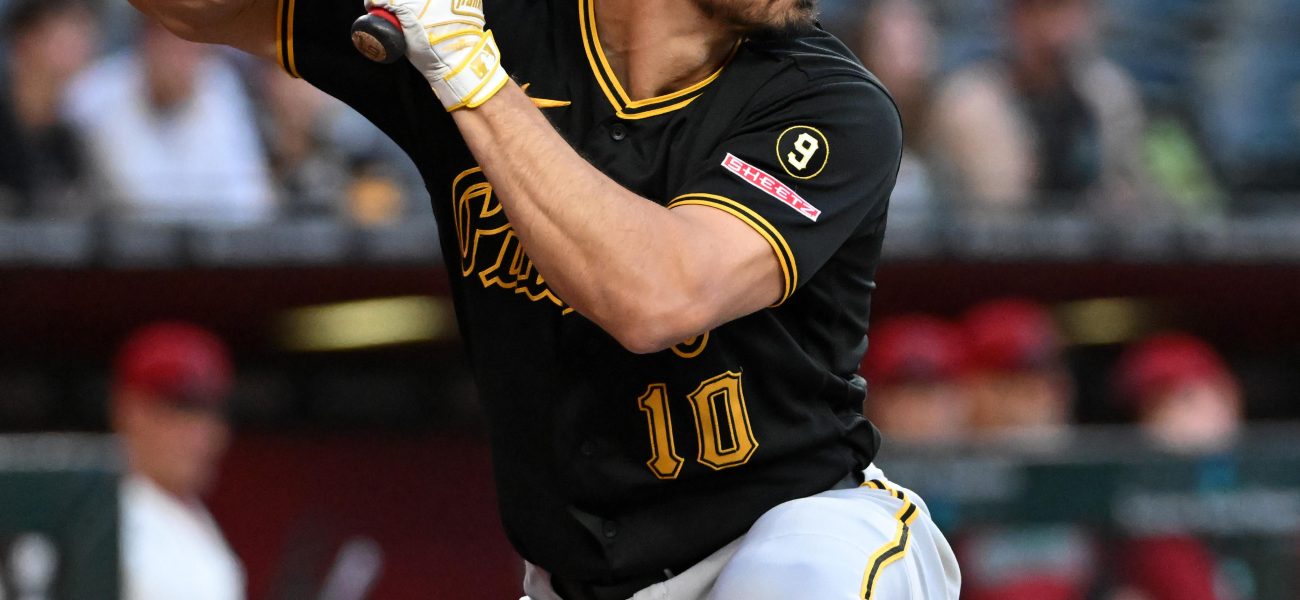
It’s rarely just about the game, is it? Not in a place like Pittsburgh, a city that’s spent decades reimagining its identity post-industrial collapse. This isn’t just a sports story; it’s an economic indicator in cleats, a morale booster packaged as an athletic triumph. Consider Bryan Reynolds, the quiet outfielder whose bat has, almost single-handedly, rewritten segments of the team’s recent history. He recently notched his 1,000th career hit, a statistical milestone that, while impressive on paper—he’s only the fifth ‘Bucco’ to accumulate 1,000 hits, 200 doubles, and 140 homers, joining legends like Roberto Clemente—means a little more when you look at the bleachers. You see a palpable difference, a collective breath held, then exhaled in cheers.
And Reynolds isn’t the only narrative. Pitcher Paul Skenes, an enigma of raw talent, has delivered the kind of dominant performances—like his eight-inning, one-run gem against the Diamondbacks—that make jaded sportswriters start believing in fairy tales. His ERA has dipped to a respectable 2.36, boasting a 5-2 record, reminding everyone that sometimes, against all odds, magic happens. This sudden burst of competency, elevating the Pirates to a tie for second place in the NL Central, isn’t lost on observers who chart more than just RBIs and ERAs.
“We’ve long moved past steel as our sole defining feature, but civic pride? That never goes away,” stated Pittsburgh Mayor Ed Gainey recently, his voice brimming with a guarded optimism. “This team’s success isn’t just for sports pages; it resonates in our neighborhoods. It puts a spring in folks’ steps, encourages community gatherings. It’s part of the fabric of how we feel about our city, — and frankly, that’s good for business, good for morale. It tells outsiders we’re a place that knows how to fight — and win.”
But the real, tangible impact? It’s harder to quantify. Yet, it’s there. Local establishments see more traffic. Jersey sales spike. And there’s an almost indefinable sense of civic belief. A recent economic survey indicated that cities with a winning sports franchise experience a modest, but consistent, 0.5% uptick in local consumer spending during a successful season. It’s a psychological multiplier, frankly, especially in an era when global investments can be swayed by perceived stability and happiness—and cities are vying for investment from even places like Pakistan, whose growing venture capital firms are now exploring U.S. markets for overlooked tech talent, Pittsburgh certainly being on that radar.
“It’s human nature,” noted Dr. Alia Khan, an urban economist at Carnegie Mellon University. “A winning team translates into positive local news cycles, enhanced perception of the city on a national—even international—stage. It’s not about the direct revenue from ticket sales alone; it’s about signaling to potential investors, young professionals, and even tourists that this is a dynamic place. This type of soft power can lead to hard economic gains. The narrative shifts, doesn’t it? From a struggling industrial past to a resilient, forward-looking future.” Indeed, a good story can attract attention as much as a high-voltage gambit to land an automotive plant in an unexpected locale.
It’s no accident that while Reynolds was tallying career-defining numbers, the city itself was reporting an unemployment rate, according to federal data released just last month, holding steady at a competitive 4.1%—a statistic that suggests a different kind of ‘bases loaded’ scenario. That’s solid, folks. It shows underlying health. So, when the Bucs, having once dwelled perpetually in the cellar, find themselves tied with the Cincinnati Reds at 20-17, and even outranking the Milwaukee Brewers in some metrics, it’s more than just a baseball anomaly. It’s a moment. A signal.
What This Means
The Pittsburgh Pirates’ unexpected resurgence isn’t merely a fleeting feel-good sports story; it offers a compelling microcosm of broader urban renewal efforts. For a city that’s fought tooth and nail to redefine itself after the decline of heavy industry, public morale isn’t a luxury; it’s an economic driver. A winning team galvanizes local identity, encouraging both community engagement — and external investment. Because, ultimately, no one wants to invest in—or move to—a city that feels like it’s losing at everything, right?
This dynamic plays out globally. Think of how football clubs impact the political and economic landscape in places like the UK, as seen in the Red Devils’ Reckoning. Success on the field or court can bolster political incumbents who are seen as overseeing a period of civic uplift. For Pittsburgh, this isn’t about immediate, massive financial gains. It’s about shifting the narrative, reinforcing a perception of progress and resilience that’s been carefully cultivated over decades. The success, no matter how fragile in the capricious world of baseball, validates the city’s tenacious spirit. And it’s contagious. It’s just how things work. People feel better, they spend a bit more, they talk up their city. And that, in itself, is a policy outcome, however unconventional.