


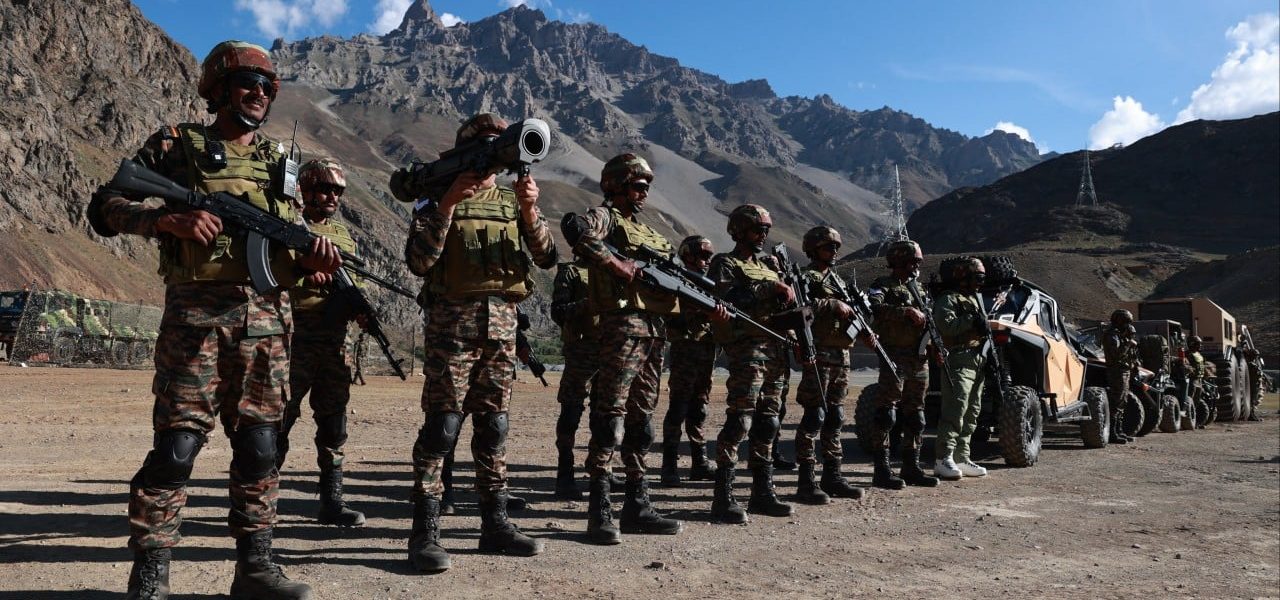
Powder Keg Politics: How Iran’s War Forged India’s Green Warriors
POLICY WIRE — New Delhi, India — Forget tree-hugging idealism; sometimes, the most profound shifts in global policy are birthed in the grime of a supply chain choked by faraway conflict....

POLICY WIRE — New Delhi, India — Forget tree-hugging idealism; sometimes, the most profound shifts in global policy are birthed in the grime of a supply chain choked by faraway conflict. India’s military, not exactly renowned for its eco-conscious leanings, is quietly—but definitively—shedting its reliance on oil and gas. Why? Not for the polar bears, mind you, but because the war raging in Iran has jacked up energy prices to a point where even generals are wincing.
It’s a stark calculation, really. When your operational budget hemorrhages rupees into a global fuel market gone haywire, every ounce of strategic autonomy you thought you possessed begins to feel pretty flimsy. That’s the cold, hard reality setting in, forcing the Indian armed forces to trade conventional combustibles for an unglamorous-sounding, but highly pragmatic, diet of biogas stoves, electric vehicles, and sun-soaked barracks.
This isn’t just about saving a buck, or looking good for the international community. This is about raw, unflinching survival in a volatile neighborhood. “We’re not just fighting enemies,” asserted Indian Defence Minister Rajnath Singh, during a closed-door briefing earlier this month, his words relayed through sources. “We’re fighting resource dependency. Self-reliance, even in BTUs, is a strategic imperative. The era of cheap, guaranteed fuel is simply over.” He’s not wrong; it’s a lesson hard-learned by many when global fuel costs surge.
The details emerging from military channels are quite telling. Army garrisons are eyeing biogas plants to fuel cooking stoves, replacing old-school natural gas setups. Think thousands of soldiers getting their daily meals prepared not on fossil fuels, but on recycled organic waste. And, they’re looking at electrifying administrative fleets and pioneering solar and wind farms for remote posts — places where a diesel tanker might cost more to deliver than the fuel itself. This isn’t just a pilot program; it’s an ambitious overhaul. India imports over 80% of its crude oil requirements, making it the world’s third-largest oil consumer, according to the Ministry of Petroleum & Natural Gas data for 2022-23. That’s a monster appetite, — and a monster vulnerability.
But India isn’t alone in this anxious pivot. Across South Asia, energy insecurity has been a gnawing problem for years, only exacerbated by regional conflicts and global price swings. Pakistan, too, battles perennial energy deficits, forcing uncomfortable decisions — and economic strains. Other Muslim-majority nations in the wider region, from Bangladesh to Malaysia, similarly contend with precarious energy import bills, often pegged to Middle Eastern stability, or lack thereof. This Indian move could very well kickstart an energy arms race, where efficiency, not just firepower, becomes the new strategic asset. They’re essentially asking: who can keep their lights on, and their tanks running, when the rest of the world goes dark?
Because, let’s be real, an army marches on its stomach, sure, but it also rolls — and flies on its fuel. Cut off that supply, or make it prohibitively expensive, and even the most formidable fighting force becomes a collection of very expensive lawn ornaments. The conflict in Iran isn’t just reshaping borders; it’s redefining the very logistical fabric of militaries worldwide. It forces nations like India, who project regional power, to re-evaluate what true self-sufficiency really looks like in the 21st century. It’s an unpleasant lesson, sure, but a necessary one.
And it’s creating strange bedfellows — between geopolitical expediency — and environmental consciousness. An energy analyst, Dr. Priya Sharma from the Observer Research Foundation, put it bluntly: “This isn’t about being ‘eco-friendly’ for bragging rights. It’s about hedging bets against global mayhem. Any state that relies heavily on imported hydrocarbons is living on borrowed time — — and fuel. This shift is pure pragmatism dressed up in green. It’s not an ‘if’; it’s a ‘when,’ for others in the region to follow suit, perhaps even with some competitive vigor against their neighbor,” she observed, her voice tinged with a knowing irony.
What This Means
This calculated transition signals a sea change in how national security is perceived in a highly interconnected yet fractured world. Politically, India’s push for military energy independence lessens its exposure to diplomatic leverage exerted by major oil producers — or the chaos emanating from conflict zones like Iran. It grants New Delhi greater strategic depth — and maneuvering room on the global stage. It’s about de-risking foreign policy by de-risking energy supply. This also projects an image of forward-thinking defense strategy, aligning with global green trends, albeit driven by deeply utilitarian motives. Internally, it could spark growth in indigenous renewable energy technologies, creating jobs and fostering innovation within India.
Economically, the implications are substantial. Reducing the enormous import bill for defense-related fossil fuels frees up valuable capital for other developmental projects or further military modernization. It insulates the defense budget from wild commodity price swings, offering greater fiscal stability. Over the long term, while initial infrastructure investments may be significant, the operational cost savings could be immense. a military-led adoption of green technologies often paves the way for civilian applications, driving down costs and accelerating mainstream acceptance. It’s an unusual path to sustainability, but then again, these are unusual times. War, after all, has a way of concentrating the mind.