

Germany’s Flight of Fancy: Half Its Air Passengers Still on the Short Hop
POLICY WIRE — Berlin, Germany — Here’s a bit of inconvenient truth for Europe’s economic powerhouse: Germany, a nation often touting its environmental credentials and leading the charge for ambitious...

POLICY WIRE — Berlin, Germany — Here’s a bit of inconvenient truth for Europe’s economic powerhouse: Germany, a nation often touting its environmental credentials and leading the charge for ambitious climate targets, is apparently still rather fond of its tiny aerial detours. Forget those grand pronouncements from Chancellor Scholz about a greener tomorrow—it seems many Germans just prefer to fly, even when they’re barely going anywhere at all.
It’s a peculiar dichotomy, isn’t it? The same country that pioneered robust recycling programs and invested heavily in renewable energies can’t seem to kick its addiction to short-distance air travel. We’re not talking about intercontinental jaunts here; we’re talking about trips that could, in theory, be navigated quite comfortably on terra firma.
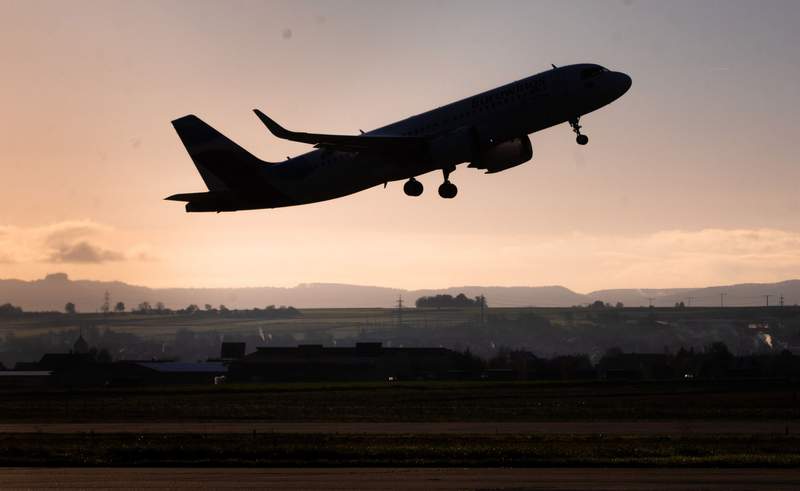
Just shy of half—to be precise, 48% of all domestic passenger traffic in Germany in the last reported period consisted of short-haul flights, according to eyebrow-raising data from the German Federal Statistical Office (Destatis). That’s right, almost every second ticket sold for a flight *within* Germany is for a journey that’s arguably more scenic and less carbon-intensive by train. But folks choose planes. They just do. Because, convenience. Or habit. Or maybe a simple lack of truly competitive rail options for those last-minute dashes.
“You can’t lecture the rest of the world about cutting emissions when your own citizens are hopping between cities in aircraft as if trains simply ceased to exist,” quipped Foreign Minister Annalena Baerbock, a Green Party stalwart, during an informal chat with reporters. “It’s not just a climate issue; it’s about credibility on the global stage. Nations in vulnerable regions, from South Asia to the Sahel—they see us, they see our actions, and they rightly ask if we’re truly serious about shared responsibility.” Her sentiment carries weight, particularly in places like Pakistan, where climate-induced super floods have displaced millions, a stark reminder of emissions’ very real human cost.
And then there’s the official line from the transport heavyweights. Transport Minister Volker Wissing, a member of the liberal FDP, tends to tread a more cautious path. “We’re focused on improving our rail network—massive investments are underway, you know. But people have to choose it. You can’t just mandate behavioral change,” he’s often quoted as saying, invariably adding a rider about modernizing infrastructure to make it a genuinely attractive alternative. He’s got a point about the trains; they aren’t always as punctual or affordable as they could be.
This situation isn’t merely an administrative hiccup; it’s a deep-seated behavioral puzzle. The perceived value of time—even just an hour or two saved—often overrides environmental considerations for the average traveler. Germany’s economy, being what it’s, moves at a blistering pace. Executives, tourists, students—they’ve all become accustomed to the ease, however fleeting, of air travel. It’s an issue with real economic teeth, too; airlines are businesses, after all, — and they’re serving a demand. Curtail it too harshly, and you risk a backlash, not just from the industry but from the very people who’ve grown to rely on these aerial shuttles. They’ve built their lives around this rhythm. To unravel it quickly? Good luck.
The government, it’s tried various levers. Higher taxes on domestic flights. Campaigns pushing rail travel. Yet, the numbers—they speak volumes. The challenge isn’t just about constructing new high-speed lines or dropping ticket prices. It’s about a cultural reset, an understanding that efficiency, true efficiency, now has to factor in ecological costs. And that’s a tough sell when you’re used to zipping from Munich to Berlin in an hour.
What This Means
This persistent reliance on short-haul flights in Germany isn’t just an environmental footnote; it’s a political headache and an economic quandary wrapped into one. Politically, it undermines Germany’s credibility as a global climate leader. How can Berlin push for ambitious CO2 reduction targets at international summits—targets vital for regions like Southeast Asia or African nations—when its own domestic travel habits contradict those very aims? It fuels accusations of hypocrisy, especially from developing economies that argue their growth is being unfairly constrained by the historical emissions of richer nations.
Economically, there’s a massive incentive challenge. The aviation industry is a major employer, but continued reliance on fossil fuels, even for short distances, risks hefty carbon penalties in the future and stifles investment in truly sustainable transport innovations. Diverting more travelers to electrified rail lines could stimulate domestic investment and create jobs in infrastructure, but it requires significant capital and—this is key—a genuine commitment to competitive pricing and seamless logistics. It means more than just a vague suggestion; it means a genuine, system-wide overhaul of pricing, connections, and even things like baggage handling at train stations. Without a radical rethink, Germany risks its carbon ledger looking rather unflattering—not to mention the knock-on effects it might have on broader EU climate policy, where Germany’s example traditionally carries considerable weight. And in this particular domain, the engine is definitely stalling on a cleaner path forward. Because ultimately, grand pronouncements without ground-level changes are just, well, pronouncements.