


Lake Busch: When Unforeseen Downpours Drown Sporting Spectacle and Echo Global Frustration
POLICY WIRE — St. Louis, MO — Even the most meticulously planned spectacles, those grand arenas of modern distraction and multi-billion-dollar enterprise, remain laughably hostage to something as...

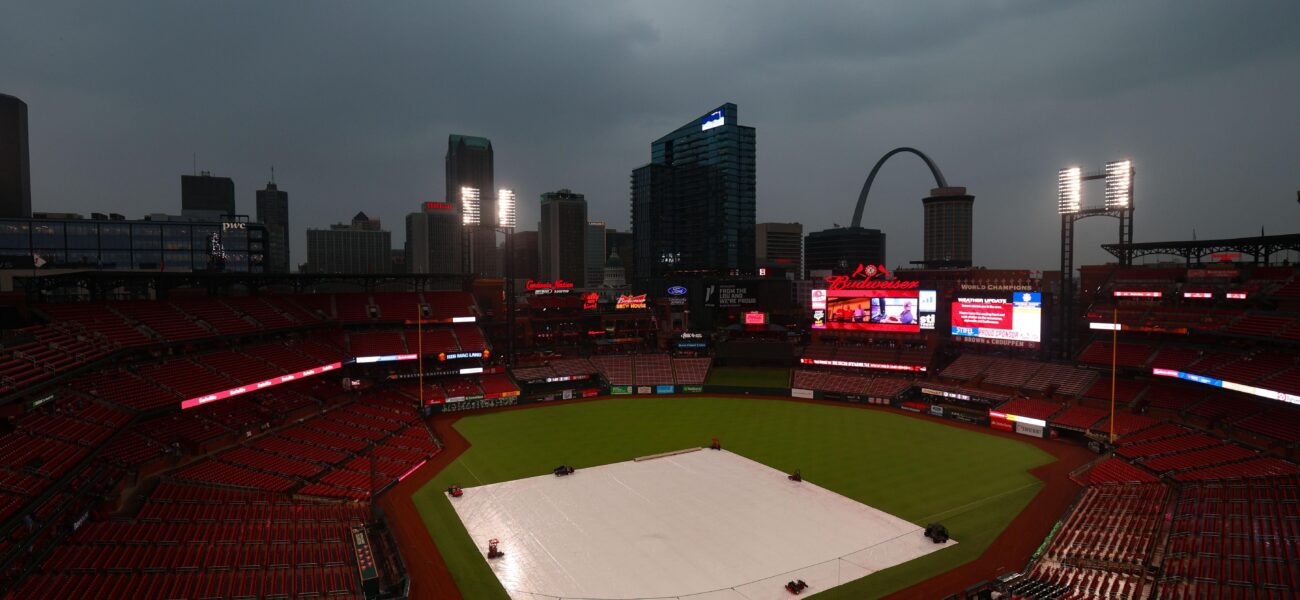
POLICY WIRE — St. Louis, MO — Even the most meticulously planned spectacles, those grand arenas of modern distraction and multi-billion-dollar enterprise, remain laughably hostage to something as primitive as atmospheric moisture. Last night, Busch Stadium, usually a stage for American baseball’s intricate drama, transformed into what one commentator accurately dubbed a ‘Lake Busch’ after a rather emphatic cloudburst, rendering a scheduled Atlanta Braves-St. Louis Cardinals tilt into an unwitting parable on humanity’s fragile dominion over nature’s caprice.
It wasn’t a sudden, cataclysmic event, not a Hollywood-grade disaster. It was just rain, yet it laid bare a simmering tension between human ambition and the persistent unpredictability of the natural world. But doesn’t this ring familiar? This casual disarray, this deferral of action due to forces outside our control— it’s a theme not confined to foul territory or the pitcher’s mound, but rather resonates through the corridors of power globally, from protracted diplomatic stalemates to development hurdles.
The night commenced with the familiar, almost folksy gallows humor of an impending weather delay. Indeed, it’s been said, [QUOTE_PLACEHOLDER] One pundit observed, [QUOTE_PLACEHOLDER] Such pronouncements, seemingly lighthearted, point to a pattern— a persistent bug in the system that’s regularly accommodated but rarely truly resolved.
Early bulletins were calm enough. The St. Louis Cardinals official channel reported, [QUOTE_PLACEHOLDER] But then came the visual evidence, a rapid descent into the comically sodden. Images circulating social media depicted what can only be described as a shallow pond where a finely manicured infield should’ve been. Ben Ingram of IngramRadio summed up the evolving situation succinctly: [QUOTE_PLACEHOLDER] But this wasn’t some novel attraction, rather an inundation of significant proportions.
Later updates suggested an increasingly bleak outlook for any on-field heroics. [QUOTE_PLACEHOLDER] wrote one social media observer, McNeil, before adding a truly sharp observation: [QUOTE_PLACEHOLDER] That sentiment— the gap between expectation and damp reality — encapsulates so much of our collective frustration, doesn’t it? The best-laid plans, the promises of seamless experience, washed away by a few hours of relentless precipitation. And this isn’t just a Midwestern problem.
Consider the logistical nightmares posed by just a single extended downpour. For every fan whose evening plans dissolved, there are untold millions affected by similar weather-related interruptions across the globe, though often with far graver consequences. In Pakistan, for example, the annual monsoon season routinely brings metropolitan hubs like Karachi to a grinding halt. Infrastructure— roads, drains, power grids — buckles under rainfall that would merely delay a baseball game, illustrating how fragile modern systems can be against nature’s raw force, and how starkly privilege can dictate the inconvenience versus disaster threshold. According to data published by the Pakistan Meteorological Department, a 2022 monsoon deluge saw Karachi receive over 200mm of rain in just 24 hours, leading to widespread flooding and dozens of fatalities, a scale of disruption that puts a temporarily waterlogged baseball field into sobering perspective.
📄 POLICY WIRE WHITEPAPER PUBLISHED: PAKISTAN'S NATIONAL SECURITY POLICY PRIORITIES
👉 READ BY CLICKING HEREThe final updates of the night offered a glimmer of hope for a return to some semblance of order, at least for the playing field. [QUOTE_PLACEHOLDER] noted Derrick Goold, adding, [QUOTE_PLACEHOLDER] For the moment, the primary goal was restoration: [QUOTE_PLACEHOLDER] A minor battle won, perhaps, but the broader war against climatic unpredictability, against an environment growing increasingly volatile, rolls on. It affects everything, doesn’t it, from global trade routes to local government budgets — not to mention a game under the Arch.
What This Means
The impromptu swimming lesson at Busch Stadium, while fodder for internet jokes and sports-talk radio, carries echoes of more substantial disruptions that policymakers consistently confront. It highlights how even in technologically advanced societies, a localized weather event can bring an entire operation to an unexpected halt, exposing latent vulnerabilities. Economically, these delays aren’t just a nuisance; they’re measurable losses: ticketing revenue, concession sales, broadcast windows, staff wages. The aggregate cost of such seemingly minor inconveniences, when extrapolated across various industries and weather events, amounts to a significant drag on economic productivity. It’s a reminder that investments in resilient infrastructure—from drainage systems to more sophisticated predictive analytics — are not mere expenses, but rather essential buffers against a world that cares little for our timetables or preferred pastimes.
Politically, the narrative of external forces disrupting public life often plays into broader discourses around governance. When routine services or beloved public events like a ballgame are consistently derailed, public trust in institutions, whether private or governmental, can erode. It sparks questions about planning, emergency response, — and proactive adaptation to changing environmental patterns. For nations like those in South Asia, where seasonal deluges aren’t an anomaly but an annual, often calamitous, reality, the need for robust infrastructure is self-evident. This relatively benign North American anecdote, therefore, acts as a micro-study of macro-challenges, urging policymakers to consider how unforeseen circumstances—even something as simple as rain — can upend stability. It’s a recurring drama, whether it’s an evening at the ballpark or the intricate dance of international politics. For more insights on global power shifts and unexpected interruptions, check out Lacrosse Uprising Echoes Power Shifts, From Chicago Fields to Global Centers. And we also examine these types of disruptions on grander stages; see our piece on The Enduring Circus: McGregor’s Latest Act and the Geopolitics of Spectacle.