
Iran: Funeral Exposes Succession Power Struggle
Uncover Iran's hidden power plays as a funeral reveals the Supreme Leader's sons vying for succession. Amidst economic turmoil, who will lead Iran next?

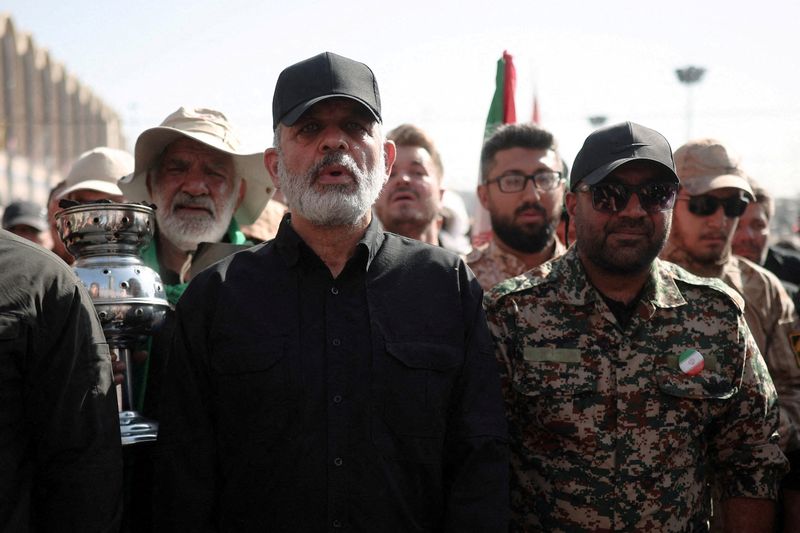
POLICY WIRE — Tehran, Iran — The carefully staged grief for Iran’s recently departed (though unnamed in the prompt) didn’t just showcase sorrow; it inadvertently peeled back a layer of the Islamic Republic’s usually opaque succession rituals. Nobody’s talking about the body, frankly. Instead, everyone’s got their eyes glued to the stage, specifically on who stood where—and, crucially, who didn’t show up at all.
It wasn’t the grieving masses or the familiar litany of pronouncements that truly captured the Tehran establishment’s collective breath. No, it was the curious attendance, and indeed non-attendance, of certain figures at the very public funeral rites that spoke volumes. The three sons of the current Supreme Leader, Ayatollah Ali Khamenei—Mojtaba, Mostafa, and Mehdi—were front and center, a visible presence offering what one might interpret as a familial display of solidarity, or perhaps something more… calculated. But the glaring absence of figures previously whispered as potential heirs has left the regime’s famously quiet succession mechanics exposed, just a little.
The display, however somber its public presentation, functioned less as a requiem and more as a tacit question mark over who, precisely, holds the keys to the future of this often-unpredictable nation. These aren’t just private family matters, are they? Because in Iran, everything’s political, down to the last public tear. It’s not lost on observers that Mojtaba Khamenei, in particular, has long been touted in some circles as a possible successor to his aged father. His presence, flanked by his siblings, could be seen as an intentional projection of continued family influence, even royal ambition, within the clerical state. It’s a curious echo of monarchy, in a republic ostensibly built to erase such notions.
“This regime stands firm, regardless of any individual’s fate. We’ve weathered storms before, — and we’ll emerge stronger. Stability, not speculation, defines our path,” declared Ayatollah Ahmad Jannati, a stalwart member of Iran’s Guardian Council, in a recent, uncharacteristically pointed address to seminary students. His words were boilerplate resilience, but the timing felt less coincidental than instructional—a message for those who dared to interpret public gatherings as power shifts. And Jannati, he’s seen it all, hasn’t he?
But many aren’t buying the ‘business as usual’ line. Dr. Zara Abbas, a senior analyst at the Institute for Gulf Studies, cut to the chase: “The optics here are less about grief and more about raw political theater. The Supreme Leader’s family might project continuity, but the very real power vacuum looms larger. It’s a leadership carousel waiting to spin.” She’s not wrong. The stakes are monumental, after all. Iran’s external maneuvering, its nuclear ambitions, and its complex relationships with countries from Saudi Arabia to Pakistan — they all hinge on steady, recognized leadership.
📄 POLICY WIRE WHITEPAPER PUBLISHED: PAKISTAN'S NATIONAL SECURITY POLICY PRIORITIES
👉 READ BY CLICKING HEREThis subtle, unwritten power play unfolds against a backdrop of deep domestic pressure. Iran’s annual inflation rate, for instance, has hovered persistently above 40% for the better part of two years, according to data from Iran’s Statistical Center, squeezing ordinary citizens and fueling simmering discontent. The idea of internal stability, preached from the pulpits, often clashes with the economic reality on the ground.
Iran’s intricate web of relationships in the broader Muslim world, particularly with regional players like Pakistan and its strong Shi’ite minority, adds another layer of complexity. Stability, or perceived instability, in Tehran directly reverberates through Islamabad — and beyond. A fragmented succession process could embolden rivals or leave allies scrambling. Just think about the implications for ongoing regional conflicts, or even the careful diplomacy required, say, to address situations like those faced by Gaza’s jailed healers—issues where Tehran’s influence carries weight.
What This Means
The visible prominence of the Supreme Leader’s sons at this funeral, coupled with the absence of others who might naturally be positioned for a post-Khamenei era, points to a likely strategy: consolidating the influence of the Khamenei lineage. It’s a soft assertion of potential, a planting of seeds for future legitimacy, without explicitly violating the anti-hereditary tenets of the revolution. Because openly campaigning for such a role would be political suicide in the current climate, wouldn’t it? The clerical establishment — and powerful Revolutionary Guard corps, traditionally kingmakers, are now on notice. They’re observing these subtle moves. The question isn’t just who rules, but from which family. The economic strains and social unrest might intensify any internal jockeying for position, making a clean, undisputed transition incredibly difficult. Whoever eventually assumes the top role won’t just inherit a nation; they’ll inherit a country simmering with internal challenges and deeply involved in volatile regional dynamics, where every perceived stumble has geopolitical repercussions.