


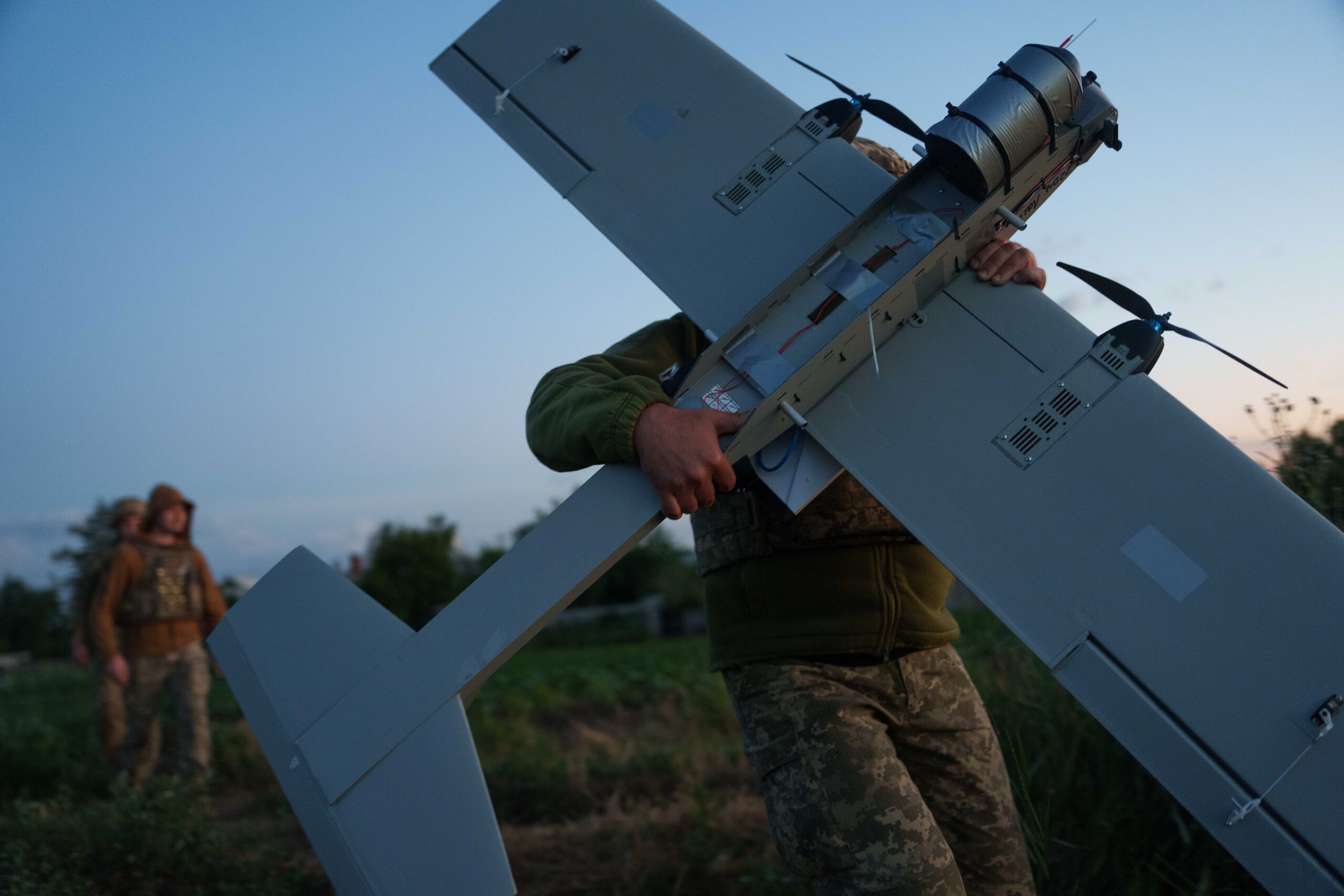
Silent Hawks of War: Ukrainian Drones Cripple Russian Supply Veins, Redrawing Battle Maps
POLICY WIRE — Kyiv, Ukraine — Forget the roaring cannons and grand armor parades for a moment. The true architects of recent battlefield shifts aren’t always found in tanks or fighter jets. They’re...

POLICY WIRE — Kyiv, Ukraine — Forget the roaring cannons and grand armor parades for a moment. The true architects of recent battlefield shifts aren’t always found in tanks or fighter jets. They’re buzzing. They’re relatively small, surprisingly cheap, and they’ve been methodically dismantling the sinews of a traditional war machine, one fuel truck, one ammunition depot at a time.
It’s a peculiar twist in modern conflict. We’re accustomed to narratives of overwhelming firepower, but Ukraine’s employment of midrange drones offers a far grittier, more insidious kind of victory: the slow strangulation of an opponent’s lifeline. These aren’t your typical hobby drones. These are purpose-built systems, increasingly sophisticated, striking deep behind enemy lines. Their success against what was supposed to be a vastly superior military isn’t just surprising; it’s an operational reset for everyone paying attention. [QUOTE_PLACEHOLDER]
Logistics, as any old general will grumble, always wins wars. Or loses them. And Russia’s sprawling, often inefficient, supply chain has become a bullseye. Attacks on depots, transportation hubs, and even individual convoys — especially those hauling vital fuel or desperately needed artillery shells — aren’t flashy. They don’t generate the headlines of a bombed bridge. But their cumulative effect is insidious, bleeding the Russian advance of its momentum, bit by agonizing bit.
Imagine, if you will, a battlefront stretching hundreds of miles, thirsty for fuel — and perpetually short on munitions. Now imagine drones picking off the tankers — and rail cars attempting to satiate that thirst. But it’s not just fuel. It’s medical supplies, food, even spare parts for tanks and armored vehicles. Every successful strike, however small, forces longer, more circuitous routes, increases exposure, and demands a greater allocation of already strained resources for protection. One recent military intelligence briefing noted that some estimates suggest these consistent drone attacks contribute to an operational delay of Russian logistical timelines by at least 25% on key fronts, effectively buying Kyiv precious time and tactical advantage against heavier Russian forces.
And because these platforms aren’t Hollywood blockbusters of weaponry, they’re accessible. This decentralization of striking power is what really changes the game. It’s no longer about a nation’s ability to produce millions of dollars worth of missiles. It’s about ingenuity, adaptation, — and swarm tactics. It’s making do with less to achieve outsized results. The implications reverberate far beyond Eastern Europe.
For a country like Pakistan, deeply entrenched in regional security concerns and keenly aware of technological disparities, the Ukrainian drone saga serves as a sobering, perhaps inspiring, case study. Facing conventional challenges from powerful neighbors, or grappling with insurgencies where asymmetrical warfare often dictates engagement, the efficacy of midrange drone technology against a formidable adversary can’t be ignored. It’s a reminder that military might isn’t solely defined by conventional heavy assets, but increasingly by the ability to adapt, innovate, and deploy disruptive, often low-cost, technologies.
It’s about having the technical know-how to integrate commercial-off-the-shelf components into battlefield-effective weapons. That’s a lesson that resonates across the Muslim world and developing nations – everywhere strategic thinkers are weighing resource constraints against national security imperatives. Canada’s recent defense spending announcements, while significant, don’t necessarily reflect this sort of nimble, disruptive innovation that Ukraine’s demonstrating.
But the story isn’t one-sided. Russia, too, is adapting. Counter-drone measures, electronic warfare, — and new doctrines are undoubtedly emerging. The air is thick with electronic static, each side scrambling to deny the other its eyes — and arms in the sky. It’s a constant, evolving chess match.
The lessons gleaned here aren’t merely tactical; they’re profoundly strategic. How does a global superpower project force when its fundamental operational backbones are vulnerable to inexpensive, easily deployable aerial systems? This question, once academic, is now starkly practical.
What This Means
The sustained effectiveness of Ukrainian midrange drones represents a stark and rather uncomfortable inflection point for military planners globally. First, it revalidates the old adage that armies march on their stomachs—or, more accurately, on their fuel, ammo, and spare parts. Disrupting logistics proves far more debilitating in a prolonged conflict than simply winning isolated engagements. It implies that future conflict models will emphasize, perhaps even overemphasize, resilience and redundancy in supply chains, making them harder and more costly targets.
Second, this saga underscores the democratization of offensive capability. Nations with smaller defense budgets or fewer conventional assets are watching. If relatively simple drone technology can hobble a large, established military power, it invites speculation about future geopolitical skirmishes. Suddenly, defense against sophisticated drone swarms becomes as critical as anti-air defense, demanding investment in electronic warfare, rapid deployment countermeasures, and potentially, autonomous defensive systems.
Economically, this shifts procurement priorities. Expect to see significant R&D investment pouring into drone technology—both offensive and defensive—and, importantly, into resilient logistical infrastructures designed to withstand pervasive aerial threats. The traditional balance of power, where massive armored divisions and fighter fleets reigned supreme, feels a little less certain with each successful drone strike. It’s a shift from brute force to precision, from industrial might to agile innovation. And it’s only just beginning, apparently.