


Washington’s Endless Drain: Another Iconic Pool Yields to the Impermanence of Public Works
POLICY WIRE — Washington D.C., USA — The Lincoln Memorial Reflecting Pool, that venerable sheet of water mirroring democracy’s ideals, is emptying out once again. It’s a grand spectacle,...

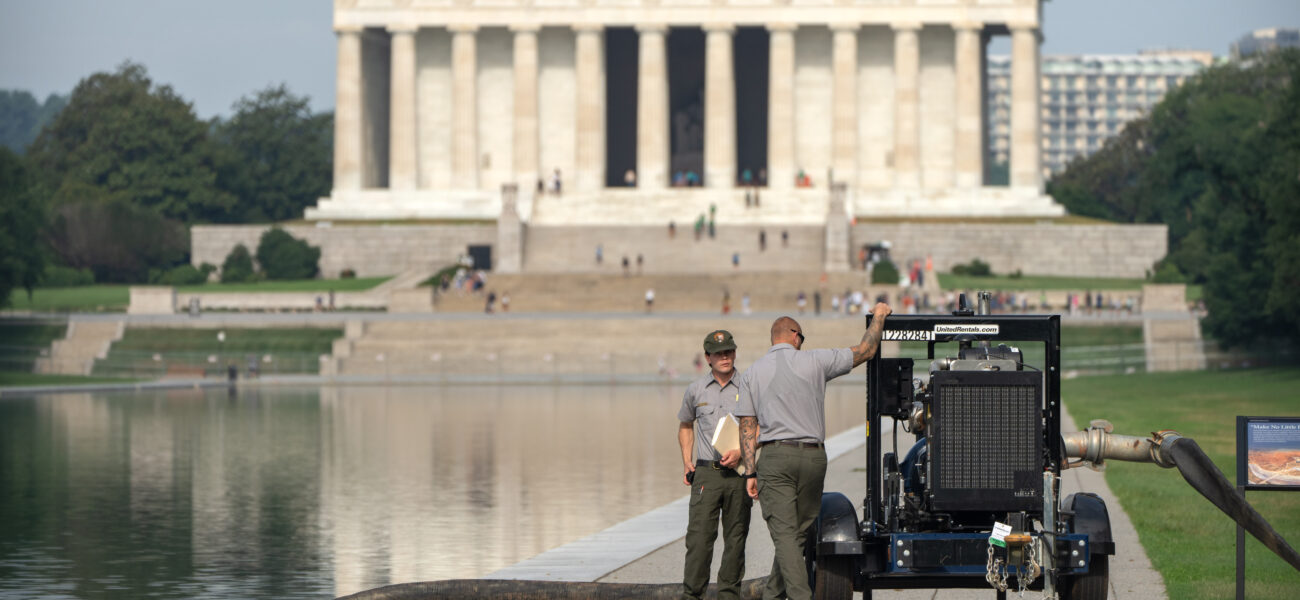
POLICY WIRE — Washington D.C., USA — The Lincoln Memorial Reflecting Pool, that venerable sheet of water mirroring democracy’s ideals, is emptying out once again. It’s a grand spectacle, perhaps—cranes looming, sluice gates humming, thousands of gallons succumbing to gravity—but it’s also a surprisingly mundane affair, another turn in a never-ending cycle of public works maintenance. This isn’t just about sediment removal or fresh paint, mind you; it’s a practical, rather pricey punctuation mark on a revamp initially envisioned with characteristic Trumpian ambition.
It seems that even Washington’s most iconic waterways can’t catch a break. They’re currently draining the Reflecting Pool, a process less poetic than it sounds. This operation, they’ll tell you, is necessary to address certain lingering issues from a substantial overhaul initiated during the prior administration. The National Park Service, stewards of this particular stretch of watery history, doesn’t much comment on the complexities of what lies beneath the placid surface—that’s all handled by teams with clipboards and hard hats. But what the public sees is the repeated emptying of what should be a static, dignified monument. It’s a good metaphor for, well, a lot of things, isn’t it? The sheer financial — and logistical slog behind the serene façade of public life.
And let’s be frank: the issues popping up post-revamp suggest a familiar dance of modern engineering versus long-term realities. It’s the kind of dance played out from bustling Western capitals to rapidly expanding megacities in the Global South, where grand projects often fall short of their eternal promises. A shiny new public square or a meticulously reconstructed heritage site is one thing; its functional longevity quite another.
The latest effort here involves addressing things like leaks and a general sprucing-up, all under the shadow of a project whose original price tag already raised eyebrows. We’re talking millions, for a puddle, basically. It’s a hefty invoice, though, to preserve an image that’s seen everyone from Martin Luther King Jr. to Forrest Gump. But doesn’t this speak to a broader tension?
Just consider how such grand infrastructural declarations often play out in places like Pakistan. Think of the new metro lines, power plants, or dams—all launched with much fanfare and often subject to public scrutiny over costs, delays, and ongoing functionality. You’ll hear local officials declare a new facility will revolutionize city life or boost economic output, but the on-the-ground reality often involves perpetual fixes, budget overruns, and a battle against time and the elements. That aspirational gap between the marble — and the pipes? It’s pretty universal.
Sources familiar with federal budgets, speaking off the record (naturally), indicate that national park infrastructure backlogs frequently hit staggering figures—like the National Park Service’s maintenance backlog reaching over $20 billion in recent years, according to data from various congressional budget reports. It’s a grim number that shows precisely how challenging it’s to keep things, you know, running.
📄 POLICY WIRE WHITEPAPER PUBLISHED: PAKISTAN'S NATIONAL SECURITY POLICY PRIORITIES
👉 READ BY CLICKING HEREBut back to our hallowed pool. This isn’t the first time it’s been drained, — and it won’t be the last. This isn’t just about a broken drain plug; it’s about the relentless wear and tear, the unseen challenges, and the sheer cost of keeping symbols shiny. A spokesperson, speaking generally about infrastructure upkeep and without direct reference to the pool, recently stated [QUOTE_PLACEHOLDER]. They didn’t really say much more. The details? Those are for engineers to haggle over, far from the reflecting glint of national idealism.
Some might look at this and wonder why such high-profile, visually impactful projects always seem to have a sequel, or an expensive postscript. Couldn’t it have been done right the first time? Perhaps, but public works, by their very nature, are a constant negotiation between aspiration, budget, and the often-unpredictable forces of nature—or human error, take your pick. It’s never simple. It never is.
A recent visitor, standing near the chain-link fences obscuring the view of the receding water, was overheard muttering [QUOTE_PLACEHOLDER]. Not exactly stirring words for a national monument, are they? But then, perhaps that’s the point. It’s a testament not just to Lincoln’s stoicism, but to the endless, gritty business of public upkeep, often out of sight, and mostly, out of mind.
What This Means
This recurring saga of the Reflecting Pool is more than just a local headache; it’s a tiny, expensive lens through which to view much larger political and economic implications. On one hand, it highlights the seemingly endless budget allocated to symbolic gestures and marquee projects, often overshadowing the quieter, less photogenic, but equally essential maintenance of everyday infrastructure—think roads, bridges, and water systems that don’t host presidential inaugurations. The ‘troubled revamp’ moniker points to a political cost: projects initiated with grandiosity sometimes come back to haunt successive administrations, draining resources and public trust. For a developing nation, such as those across South Asia or the Muslim world, this scenario mirrors the constant struggle between ambitious infrastructure drives—often financed through international loans or foreign investment—and the subsequent reality of inadequate operational funds or technical expertise for sustained upkeep. It suggests that whether in Washington or Lahore, the true test of a public work isn’t its initial unveiling, but its enduring, mundane functionality. We’re reminded that grand pronouncements need to be followed by meticulous planning and consistent funding for long-term operational success, an area where political cycles and fiscal priorities often diverge. This draining isn’t just water leaving a pool; it’s a subtle draining of taxpayer dollars into what feels like a continuous repair job, reminding everyone that even national grandeur requires dirty, costly work.