


Japan’s Silent Ascent: Reusable Rocket Redefines the Cosmic Scramble
POLICY WIRE — Tokyo, Japan — In an era obsessed with grandiose pronouncements and chest-thumping nationalism, Japan quietly — almost imperceptibly, one might say — launched an experimental piece of...

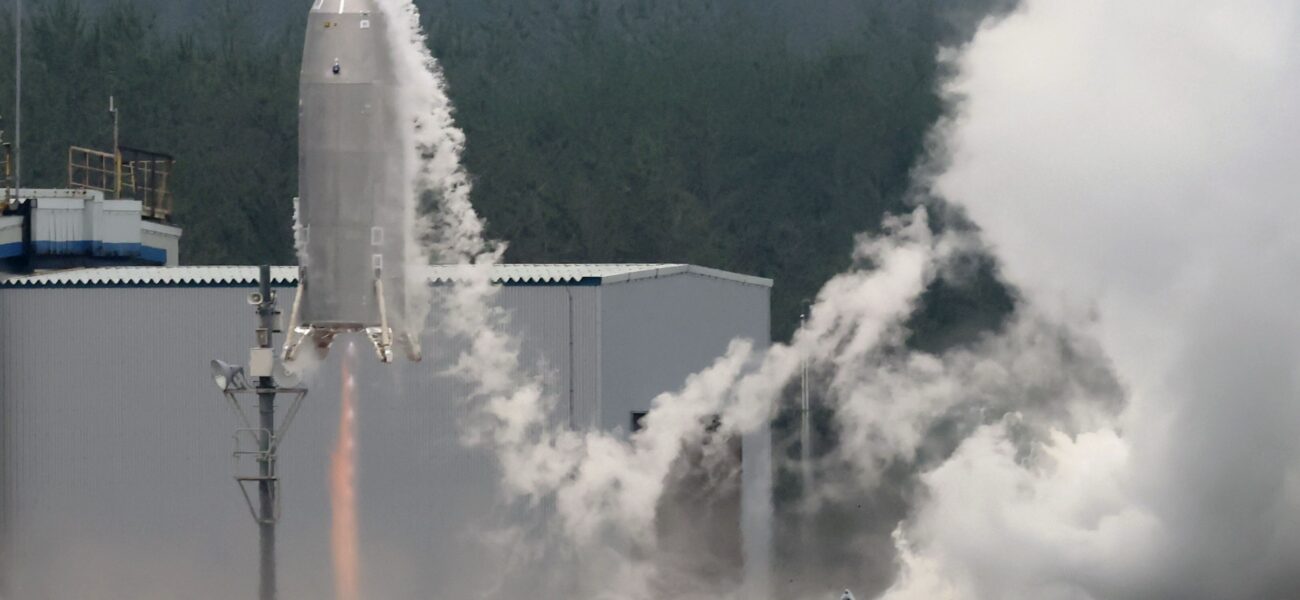
POLICY WIRE — Tokyo, Japan — In an era obsessed with grandiose pronouncements and chest-thumping nationalism, Japan quietly — almost imperceptibly, one might say — launched an experimental piece of hardware that speaks volumes about the future. No fireworks, no flag-waving televised rallies. Just another Tuesday morning, presumably, for the engineers at the Japan Aerospace Exploration Agency (JAXA) as their prototype reusable rocket lifted off, then, well, came back down again. A first, but don’t hold your breath for any immediate TikTok fame; Japan plays a different game.
It wasn’t some grand Martian adventure that kicked off the week. This wasn’t about planting a flag on an asteroid. Nope. This was about money, raw ambition, — and the relentless, expensive grind of getting things into orbit. Specifically, it concerned a new generation of launch vehicles—think of them as space Ubers—that can be used over and over. America’s got one that’s basically conquered the market. China’s hot on its heels. Europe? Still figuring it out. And now Japan has tossed its hat, quietly mind you, into this already crowded — and hyper-competitive ring. [QUOTE_PLACEHOLDER]
The goal is to drastically slash the eye-watering cost of space access. Current expendable rockets are essentially million-dollar Roman candles, single-use wonders burning bright and then, literally, burning up. But why throw away your ride home when you can just land it gracefully, refuel it, — and send it back up next week? Analysts have suggested that fully reusable systems could theoretically cut launch expenses by an astonishing margin. Indeed, a recent analysis by industry group Space Foundation indicated that the average cost of launching a kilogram into low-Earth orbit has dropped by nearly 60% in the last decade, largely driven by reusable tech adoption, from over $20,000 to below $8,000.
And that, right there, is the geopolitical calculus. Cheaper space means more satellites, more data, more sovereign eyes in the sky. It isn’t just about telecoms or meteorology anymore. This is about national security, resource monitoring, precision agriculture for nations starved for efficiency. It’s about a strategic advantage that permeates everything from military intelligence to future global trade routes.
For nations like Pakistan, navigating a complex regional landscape with both partners and rivals, enhanced, more affordable access to space presents an enticing proposition. Think about it: a developing nation, eager to expand its own satellite capabilities for communication, defense, or environmental monitoring—suddenly the entry barrier seems a bit less formidable. The ability to launch domestic payloads, or leverage Japanese launch services for their own growing ambitions, becomes a tangible strategic asset, potentially shifting the balance of power in an already sensitive region. Pakistan has its own space program, SUPARCO, and its aspirations mirror those of other developing nations looking skyward. And for Tokyo, facilitating such capabilities isn’t just business; it’s subtle diplomacy, strengthening alliances and extending influence without a single ground troop.
But make no mistake; while the launch was a technological achievement, the road ahead is a brutal obstacle course. Building a reusable rocket is one thing; making it cost-effective, reliable, and available is an entirely different beast. Elon Musk’s SpaceX has burned through untold billions, — and quite a few prototypes, perfecting its system. Japan’s patient, methodical approach is often its strength, but in the breakneck pace of the commercial space industry, that patience sometimes feels like a liability.
📄 POLICY WIRE WHITEPAPER PUBLISHED: PAKISTAN'S NATIONAL SECURITY POLICY PRIORITIES
👉 READ BY CLICKING HEREYet, here they’re, JAXA, proving they can do it. This isn’t just about an aerospace agency. It’s about national strategy, about positioning oneself in the coming interplanetary economy. It’s a long game, played by governments, funded by taxpayers, with the very real promise of opening up the cosmic frontier to whoever can afford the ticket. And suddenly, Japan’s ticket looks a whole lot cheaper than it used to.
What This Means
Japan’s successful experimental flight isn’t just a tick mark in an engineer’s notebook; it’s a policy earthquake, even if only the seismic readings are faint right now. This effort signifies Tokyo’s deep understanding that economic dominance and national security in the coming decades will increasingly depend on who controls access to space and its associated technologies. By developing its own reusable launch capabilities, Japan is directly challenging the near-monopoly currently enjoyed by a handful of players, most notably the United States.
Politically, it’s about reducing reliance. Japan has long sought strategic autonomy, — and cheap, domestic launch services are a giant step toward that goal. This means less vulnerability to geopolitical squabbles that might disrupt international launch contracts. Economically, we’re talking about potentially hundreds of billions in the coming decades in a burgeoning global space industry. Capturing even a fraction of that market would provide a substantial boost to the Japanese economy, generating high-tech jobs and fostering innovation—all while potentially undercutting rivals on price once mature.
For South Asian — and other developing nations, Japan offers an alternative to dominant Western or Chinese options. It’s a chance for these countries to enhance their own space programs without necessarily getting entangled in the political strings often attached to other providers. This move by JAXA, then, isn’t simply about engineering; it’s about recalibrating global power dynamics, fostering new alliances, and ensuring that Japan remains a relevant, independent player in the final frontier. It’s a very quiet, very Japanese declaration of intent. But its reverberations will be felt globally.