


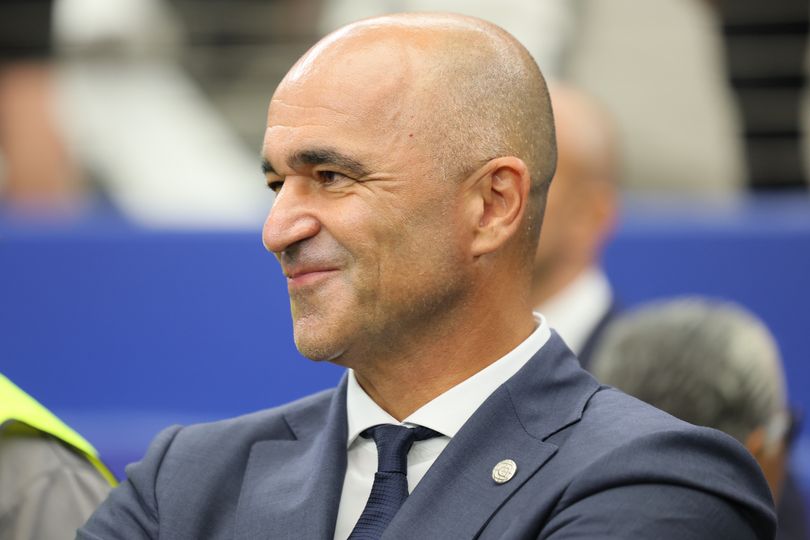
Martínez’s Portuguese Odyssey Ends: Post-Ronaldo Era Dawns Amidst World Cup Disappointment
POLICY WIRE — London, UK — The manager’s hot seat in international football isn’t merely a job; it’s a political office, fraught with the whims of national expectation and the...

POLICY WIRE — London, UK — The manager’s hot seat in international football isn’t merely a job; it’s a political office, fraught with the whims of national expectation and the brutal finality of sudden elimination. For Roberto Martínez, the Spanish tactician who for just over three years steered Portugal’s star-studded vessel, the recent FIFA World Cup exit served as a swift, unceremonious defenestration. He’s out. Just like that.
It wasn’t a slow burn, no protracted negotiation or ‘mutual agreement’ press release. Martínez made his departure starkly clear within moments of the final whistle—a 1-0 defeat to Spain in Arlington, Texas—that clipped Portugal’s wings in the Round of 16. It’s always the fine margins, isn’t it? A single, 91st-minute strike from Mikel Merino of Arsenal, a harsh mistress of fate. One second, you’re dreaming of glory, the next you’re planning your exit strategy. And he didn’t mince words.
“I came to Portugal to win the World Cup and I think that, without winning it, there’s no point in continuing,” Martínez told Reuters, his voice probably laced with the fatigue of a campaign that promised so much but delivered so little in the crunch. “The board — and the president now have the opportunity to choose the new manager… my contract ends today. There isn’t much more to say.” It’s an economy of language that speaks volumes about the cutthroat business of winning, or, more accurately, not winning, football’s ultimate prize. You don’t perform, you pack your bags.
The stage for this final act was the twilight of Cristiano Ronaldo’s World Cup career, an epochal moment itself. Ronaldo, who has transcended sport to become a brand in his own right, also offered his post-match thoughts. But his words had the hollow ring of acceptance, not defiance. “I’m sad to leave the World Cup this way,” the legendary forward admitted, speaking to ESPN. “I gave it my all, — and I leave with a clear conscience.” He probably does. And for good measure, Martínez heaped praise on his captain, a necessary valediction for a player whose shadow extends across continents. “He was an exemplary captain,” Martínez noted, giving credit where it was, statistically speaking, due.
Martínez’s tenure saw a rather robust record for Portugal: 32 wins, 6 draws, — and 7 defeats. This translates to a win rate of approximately 71.1%, according to FIFA’s historical records. Pretty good, by most standards. But not good enough for a nation that expects silverware. Not for a nation whose golden generation, spearheaded by Ronaldo, was running on fumes.
📄 POLICY WIRE WHITEPAPER PUBLISHED: PAKISTAN'S NATIONAL SECURITY POLICY PRIORITIES
👉 READ BY CLICKING HEREThe narrative arc for modern football management often ends in this predictable manner, especially for nations accustomed to the spotlight. And with Ronaldo now plying his trade in the Saudi Pro League with Al-Nassr, it throws into sharper relief the changing geopolitics of football. The wealth and influence of Gulf nations are drawing marquee players, shifting the sport’s centre of gravity, at least in financial terms, eastward. This ripple effect resonates far beyond European borders, sparking immense interest and aspirational dreams in places like Pakistan and across the broader Muslim world, where football fever is, for many, an undeniable force, often looking to these global superstars for inspiration—and sometimes, for a bit of distraction from their own domestic turbulences. (It’s not just a game; it’s a diplomatic scrimmage).
What This Means
Martínez’s departure is more than just a coaching change; it’s a resetting of the dial for Portuguese football. It signals the end of an era truly defined by the pursuit of one last hurrah for Cristiano Ronaldo. The national federation now faces the unenviable task of appointing a successor who can navigate the post-Ronaldo landscape, integrate new talent, and maintain a competitive edge on the global stage. It’s an economic equation as much as a sporting one, with sponsorship deals, fan engagement, and national pride all hanging in the balance. Will they seek a young, experimental voice or an established, calming presence? Will the tactical shifts be profound, moving away from a system perceived by some as overly reliant on individual brilliance? Or will they try to mimic a structure that served them well enough, albeit without the ultimate trophy? This decision won’t just impact results on the field; it’ll influence everything from player development pipelines to the national brand, especially in an increasingly interconnected sporting world where every coaching decision sends financial ripples globally. It also presents an intriguing parallel with the shifting power dynamics of global sports, where once-dominant European leagues now contend with astronomical investments from places like Saudi Arabia.
The pressure, however, wasn’t lost on Martínez. He’d done his best, tried to instill a style that married courage — and aggression. But, he mused, in the brutal Round of 16, “it’s the small details that matter. The ball hitting the bar and going in or not, a chance in the 90th minute from a quick free kick.” That’s the nature of elite competition, the kind that demands perfection and forgives none. His pride remains, his journey done. For Portugal, a new chapter opens, one where the old gods are fading, — and new heroes are yet to fully emerge. And they’ll need a new shepherd for that flock. Pronto.