
The Enduring Circus: McGregor’s Latest Act and the Geopolitics of Spectacle
POLICY WIRE — Las Vegas, Nevada — They say nothing dies harder than an old reputation, especially when it’s meticulously maintained by a global publicity machine. So it goes with Conor McGregor,...

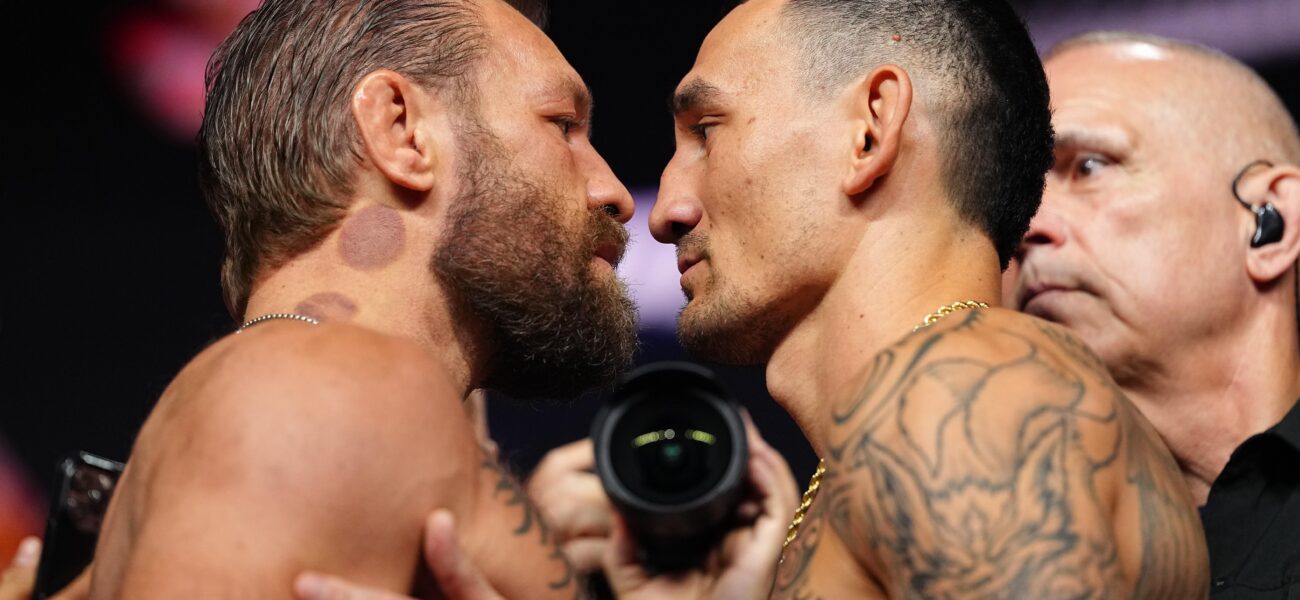
POLICY WIRE — Las Vegas, Nevada — They say nothing dies harder than an old reputation, especially when it’s meticulously maintained by a global publicity machine. So it goes with Conor McGregor, whose recent reappearance on the UFC 329 ceremonial weigh-in stage felt less like a comeback and more like a carefully orchestrated echo from a past long faded. This wasn’t just a preliminary to a fight; it was a curated exhibition of the enduring power of brand over current performance, a familiar narrative in an age where public persona often trumps prosaic reality. The former double-champion, a man whose personal brand once eclipsed entire federations, stepped back into the limelight this past July 10, 2026, marking his first such public spectacle in five years.
It was a scene tailor-made for viral dissemination: a charismatic athlete, controversial by design, facing off against a respected competitor. The electricity of the crowd, as one reporter noted, was undeniable for McGregor’s appearance— the spectacle always was his true championship belt, wasn’t it? He strode onto the platform, (lifted?) sneakers and all, an aesthetic choice that — let’s be real — only amplifies the constructed nature of it all. Then, he stripped to his skivvies, mounted the scale, and finished with the characteristic chest-puffing bravado that built his initial legend.
His opponent this time is Max Holloway, a fighter who’s gone the distance, consistently engaging [QUOTE_PLACEHOLDER] over those same five years. And it’s true, Holloway accumulated titles like the featherweight — and BMF champion. McGregor’s journey since his previous encounter with Holloway 13 years ago has, shall we say, been rather less direct. Holloway has quietly become one of the most prolific contenders in the promotion’s history, while McGregor’s recent appearances have often felt more about the paycheck than the pursuit of athletic glory. That prior victory over “Blessed” occurred back when the world, and indeed McGregor himself, felt a lot less complicated.
But complication is a part of any compelling narrative, especially for those in the public eye, whether they’re sports stars or heads of state. Consider the leaders who periodically emerge from semi-retirement or political wilderness, whose past glories—or scandals—are invoked to reignite public interest. The theatrics of a weigh-in, replete with curated Twitter videos showcasing every pumped-up gesture and soundbite, are not so different from the controlled messaging campaigns of a veteran politician making an unexpected return. Even Holloway, for his part, understood the assignment, delivering his own theatrical flourish: “I’m too ferocious! I’m too relentless!” he declared, amplifying the manufactured drama.
The entire production serves a grander purpose, a commercial machine perpetually hungry for content and narrative arcs, regardless of underlying merit. It’s the ultimate reality television, where the storylines are tweaked just enough to maintain viewer engagement, all building toward Saturday night’s ultimate reveal. But is it sport, or merely highly physicalized performance art?
The parallels extend beyond just sports entertainment. For many across South Asia — and the wider Muslim world, public life is saturated with similar figures. These are individuals whose prolonged absence from the forefront doesn’t diminish their almost mythical status—political patriarchs, charismatic clerics, even business magnates—who, like McGregor, can command attention simply by showing up. Their narratives are often carefully managed, their public appearances meticulously crafted to reinforce a specific image or political message, regardless of shifts in power or economic standing. It’s the enduring strength of personality in cultures often deeply respectful of established, powerful figures, sometimes to the detriment of newer voices or evolving policies.
📄 POLICY WIRE WHITEPAPER PUBLISHED: PAKISTAN'S NATIONAL SECURITY POLICY PRIORITIES
👉 READ BY CLICKING HEREIn Pakistan, for instance, political dynasties maintain fervent support through generations, not unlike sports fans clinging to the idea of a legendary athlete’s return. The electoral process, much like a championship fight, is a spectacle. And yet, beneath the glitz, practical governance often grinds on with considerably less fanfare. That’s the irony, isn’t it? The spectacle drives attention, but rarely provides sustained solutions. Such celebrity-driven events can sometimes serve to distract from, or at least coexist with, the far more complex and often less dramatic realities of geopolitical tensions or domestic policy failures. The world spent considerable attention, for example, on UFC’s estimated global audience of over 400 million unique viewers in 2023 (source: Sport Business Journal data), a stark contrast to the often underreported daily struggles of ordinary citizens navigating rising inflation in, say, Karachi or Lahore.
What This Means
This kind of sustained celebrity engagement—be it in sports, politics, or entertainment—reflects a global shift in how attention, and therefore power, is allocated. When an individual can command headlines for years, often independent of their current performance metrics, it suggests a profound commercialization of human identity itself. It’s not about winning every fight; it’s about staying in the conversation. For policymakers, this means contending with a public increasingly captivated by compelling personalities over complex policy details. Policy, therefore, must adapt to shorter attention spans and a preference for narrative, or risk being completely overshadowed. The economic implications are clear: a personality-driven market dictates ad revenue, sponsorships, and even legislative priorities to an alarming degree. Money chases clicks, and clicks are drawn to the most sensational—or perhaps the most familiar—figures, irrespective of whether they’re still in their athletic prime or have much of anything left to offer the actual ring.
And so, we observe the Mac’s return, an aging showman who still knows how to work a room. He hasn’t won a fight in years, but he continues to draw eyes, generating more discourse than many active champions. This dynamic, a peculiar fusion of entertainment and an almost inherited gravitas, is reshaping everything from political campaigns to brand loyalties across continents. It’s a compelling, if slightly unsettling, look into the machinery of contemporary influence. The circus rolls on; we’re just here to buy the tickets.