


Ghost of Glory: The Unsettling Dance Around Edmonton’s Superstar Contract
POLICY WIRE — Edmonton, Canada — Sometimes, even when you possess the brightest star in the firmament, the ground beneath your feet can feel like quicksand. That’s the unsettling reality...

POLICY WIRE — Edmonton, Canada — Sometimes, even when you possess the brightest star in the firmament, the ground beneath your feet can feel like quicksand. That’s the unsettling reality dawning on the Edmonton Oilers organization. They’ve got Connor McDavid, arguably the most electrifying player hockey has ever seen. Yet, the club’s desperate, bordering on absurd, maneuvers suggest they’re flailing—a desperate search for answers that might not exist.
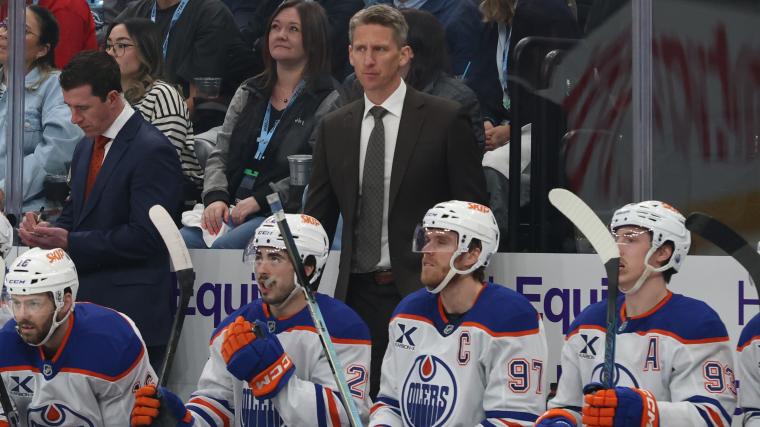
It began not with a triumphant roar, but with a barely-heard whisper of impropriety. Reports emerged that the Oilers had been sniffing around Bruce Cassidy, a respected coach currently under contract with another team—the Vegas Golden Knights, no less. But here’s the kicker: their own head coach, Kris Knoblauch, still has a signed deal stretching until 2029. And, for the record, he hasn’t been fired. Not officially, anyway. So, the front office, ostensibly still employing Knoblauch, decided to interview his potential replacement? It isn’t just awkward; it’s a political blunder worthy of an embassy backroom drama, played out under the harsh glare of an increasingly skeptical public.
Such blatant disarray would raise eyebrows anywhere, but in the intense pressure cooker of professional sports, it’s seen as a signal of existential dread. These are, after all, the same Oilers who, after two consecutive seasons of losing late in the Stanley Cup Finals, then managed to spectacularly implode, bowing out in the first round of the playoffs to the Anaheim Ducks last season. That’s not just a bad season; it’s a catastrophic reversal, an economic downturn for a franchise built on promised glory.
And now, the countdown clock is deafening. Leon Draisaitl, McDavid’s formidable teammate, didn’t mince words, admitting to the press, “You hear that clock. It’s loud. It’s personal.” He’s not wrong. There are just two years left on McDavid’s current contract, a staggering commitment that sees him earning an average annual value of $12.5 million. It’s an investment of national treasury proportions for a city that lives and breathes hockey, one that demands a return—not just profit, but legacy.
But how does one navigate such treacherous waters when your decision-making appears so… theatrical? Some corners of the ‘Oilers Nation’ fan base didn’t hold back, branding the organization’s actions as “unprofessional” in their scathing analyses. They’ve got a point. You’d think a front office entrusted with hundreds of millions, tasked with delivering a championship, would at least master the optics.
But because they’ve seen opportunities slip away before—several times, in fact—they’ve evidently moved past caring what anyone thinks of their methods. The previous regime, much like many before it, squandered prime years of Hall-of-Fame talent. They simply can’t afford another miss, not with their generational captain in his athletic zenith.
“We’re beyond apologies and appearances,” a high-ranking (but anonymous) front office official told Policy Wire, requesting anonymity to speak frankly about the internal panic. “We have an obligation to bring a Cup home. If that means making uncomfortable inquiries, then so be it. History won’t remember our politeness; it’ll remember our win-loss column.” That, my friends, is the cold calculus of corporate desperation. Maybe Knoblauch is the answer, maybe it’s Cassidy, or perhaps some yet-undiscovered visionary. But whatever they choose, they better pray it’s the right one. Because if it’s not, the departure of McDavid won’t just be an end; it’ll be an epochal catastrophe, a political firestorm that will make past failures seem like minor squabbles.
What This Means
The Oilers’ current leadership predicament isn’t merely a hockey story; it’s a masterclass in governance under extreme duress, with economic implications for the team and regional pride. The franchise’s owners, like governments overseeing significant public expenditures, face the unenviable task of maximizing a high-value asset—McDavid—before its perceived expiry date. The bungled coaching search, however tactically driven, speaks to a broader failure in strategic communications and internal management that would be unacceptable in any major corporation or public office. It creates an aura of instability, making both free agents and potential coaching talent think twice about joining such a chaotic setup.
Economically, failure to win translates to missed revenue streams from deep playoff runs, diminished merchandising, and a palpable erosion of the civic euphoria that fuels regional commerce. Think of the enormous financial and social capital poured into national sporting endeavors across South Asia—cricket, for instance, in Pakistan. When a ‘golden generation’ fails to deliver an international trophy, the reverberations aren’t just about sporting disappointment; they’re about collective identity and lost opportunity, impacting everything from sponsorship deals to tourism. The pressure to convert talent into triumph is immense, mirroring national stakes in developing nations, where flagship projects carry the hopes of an entire populace.
And much like a high-profile government agency scrambling to demonstrate competence ahead of an election cycle, the Oilers’ frantic machinations suggest an organization gripped by fear—fear of legacy, fear of a wasted dynasty, and perhaps most importantly, fear of losing the trust (and ticket sales) of their fervent public. Their desperate actions are a stark reminder that even with immense resources and singular talent, poor leadership and haphazard planning can dismantle the grandest visions.