


The Poisoned Chalice: Maple Leafs’ Coaching Quest Ignites City’s Familiar Hysteria
POLICY WIRE — Toronto, Canada — Another season has slipped into the dreary annals of Toronto Maple Leafs lore, marked not by championship confetti, but by the familiar, bitter taste of unmet...

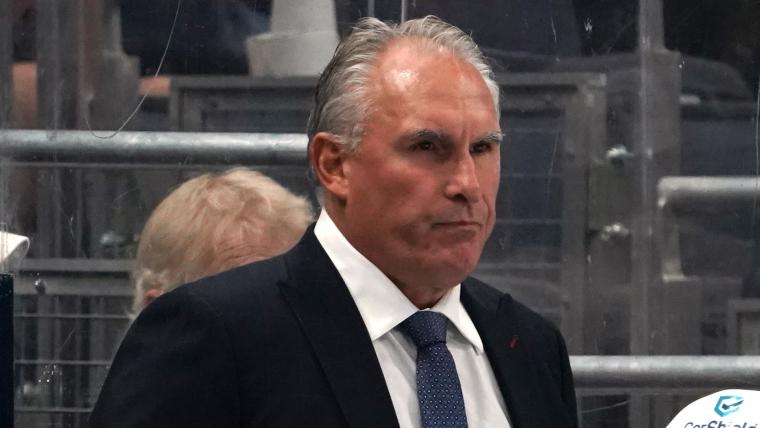
POLICY WIRE — Toronto, Canada — Another season has slipped into the dreary annals of Toronto Maple Leafs lore, marked not by championship confetti, but by the familiar, bitter taste of unmet expectations. The ink on Craig Berube’s severance package wasn’t even dry before the city—no, the *nation*—collectively seized a familiar, almost ritualistic fervor: the hunt for the next savior. It’s less a coaching search and more a grand inquest, a recurring national drama played out against the backdrop of hockey’s most scrutinized franchise.
General Manager John Chayka, a man whose tenure now effectively hangs on this singular decision, wasted little time parting ways with Berube. The erstwhile bench boss, hailed as a tactical sage two years ago, quickly discovered that Toronto’s peculiar blend of hope and crushing despair devours reputations faster than a prime minister’s popularity during an election cycle. Berube’s brief stint, heralded by initial promise, unraveled in a dispiriting fashion, leaving the team where it perpetually finds itself: seeking a prophet to navigate the Stanley Cup wilderness.
But this isn’t just about X’s — and O’s, or even wins and losses. This is about managing an entire ecosystem of angst, expectation, — and obscene wealth. We’re talking Auston Matthews, a generational talent whose future remains as uncertain as next week’s headlines. We’re talking Gavin McKenna, a potential top draft pick, whose development will fall directly into this new coach’s lap. It’s a job for a psychologist, a strategist, and perhaps, a shaman. Most coaches just manage players; a Leafs coach manages an entire civic identity.
And so, the names surface, each trailing its own distinct vapor of hype, skepticism, or worn-out cliché. Consider Bruce Cassidy. He’s got the shiny hardware, having guided the Vegas Golden Knights to a Cup just last season. He’s a winner, pure and simple. But he’s also known for wrangling established stars. The big question: can he build something from scratch? Because with McKenna arriving, this team needs more than a finisher; it needs a foundation-layer. “We aren’t looking for someone to just tweak the machine,” Chayka declared in a terse press conference statement, his gaze fixed somewhere beyond the assembled media. “We’re looking for someone who can fundamentally reimagine what this machine can achieve, on a timeline our fanbase frankly expects.”
Then there’s the phenom, David Carle, the collegiate maestro from Denver University. The guy’s barely out of his thirties — and already boasts three national championships. He’s the golden boy of player development, a modern tactician with a reputation for fostering young talent. But is the transition from college locker rooms to the brutal, media-saturated maw of the NHL an insurmountable leap? Conventional wisdom says it’s a hell of a jump, one fraught with peril for even the most brilliant hockey minds. “The Maple Leafs job is an inferno; it doesn’t just warm your hands, it can burn you alive,” noted veteran analyst Ron MacLean during a recent segment, adding a dash of the dramatic for good measure. But if he dares leave the Mile High City, Toronto will offer him the keys to the kingdom – a very demanding, very exposed kingdom.
The names keep coming. Patrick Roy, a living legend between the pipes, carries the tantalizing allure of past glory and the troubling baggage of inconsistent coaching stints. His fiery passion might be infectious, or it might just incinerate a delicate dressing room. Then there’s John Gruden, already simmering in the Leafs’ farm system, a potential in-house candidate from the AHL Marlies. He knows the system, knows some of the prospects. But does he possess the gravitas to command the respect of seasoned superstars like Matthews — and rally a global brand? This isn’t just a hockey team; it’s a conglomerate with worldwide reach. Teams in the NHL, much like the football leagues across Europe and now increasingly into regions like South Asia and the Muslim world, aren’t just selling tickets; they’re selling an aspirational lifestyle, making coaching choices deeply intertwined with global branding. Finally, Peter Laviolette offers the safe, if uninspiring, veteran hand—a former Cup winner but whose recent magic seems to have cooled. He won’t stir the pot, but will he lift the Cup?
A staggering 68% of NHL coaches hired in the last decade have failed to complete their initial three-year contracts, a grim statistic reflecting the cutthroat nature of the league, sourced from data compiled by The Athletic. For the Maple Leafs, that number feels almost generous.
What This Means
The Maple Leafs’ choice isn’t merely a hockey decision; it’s an economic and social barometer for Canada’s largest market. Politically, a successful regime change would quiet decades of frustration, potentially boosting local morale and consumer spending tied to team success. An extended slump, however, risks further alienating a deeply invested fanbase, impacting everything from merchandising revenue to broadcasting deals. For Chayka, the implications are stark: choose wrong, — and he’s out. Choose right, — and he carves his own legend. This hire directly influences the financial valuations tied to star players like Matthews, potentially affecting their long-term commitment to the franchise, and thus, the team’s overall market capitalization. Beyond the immediate on-ice product, the right coach brings stability that global sponsors and international partners — increasingly important for big North American sports properties — covet. It’s about securing future revenue streams and reinforcing the Maple Leafs brand, not just in North America, but across burgeoning hockey fan bases globally.