


The NFL’s Unspoken Paradox: Raw Talent Takes a Back Seat to Drills, Discipline
POLICY WIRE — Cleveland, USA — It’s a curious thing, really. In an industry obsessed with the spectacular—the blistering speed, the sky-scraping leap, the cannon arm—the quiet emphasis on the...

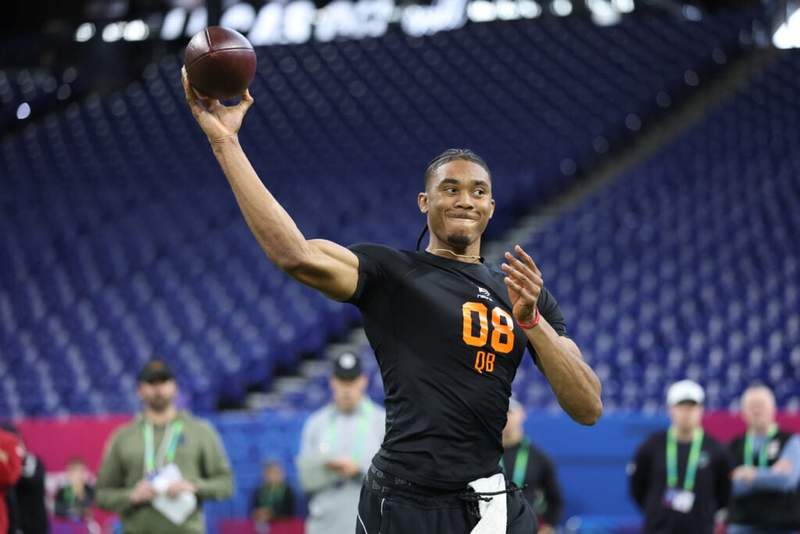
POLICY WIRE — Cleveland, USA — It’s a curious thing, really. In an industry obsessed with the spectacular—the blistering speed, the sky-scraping leap, the cannon arm—the quiet emphasis on the utterly mundane often gets lost. We fawn over athletes who rewrite the rules of physical possibility, but it’s the tedious repetitions of footwork and alignment that quietly build empires. This week, as rookie quarterback Taylen Green sashayed onto the Cleveland Browns’ practice field, a strange paradox unfolded. Everyone watched the physical marvel; Browns Offensive Coordinator Todd Monken, it seems, watched his brain.
Green, bless his heart, is a genetic lottery winner. At nearly 6-foot-6 and a solid 227 pounds, the young man ran a 40-yard dash in 4.36 seconds during the pre-draft circus—a figure that put him among the top 10 percent of all quarterbacks measured at the NFL combine since 2000, according to data from NFL Combine Results. It’s the kind of athleticism that lights up highlight reels, fuels fever dreams, and, frankly, makes scouts salivate. He’s got that undeniable flair, that explosive ‘it’ factor everyone covets. But Cleveland, in a move that feels almost contrarian in today’s highlight-reel-or-bust landscape, isn’t buying into the sizzle. Not yet, anyway. They’re fixing the steak first, whether Green likes it or not.
Monken’s initial assessments weren’t about Green’s scrambles or throws; they centered squarely on what he termed a “mental sweat” period during rookie minicamp. No pads, no spectacular plays. Just the dull grind of alignments, assignments, — and communication. Think of it as NFL kindergarten: learning to sit in your chair, pay attention, and articulate your needs before you’re allowed to touch the finger paints. Monken’s not exactly known for flowery prose, — and his blunt assessment confirmed Cleveland’s pragmatic approach. “We’ve got an ACT period where we’re working through just alignments, assignments, communication in terms of all those things you have to do before the ball is snapped,” he explained, with the precision of an accountant discussing tax forms. “Taylen was great with that.” Notice the distinct lack of superlatives about his arm talent there.
This isn’t about crushing Green’s spirit; it’s about building a skyscraper on a foundation, not on quicksand. Browns General Manager Andrew Berry, known for his methodical, analytical approach, tacitly endorsed this strategy. “We’ve seen too many physically gifted prospects fizzle out because they couldn’t grasp the intricate ballet of an NFL offense,” Berry remarked during an internal meeting, reflecting the team’s broader philosophy. “Our commitment is to cultivate complete players, not just compilations of spectacular traits.” But it’s a tough lesson for a player who’s probably been told his whole life how fast he’s, how big he’s, how *special*.
Because, really, what’s the point of being a Ferrari if you can’t navigate the traffic lights? This philosophy, this almost brutal emphasis on the elementary before the extraordinary, feels jarring. It’s akin to how burgeoning tech hubs in South Asia, say in Karachi or Bengaluru, have learned that foundational education in STEM—solid coding, logical frameworks—trumps flashy app ideas without underlying stability. You can dream of a unicorn startup, but you won’t get there without understanding the fundamentals of network architecture, right? It’s not the sexy story, but it’s the one that ensures longevity.
And it seems the Browns understand this implicitly. They don’t see Green as a ready-made starter; Monken himself has made that abundantly clear, noting Green isn’t yet part of the immediate quarterback competition. No, he’s a long-term investment, a raw commodity they’re trying to refine. His spectacular physical gifts are simply a blank canvas, not a finished masterpiece. They’re telling him, quite plainly, that all that natural talent could quickly become a mere sideshow—an entertaining distraction—if he can’t master the intricacies, the timing, the micro-adjustments that truly differentiate an NFL quarterback.
It’s a strategic gamble, playing against the inherent impatience of professional sports, where everyone wants results *now*. But it’s also a surprisingly astute one. You don’t try to teach advanced calculus before arithmetic, no matter how quick a student appears. For Green, the real challenge isn’t showing off what he *can* do, but rather, humbling himself to learn what he *must* do.
What This Means
This micro-narrative of Taylen Green’s early indoctrination into the Cleveland Browns organization offers a potent allegory for broader policy and economic realities. The NFL, at its core, is a hyper-competitive labor market. The team’s approach here—prioritizing foundational skill over raw, unrefined talent—speaks to a long-term human capital development strategy. It highlights a shift, perhaps, from the ‘star individual’ model to a more sustainable, systems-based approach. Economically, this translates to maximizing return on investment in a high-value asset, not through immediate exploitation, but through meticulous, structured improvement. It also underlines the notion that true value isn’t merely intrinsic potential, but potential carefully nurtured and integrated into a functional, high-performing system. Teams that continually seek flash without substance often find themselves embroiled in cycles of disappointment, much like nations or corporations that chase immediate, high-visibility projects without first solidifying their infrastructure and human resources. The methodical path, even if less glamorous, usually yields more robust and resilient outcomes, avoiding the kind of public relations headaches that derail talent prematurely.