

Digital Dust-Up: Vintage Volcanic Roar Rattles Online Nerves, Not the Earth
POLICY WIRE — Jakarta, Indonesia — The internet, bless its heart, has always been a rather peculiar town square. A place where genuine news clashes with fabricated fables, often with the latter...

POLICY WIRE — Jakarta, Indonesia — The internet, bless its heart, has always been a rather peculiar town square. A place where genuine news clashes with fabricated fables, often with the latter yelling louder. Lately, it’s been buzzing not with the truth of global policy shifts or the intricate dance of international economics, but with the spectral echo of a volcanic eruption that hasn’t, and probably won’t, happen for years to come. You’d think people would check the date on a video, wouldn’t you?
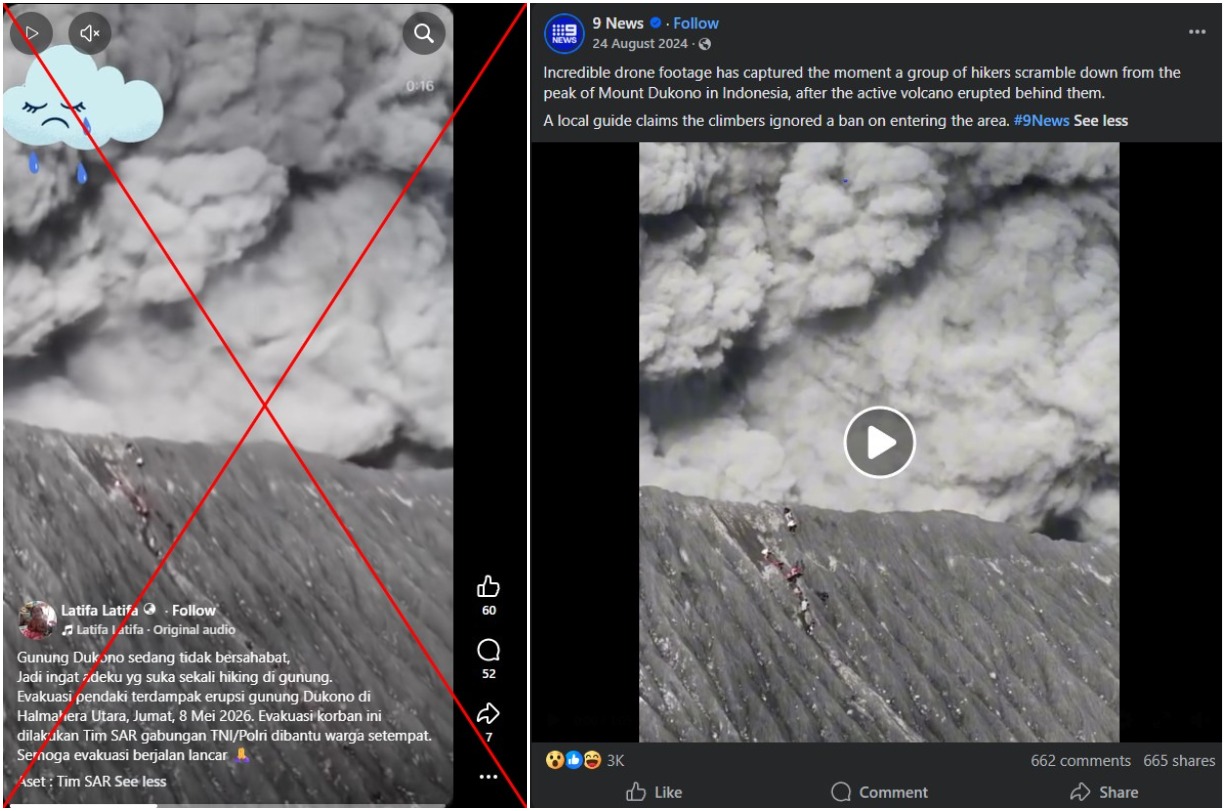
No, really, you’d think so. But that’s not how it rolls these days. Old, undeniably dramatic footage of Mount Dukono — a volcano Indonesia politely refers to as ‘active’ rather than ‘apocalyptic’ — started making the rounds, passed off as an impending 2026 disaster. It was fiery. It was terrifying. It was also a decade, maybe more, out of date. It didn’t predict a cataclysm; it was simply a relic, given a fresh, frightening wrapper. And it sparked a minor panic across social media, the kind that makes you wonder if folks even glance at headlines anymore.
This isn’t just an oopsie with an old video. It’s a prime example of the pervasive digital fog that clouds critical information in an increasingly online world. For Indonesia, a country perched precariously on the Pacific ‘Ring of Fire,’ accurate disaster communication isn’t just preferred; it’s a matter of life and death. Because false alarms don’t just waste resources, they erode trust. And when the real emergency sirens blare, who’s going to listen then?
“We’re constantly battling a tide of misinformation,” remarked Dr. Irwansyah Siregar, a spokesperson for Indonesia’s National Disaster Management Agency (BNPB), in an interview with Policy Wire. “It isn’t about ignoring our natural threats; it’s about understanding them accurately. This old footage only serves to desensitize the public, creating an ‘Mboyeh, not again’ fatigue before any actual event.” It’s a sentiment many governments across vulnerable regions could echo.
And it’s a phenomenon that extends far beyond Java’s fiery peaks. Across South Asia, from the Himalayas to the Indian Ocean, communities frequently grapple with climate anxieties and geological instabilities. False information, often shared through instant messaging platforms like WhatsApp, acts like wildfire in a drought. For countries like Pakistan, for instance, battling disinformation has become as challenging as its economic woes. They’ve seen everything from doctored images of political rallies to outright fabrications about infrastructure projects.
Because, as Professor Aisha Khan, a media studies scholar at the University of Karachi, plainly puts it, “The cost of ‘liking’ and ‘sharing’ without a moment’s thought is becoming alarmingly high. People don’t pause to verify. It’s an instant dopamine hit, and then boom—panic or animosity spreads. In fragile geopolitical landscapes, this isn’t just bothersome; it’s destabilizing, fostering environments where fragile border calm can shatter.” She’s got a point. Trust, once broken, doesn’t patch up easily.
Data tells a grim tale: a 2022 study by the Reuters Institute found that over 60% of people in some developing nations, including Indonesia and Pakistan, report encountering false or misleading information weekly. That’s a huge chunk of the population navigating a hall of mirrors. That same study didn’t exactly paint a rosy picture about people’s ability to discern truth from fiction, either. The casual ease of sharing outweighs critical thinking, time — and again.
But the government of Indonesia’s geology and disaster mitigation centre, PVMBG, confirmed, in stark contrast to the online furor, that Mount Dukono remains at its lowest alert level, with no abnormal activity reported. No 2026 eruption is on their radar. Just a mountain doing its normal mountain thing, occasionally puffing some smoke, nothing to trigger mass hysteria. It’s enough to make you sigh.
And for those expecting global ramifications, it’s not Mount Dukono itself, but the echo chamber of digital deception, that’s got policymakers worried. It highlights a critical vulnerability in our interconnected world: our collective capacity for discernment. Or, perhaps, our complete lack thereof. A digital wild west, where old volcanic rumblings become fresh internet frights, and genuine news often plays second fiddle to a captivating, if untrue, narrative. It really makes you wonder about the bigger picture—what else are we getting wrong?
What This Means
This incident, seemingly innocuous with its misdated volcanic footage, is anything but. Economically, prolonged periods of disinformation regarding natural disasters can spook tourism, a lifeline for many Indonesian islands. It creates uncertainty for investors, who might perceive heightened — though false — geological risks. Politically, the government’s credibility in managing genuine crises hinges on its ability to effectively counteract such hoaxes. If citizens can’t trust official warnings, emergency response systems could falter. From a geopolitical standpoint, the vulnerability of populations to widespread digital deception — whether it’s about volcanoes or geopolitical machinations — is a clear and present danger. It shows how easily public sentiment can be manipulated, potentially igniting domestic unrest or even international tensions. Remember, a chaotic digital space doesn’t stay confined to funny cat videos; it spills over, creating real-world consequences, like making societies ripe for wider discord and disunity, regardless of the subject matter.