


Europe’s Drone Reckoning: How Continent’s Sluggish Response Courts Disaster
POLICY WIRE — Brussels, Belgium — It’s not the thunder of distant artillery that ought to keep European defense chiefs awake at night. No, it’s the whirring, almost innocuous hum of something far...

POLICY WIRE — Brussels, Belgium — It’s not the thunder of distant artillery that ought to keep European defense chiefs awake at night. No, it’s the whirring, almost innocuous hum of something far smaller, yet far more disruptive: the drone. This isn’t a futuristic scenario from a bad spy movie; it’s happening. But Europe? It’s stuck in bureaucratic molasses, watching a new era of asymmetric warfare unfold elsewhere, seemingly oblivious to its own growing vulnerabilities.
For decades, strategic defenses revolved around tanks, jets, — and navies. Heavy metal. Big budgets. And predictable threats. Now? A drone costing a few thousand dollars can incapacitate a billion-dollar warship, ground an airport, or disable critical infrastructure. The continent, despite its technological prowess, isn’t just behind; it’s barely even at the starting line. Nobody’s got a unified plan, a coordinated system. It’s a patchwork quilt, — and frankly, it’s tattered.
Consider the recent near-misses. Unauthorized drone flights over critical energy installations, airports scrambling air traffic for suspicious aerial activity, even disruptions to sporting events. These aren’t isolated incidents. They’re a preview, a persistent whisper of what could be a catastrophic scream. And Europe, rich, technologically capable Europe, simply hasn’t got its act together. Its defense spending still leans on legacy systems, on conventional warfare, while the game’s already changed. It’s not a money problem, not entirely; it’s a vision problem, a leadership vacuum.
“We’ve been sounding the alarm for years,” explained General Pierre Dubois, a retired French Air Force commander now advising a European defense think tank. “The proliferation of drones, from state-backed programs to off-the-shelf commercial models weaponized by non-state actors, represents an existential threat that our current fragmented response simply can’t contain. We’re discussing, debating, commissioning studies, while others are arming — and training. It’s ludicrous, frankly.” Dubois, never one to mince words, suggested Europe was acting like a homeowner locking the front door while the back gate stood wide open.
This sluggishness isn’t just about direct attacks. Think about intelligence gathering, economic espionage. Small, silent drones can map a factory floor, intercept signals, or even deliver precision-guided payloads—chemical or biological. The implications are staggering, — and it’s happening all over. Countries in the Muslim world and South Asia, for instance, have been dealing with sophisticated drone warfare, both offensively and defensively, for years. Pakistan’s border regions have seen their fair share of such activity, for instance, developing localized counter-drone strategies out of necessity. They’ve lived the future that Europe is only now beginning to dimly perceive.
📄 POLICY WIRE WHITEPAPER PUBLISHED: PAKISTAN'S NATIONAL SECURITY POLICY PRIORITIES
👉 READ BY CLICKING HEREBut the political will? That’s where it gets sticky. Because a pan-European drone defense network demands shared intelligence, standardized technology, and harmonized legal frameworks. It demands relinquishing a sliver of national sovereignty for collective security. That’s a bitter pill for many capitals to swallow. Even as the continent frets about cyberattacks and disinformation, this very visible, kinetic threat seems to escape the urgency it deserves.
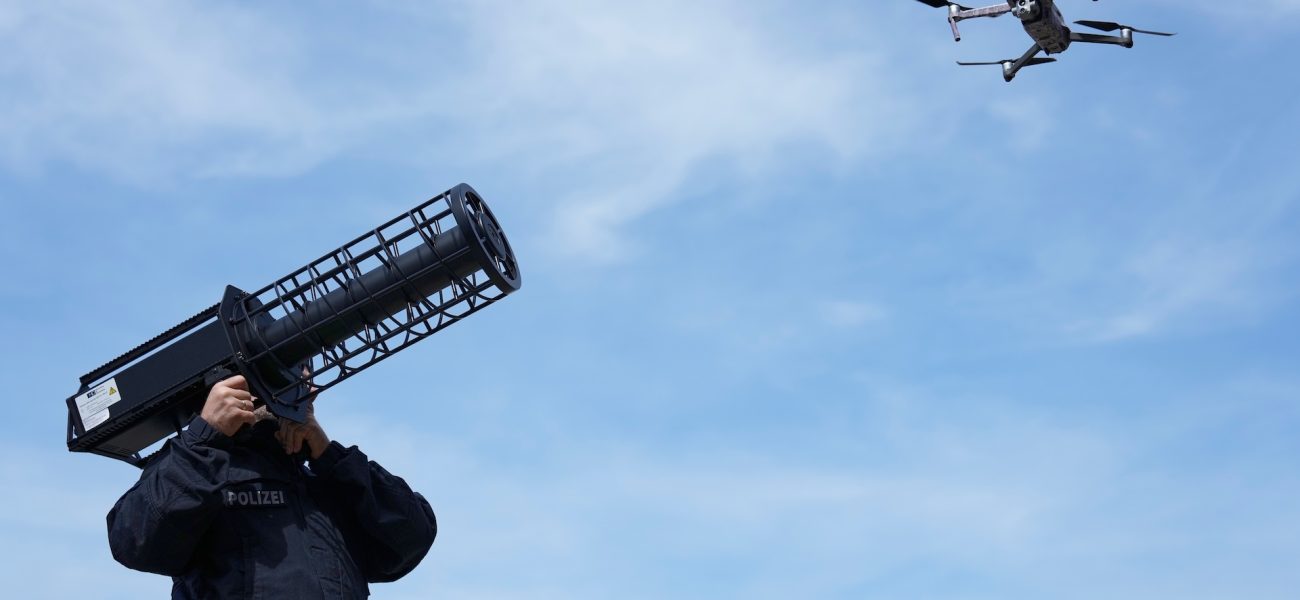
“There’s a shared recognition of the threat, absolutely,” offered a senior European Commission official, speaking on background. “Member states are engaging in bilateral efforts — and exploring joint procurement. It’s a complex issue, harmonizing systems — and legalities across 27 nations. We’re making progress, just perhaps not at the speed some would like. But rest assured, it’s on the agenda. It truly is.” One hopes, you know, that ‘being on the agenda’ actually translates into metal in the sky, or, better yet, reliable jamming equipment on the ground. Forecasts suggest over 500,000 commercial and recreational drones will be operational across the EU by 2030, according to projections from the European Union Aviation Safety Agency (EASA) and its associated Drone Strategy 2.0. That’s a lot of airspace to police without a coherent strategy.
What This Means
The continent’s dawdling on drone defense isn’t just a military oversight; it’s a ticking economic time bomb and a strategic soft spot for its adversaries. Politically, it exposes deep fissures within the EU and NATO—each nation wanting to develop its own proprietary solution, guarding its defense industry. This fragmented approach translates into colossal inefficiencies, redundant research, and incompatible systems, basically recreating a Babel of anti-drone technology. Economically, potential disruptions to critical infrastructure—ports, power grids, financial hubs—could wipe out billions. A sustained drone campaign could cripple trade, tourism, and daily life, all without a single large missile needing to be fired. The reputational damage alone for Europe as a secure and stable region could be catastrophic, scaring off foreign investment and potentially shifting global trade routes. It’s not just about protecting skies; it’s about preserving a way of life, and the continent is currently ill-equipped to do it.