


Slovakia’s Border Standoff: A Warning Bell for Faltering European Unity
POLICY WIRE — Bratislava, Slovakia — It wasn’t the thunder of distant artillery that shook the foundations of European solidarity this week, but something far more prosaic: a chain across a...

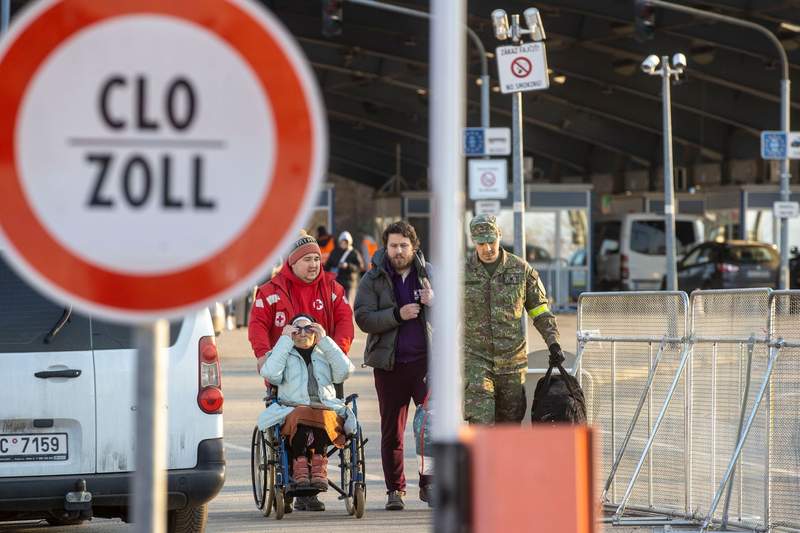
POLICY WIRE — Bratislava, Slovakia — It wasn’t the thunder of distant artillery that shook the foundations of European solidarity this week, but something far more prosaic: a chain across a border crossing. Bratislava’s decision to abruptly shutter several points of passage with Ukraine has sent a ripple of disquiet through a continent already struggling with the weight of conflict and economic uncertainty. It isn’t just about traffic flow, don’t kid yourself. It’s a crack in the façade, another sign that the shared burden—that grand European experiment—might just be starting to show its seams.
For months, the war in Ukraine has tested the resilience of the European Union, pulling disparate nations into a unified, albeit sometimes reluctant, front. Slovakia, geographically situated on Ukraine’s western flank, has found itself an accidental linchpin. But a nation can only absorb so much. Resources stretch thin. And political winds, ever fickle, shift. Prime Minister Robert Fico, never one to mince words or shy away from a populist gambit, positioned the closures as a hard-nosed national security measure. It’s about protecting ourselves, he’d tell you.
But scratch beneath the surface of the official pronouncements, — and you’ll find a narrative far richer and messier. Many in Slovakia feel the pinch of inflated prices, a strained social welfare system, and the ever-present drone of a war next door that, for some, feels less like a shared struggle and more like a never-ending bill. Ukrainian transit has, they argue, brought a litany of headaches—illicit goods, paperwork nightmares, and perceived economic drains. And let’s be honest, few in Western capitals want to hear about it, do they? But the reality bites hard at home.
“We’ve extended our hand of friendship, and we continue to support Ukraine’s sovereignty,” declared Prime Minister Fico recently, likely from behind a sturdy, oak desk, “but that doesn’t mean we’re going to allow our nation to be used as a free-for-all transit route for what amounts to economic opportunism. Our citizens expect their government to prioritize their interests, not the abstract notion of an endless open door.” His tone, often tinged with a weariness that borders on exasperation, resonates with a segment of the Slovak populace who are frankly tired.
On the other side of that suddenly more formidable border, however, the mood is one of profound disappointment. Ukrainian Foreign Minister Dmytro Kuleba, perpetually juggling the demands of war and the sensitivities of allies, voiced his country’s dismay. “Every closed crossing is a gift to Moscow’s propaganda machine, another sign to our adversaries that European unity is not as rock-solid as we portray it,” Kuleba stated, perhaps with a sigh. “We understand our partners face domestic pressures, of course we do. But our fight is their fight, and isolating us now feels like a betrayal of the very principles we’re defending.” It’s tough talk, and it’s meant to be.
The immediate fallout for aid delivery — and commercial traffic remains unclear, but it’s undoubtedly complex. Consider, if you will, the sheer volume: global economic jitters have already got supply chains stretched thinner than a worn-out tee shirt. And now this. According to Eurostat data from January 2024, approximately 4.2 million Ukrainian refugees have registered for temporary protection in EU countries since Russia’s full-scale invasion. That’s a significant burden, no matter how you slice it, and countries like Slovakia bear a disproportionate amount of that initial ingress. Because when borders start to harden, everybody feels it.
It’s a peculiar irony, isn’t it? While Europe wrestles with its own internal divisions, debates often rage across continents about humanitarian aid and refugee crises elsewhere. In South Asia, nations like Pakistan grapple with millions of Afghan refugees, their borders far more permeable by necessity, their resources—and international attention—often dwindling to a trickle compared to Europe’s focus on its eastern front. The political optics of a wealthy European nation tightening its belt against its war-torn neighbor send a problematic message far beyond the Carpathians. It whispers of selective compassion, of a solidarity that holds only until the economic calculus gets a bit uncomfortable. Not a great look, by any standard.
What This Means
This isn’t just about trucks backing up at a checkpoint; it’s a loud claxon. Politically, Fico’s move is a potent signal of rising nationalist sentiment across the EU. It reflects a growing fatigue with the economic demands of supporting Ukraine, potentially emboldening other recalcitrant member states. Don’t be surprised if Hungary or Poland watch this with keen interest, plotting their own moves. It fragments the collective bargaining power of the bloc and provides fresh grist for Moscow’s propaganda mill—that geopolitical chess game keeps getting weirder, doesn’t it? Economically, while the short-term impact on Slovakian trade may be manageable, the long-term message is damaging: instability in transit routes increases costs, diverts investment, and discourages businesses.
it throws a wrench into the West’s stated unified front against Russian aggression. If internal squabbles lead to border closures, it shows a lack of commitment, or at least a highly conditional one. This might force Kyiv to seek more ad-hoc, costly solutions for essential supplies, further draining its resources. The immediate question is whether this is a temporary political stunt for domestic consumption or a harbinger of a deeper, more troubling isolationism within the EU. We’ve been here before. History rarely repeats itself exactly, but it does, as they say, rhyme. And this tune sounds awfully familiar.