


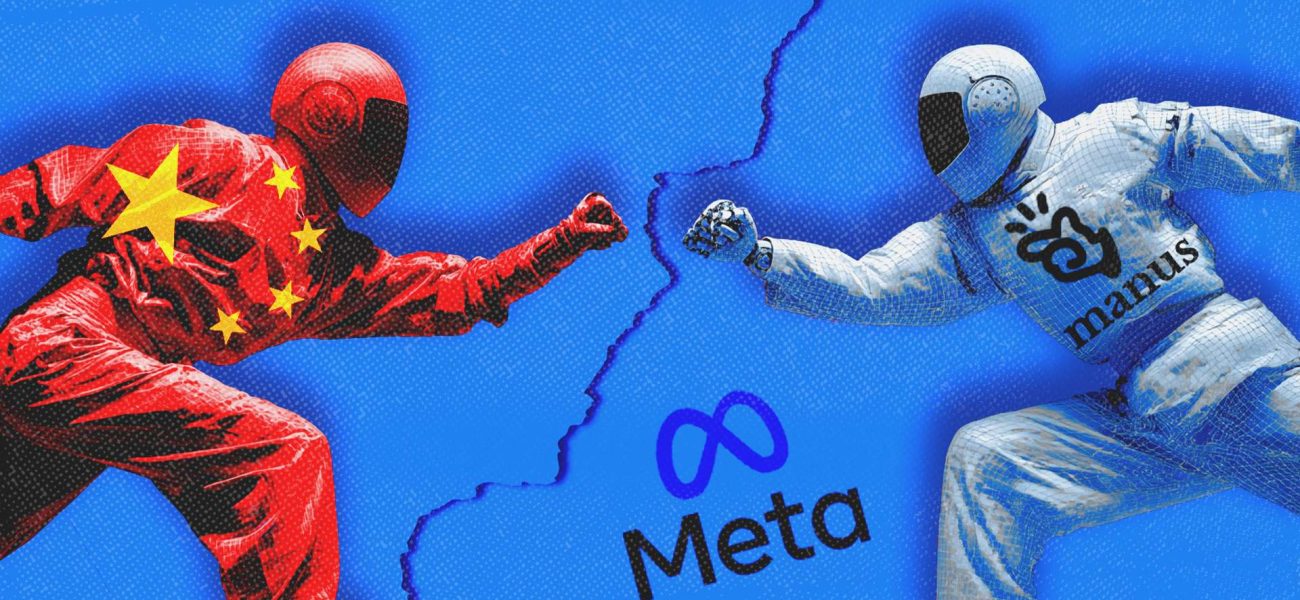
The Perilous Embrace: Why America Must Resist China’s Protectionist Tech Playbook
POLICY WIRE — Washington, D.C. — The digital frontier, once lauded as a borderless expanse of innovation, has calcified into a new battleground. Not with drones or tanks, but with regulatory edicts —...

POLICY WIRE — Washington, D.C. — The digital frontier, once lauded as a borderless expanse of innovation, has calcified into a new battleground. Not with drones or tanks, but with regulatory edicts — and the cold, hard logic of national interest. This isn’t just about microchips or algorithms; it’s about the very future of economic supremacy, and the chilling prospect that a generation’s worth of interconnected progress might simply unravel.
For years, Beijing has wielded its regulatory hammer with surgical precision, routinely blocking foreign tech acquisitions that don’t align with its strategic objectives—often code for gaining a competitive edge. It’s a playbook we’ve observed for decades, really. This isn’t merely about protecting domestic industry; it’s an overt, often brutally effective, tactic designed to funnel proprietary technology inward, cementing China’s pole position in critical sectors from artificial intelligence to quantum computing.
Still, the question gnawing at policymakers in Washington isn’t if China is doing this, but whether the U.S. should retaliate in kind. Some argue that an eye for an eye, a block for a block, is the only language Beijing understands. They believe reciprocity, even if unpalatable, is the solitary path to leveling a grossly uneven playing field. But this stance, while emotionally resonant, carries an insidious risk: becoming the very thing we decry.
The Biden administration, perpetually caught between protecting national security and preserving an ostensibly free market, grapples with this binary. U.S. Secretary of Commerce Gina Raimondo, a key figure in these delicate discussions, has repeatedly articulated the fine line. “We’ve got to protect our strategic assets, sure, but slamming the door shut on foreign investment—especially from allies—only hobbles our own innovation in the long run,” she recently opined at a closed-door economic summit. It’s a sentiment echoed by many within the executive branch, a cautious appeal to maintain a global perspective.
But others aren’t so sanguine. Senator Marco Rubio, ever the hawkish voice on China, doesn’t mince words. “Beijing plays by a different rulebook; they see every acquisition as a strategic play, not just a market transaction,” Rubio once countered in a fiery Senate hearing, his voice cutting through the typical D.C. politeness. “We’d be naive, even dangerously so, to pretend otherwise. We need to fight fire with fire.”
📄 POLICY WIRE WHITEPAPER PUBLISHED: PAKISTAN'S NATIONAL SECURITY POLICY PRIORITIES
👉 READ BY CLICKING HEREThis isn’t an abstract debate; it’s one with tangible consequences extending far beyond the boardrooms of Silicon Valley and Shenzhen. Consider countries like Pakistan, deeply enmeshed in China’s Belt and Road Initiative, which frequently involves significant tech infrastructure investments. As the U.S. and China vie for technological dominance, nations like Pakistan find themselves navigating a treacherous geopolitical landscape, often forced to choose between competing standards, incompatible systems, and potentially bifurcated digital futures. Their sovereign tech decisions—or lack thereof—become collateral damage in a global tech Cold War, making their own strategic predicaments acutely felt.
The stakes couldn’t be higher. China’s share of global R&D spending has steadily climbed, reaching an estimated 22.8% in 2020, rapidly closing the gap with the United States’ 30.6%, according to a National Science Foundation report. This isn’t just about market share; it’s about who defines the next generation of technology, who sets the global standards, and ultimately, who holds the keys to future economic and military power. Should the U.S. adopt Beijing’s protectionist tactics, it risks not only alienating potential allies but also choking the very dynamism that has long been its hallmark. Innovation thrives on open exchange, on the cross-pollination of ideas, not on walled gardens.
What This Means
The choice facing the United States isn’t just a policy decision; it’s a profound strategic inflection point. If Washington opts to mirror Beijing’s restrictive approach, we’d likely see a rapid acceleration towards a balkanized global tech ecosystem. Economic implications would be severe: higher costs for consumers due to reduced competition, stifled cross-border investment, and a potential exodus of top talent from increasingly insular markets. Politically, it would signal a retreat from multilateralism and a tacit admission that democratic ideals of open markets can’t withstand authoritarian pressures. Conversely, sticking to a more open, albeit security-conscious, approach would project confidence in American innovation and its capacity to outcompete. But it’s a high-wire act, requiring robust domestic investment in R&D, stringent export controls on sensitive technologies, and sophisticated intelligence to detect and counter illicit tech transfers. The challenge, then, isn’t simply reacting to China, but proactively shaping a resilient, innovative, and secure future for America’s technological leadership, one that doesn’t sacrifice its fundamental principles at the altar of perceived parity.