


Ghost in the Machine: Hamas High-Commander’s Digital Undoing Shakes Gaza
POLICY WIRE — Gaza Strip, Occupied Palestinian Territories — It wasn’t the smoke, nor the blast, that truly announced his end. It was, rather, the meticulous dance of data—the digital ghost of...

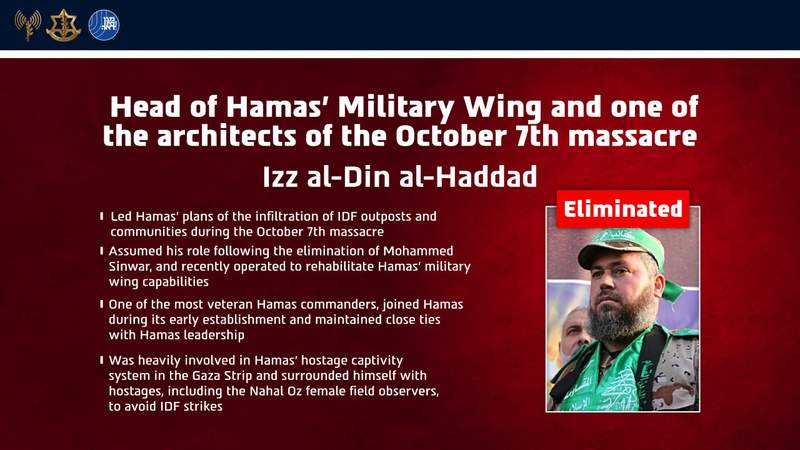
POLICY WIRE — Gaza Strip, Occupied Palestinian Territories — It wasn’t the smoke, nor the blast, that truly announced his end. It was, rather, the meticulous dance of data—the digital ghost of a man too careful by half—that ultimately dragged the curtains down on Hamas’s military commander in Gaza. Yahya Sinwar’s alleged second-in-command, a figure whose very existence was predicated on near-mythical discretion, didn’t fall to a heroic commando raid. He fell because, well, he apparently stopped playing by his own playbook.
Sources within Israeli intelligence suggest the high-ranking operative, a ghost for years, was found out by a lapse in his notoriously rigid operational security—perhaps a stray communication, an unexpected visit, or a digital fingerprint that shouldn’t have been there. It’s the kind of screw-up any seasoned intelligence veteran would scoff at—and exactly the kind of thread Israeli military intelligence (AMAN) lives for. They didn’t just ‘snuff him out’; they traced a whisper, a digital flicker, across a landscape they’ve increasingly saturated with surveillance.
His elimination marks a significant, albeit mostly symbolic, blow to Hamas’s top-tier operational command. But it also raises uncomfortable questions about the longevity of ‘ghosts’ in an age where everything from a smart thermostat to a children’s smartwatch leaves a traceable electronic residue. For years, these leaders mastered the art of the disappearing act—cash transactions only, no mobile phones, never the same place twice. They thought they’d outsmarted the silicon. Turns out, the silicon just needed time.
And time, as it always does, changes everything. Especially in Gaza, a pressure cooker of a territory, where every shadow might hide an informant and every electronic signal is probably being logged somewhere. “This wasn’t just a target; it was a stark, unapologetic message,” noted Brigadier General (res.) Reuven Gal, a former Israeli military psychologist, speaking from Tel Aviv. “Their senior ranks aren’t untouchable, no matter how deep they burrow, or how long they play the phantom. This operation reinforces that, brutally.” He’s got a point. You can’t just wish away omnipresent drones — and increasingly sophisticated signals intelligence.
The news will certainly reverberate across the wider Muslim world, sparking defiance in some quarters and resignation in others. Pakistan, for instance, a nation grappling with its own complex relationship with non-state actors and intelligence operations, will view this through its own unique lens. How long can any militant leadership maintain absolute secrecy in such a connected world? The parallels, though imperfect, aren’t lost on observers who’ve seen similar tactics deployed in the rugged terrains of the Afghan-Pakistan border—remember how digital trails can ensnare even the most obscure figures, even a popular cricketer for a brief, bewildering moment?
Back in Gaza, Hamas’s propaganda machine will undoubtedly spin this as another act of ‘cowardly aggression.’ But privately, the group’s internal security apparatus must be in an absolute frenzy, desperately searching for the breach. But what if the breach wasn’t a mole, but a momentary flicker of normalcy? Because even ghosts, sometimes, want a glimpse of the sun—or make a single, ill-advised phone call.
📄 POLICY WIRE WHITEPAPER PUBLISHED: PAKISTAN'S NATIONAL SECURITY POLICY PRIORITIES
👉 READ BY CLICKING HEREA recent study published by the Journal of Conflict Resolution suggested that in urban counter-insurgency scenarios, digital intelligence contributes to over 65% of high-value target (HVT) interdictions in highly networked environments, up from just 15% a decade ago. It’s a game of inches, but the battlefield is shifting, fast.
“These strikes only breed deeper resentment — and solidify resolve,” countered Dr. Laila Hadidi, a political science professor at Al-Azhar University in Gaza, offering a starkly different perspective. “You can assassinate individuals, you can’t extinguish a cause – nor the despair that fuels it. It’s a tragic cycle, fueled by short-term tactical wins, not genuine strategy.” Her words hang heavy, a testament to the conflict’s grim predictability.
What This Means
The immediate implication is a significant morale dent for Hamas’s military wing and a temporary disruption to their operational flow. Command — and control will likely decentralize further, becoming even more atomized to avoid detection. Economically, while this specific elimination won’t move markets directly, it signals continued Israeli dominance in the intelligence war, potentially influencing international perceptions of Hamas’s operational capabilities and therefore the financial and material support it might receive. For the residents of Gaza, already enduring unfathomable hardships, it means the grinding war against an unseen, digital enemy continues, escalating their vulnerability. The incident could also push regional players, particularly those in South Asia who frequently engage in complex geopolitical maneuvers involving non-state actors, to reassess their own internal security measures and intelligence counter-surveillance protocols. This isn’t just about a single death; it’s about a new, uncomfortable standard being set for clandestine warfare in the digital age.