

Desert Dream Delayed: Saudi Arabia’s ‘The Line’ Project Faces Stiff Reality Check
POLICY WIRE — Riyadh, Saudi Arabia — The sand, it seems, isn’t quite ready for the concrete. Saudi Arabia’s audacious vision for ‘The Line’—a sprawling, mirror-clad metropolis...

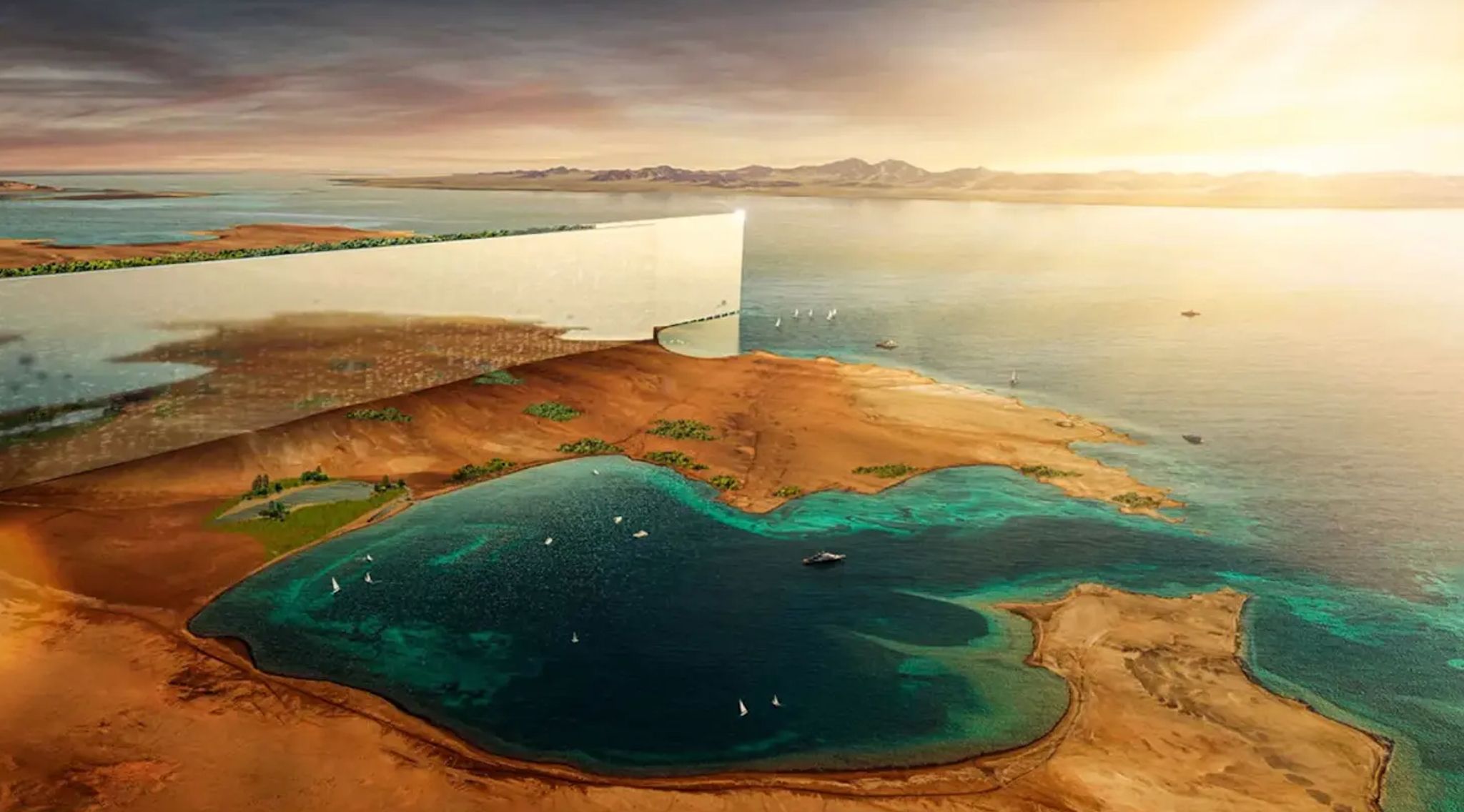
POLICY WIRE — Riyadh, Saudi Arabia — The sand, it seems, isn’t quite ready for the concrete. Saudi Arabia’s audacious vision for ‘The Line’—a sprawling, mirror-clad metropolis designed to stretch 170 kilometers across the desert—has slammed into an unforeseen obstacle: reality. They’re quietly, yet definitively, pumping the brakes, with initial construction targets for the futuristic urban marvel now pushed well past its splashy 2030 debut.
It wasn’t a sudden crash, more like a slow, deliberate deceleration of a hyperloop. But for a project billed as the apex of human ingenuity, promising to house millions within an AI-powered linear city, any delay feels seismic. For years, the imagery—sleek, impossible skyscrapers reflecting a pristine desert sky—captured global imagination. Now, that glittering promise just got a lot hazier. Initial projections had ‘The Line’ accommodating 1.5 million residents by the decade’s end. Now, sources within the NEOM project, speaking on background, suggest that number might be closer to 300,000, maybe even less, by 2030. They’re scaling back. That’s a staggering downsize, frankly.
Because, let’s be honest, building a linear city in a hostile environment, costing hundreds of billions, was never going to be easy. Crown Prince Mohammed bin Salman’s pet project, a centerpiece of Vision 2030 to diversify the Kingdom’s oil-dependent economy, represented an almost defiant leap into a sci-fi future. But even the deepest pockets hit practical limits.
Dr. Lena Khan, a geopolitical analyst specializing in Gulf economies, didn’t mince words. “This isn’t just a scheduling hiccup; it’s a stark realization of the sheer engineering and financial hurdles involved in constructing something so utterly unprecedented. They might have underestimated just how much effort, materials, and international buy-in something of this scale demands. It’s a grand vision, but grand visions have price tags, and sometimes, those price tags simply exceed the current budget or logistical capabilities.” And she’s not wrong. A recent estimate by Bloomberg suggested NEOM’s full build-out could easily exceed $1.5 trillion – money that doesn’t just materialize, even for petro-states.
Meanwhile, the public-facing statements remain, shall we say, robust. Ahmed Al-Saud, Director of Strategic Communications for NEOM, insisted this week, “Our commitment to NEOM’s transformational goals remains absolute. The timeline adjustment for ‘The Line’ simply reflects a natural recalibration as we move from conceptualization to large-scale implementation. We’re prioritizing quality — and long-term sustainability over arbitrary deadlines. It’s about building it right, not just fast.” Fine words, certainly, but anyone tracking these megaprojects knows what ‘recalibration’ usually means. It means problems. Big ones.
The implications ripple far beyond the deserts of Tabuk province. This isn’t just about futuristic housing; it’s about projecting an image of regional dominance and forward-thinking leadership across the Middle East and the broader Muslim world. Pakistan, for instance, a nation often grappling with its own infrastructure challenges and keen on attracting foreign investment, watches such endeavors with keen interest. Successful, rapidly executed Saudi megaprojects often serve as a template or at least an aspiration for other developing Muslim-majority nations—demonstrating the potential for large-scale national development without direct Western financial mandates. A stumble here, even a temporary one, could temper some of that regional enthusiasm for ‘moonshot’ projects, making other nations ponder more grounded, achievable developments.
For hundreds of thousands of expatriate workers, particularly those from South Asia—Pakistan, India, Bangladesh—who’ve long fueled the Gulf’s construction booms, delays like this bring a chilling uncertainty. While immediate job losses aren’t being advertised, a significant slowdown inevitably affects labor demand and project stability. They’re often on contracts tied to specific phases, after all. But this goes deeper than just individual employment; it speaks to the perceived stability of a market heavily reliant on these massive undertakings.
And it’s a financial strain, too. Even Saudi Arabia, swimming in petrodollars, isn’t immune to global economic fluctuations or the simple mechanics of project finance. They’ve been pouring cash into diversifying, into tourism, into these grand cities. There’s only so much capital to go around, even for the Kingdom. They’ve also been aggressively pursuing strategic partnerships, often tying into the Kingdom’s broader geopolitical ambitions, sometimes at the expense of local economies, much like how Samsung’s pay concessions reshaped the Asian labor landscape.
What This Means
This slowdown in ‘The Line’ project—whether it’s a full stop or merely a serious speed bump—carries considerable political and economic weight. Economically, it suggests a pragmatic retreat from an over-ambitious timeline, potentially freeing up capital for other Vision 2030 initiatives or providing a financial cushion amidst uncertain oil prices. It might also signal a greater internal scrutiny of mega-project viability. Politically, the optics are trickier. Prince Mohammed bin Salman has staked a significant part of his reformist reputation on these ‘cities of the future.’ A scaled-back or delayed delivery could spark skepticism about the broader feasibility of his vision. Internationally, it may temper enthusiasm from potential foreign investors who are always assessing risk and return in nascent, state-led ventures. For neighboring nations, particularly in South Asia, this adjustment offers a double-edged lesson: inspiration mixed with a sober warning about the complexities of trying to build the future at hyper-speed. It’s a reminder that even limitless ambition eventually has to contend with limited resources and the immovable laws of physics.