


Denver’s Playoff Predicament: A Microcosm of Unraveling Dominance in High-Stakes Arenas
POLICY WIRE — Denver, United States — Just when a narrative seemed etched in stone, the ink began to bleed. The reigning NBA champions, the Denver Nuggets, once seen as an indomitable force, now...

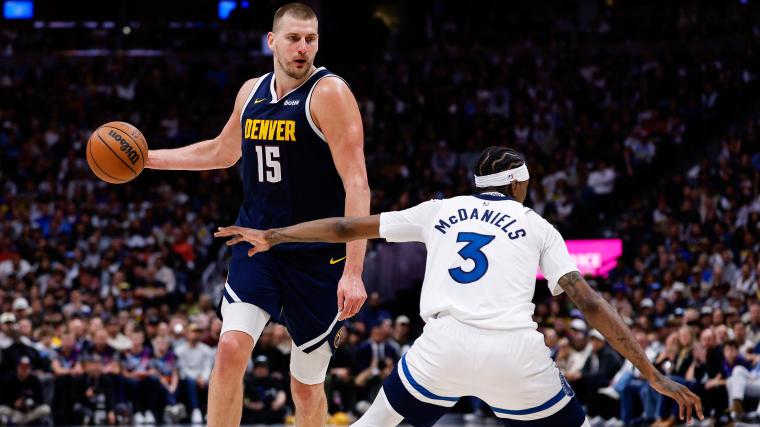
POLICY WIRE — Denver, United States — Just when a narrative seemed etched in stone, the ink began to bleed. The reigning NBA champions, the Denver Nuggets, once seen as an indomitable force, now stare down a precarious elimination. What began as a confident romp against the Minnesota Timberwolves has devolved into a tense, existential struggle, a stark reminder that even the most formidable empires can find their foundations suddenly, unexpectedly, shifting beneath them. It’s a drama unfolding not just on the hardwood, but one that echoes the fragility of dominance across far grander stages.
Denver, after securing a decisive Game 1 victory, found itself quickly ceding control, dropping three consecutive contests. They’re now down 3-2 in a series many pundits had dismissed as a mere formality. The collective gasp across the sporting world wasn’t just for the upset, but for the swiftness with which perceived superiority could simply… evaporate. And it’s not just the on-court performance; injuries to key opposition players, like the Timberwolves’ dynamic wing Anthony Edwards, seemed to open a clearer path for the Nuggets, yet here we’re.
The Wolves, despite Edwards’ significant absence (he’s considered a top-10 talent, by the way), somehow found a new gear, holding the Nuggets’ high-octane offense to under 120 points in those crucial losses. Star power, it turns out, can be a double-edged sword: without it, a team might forge a more unified, desperate resolve. Still, the Nuggets’ Nikola Jokic delivered a virtuoso performance in Game 5 (27 points, 12 rebounds, 16 assists), proving some stars don’t fade, they just need more spotlight. But a single brilliant constellation rarely illuminates an entire sky.
“You think you’ve got it figured out, then the universe reminds you of gravity,” shot back Nuggets Head Coach Michael Malone, his voice a low rumble after a recent practice, addressing the media scrum. “It’s about how you respond when the floor drops out from under you. We’re not folding. That’s not what champions do.” His sentiment, thick with the weight of expectation, underscored the psychological battlefield that often accompanies physical contests of this magnitude. It’s not just a game; it’s a test of mettle, a public interrogation of resolve.
For the Minnesota Timberwolves, this series has been less about dominance — and more about gritty, improbable survival. They’ve had their own calamities, of course, with Guard Ayo Dosunmu sidelined in Game 6 due to a calf injury. Yet, their spirit seems undeterred. “We’ve faced our own trials this series—injuries, doubt,” Timberwolves Coach Chris Finch countered, a hint of steel in his tone. “But this isn’t just a game; it’s an opportunity to rewrite the script, and frankly, my lads are itching to do just that.” His words point to the power of adversity, a force that can either crush or galvanize.
At its core, this dramatic playoff swing reflects a broader truth: the world, whether in sports or geopolitics, rarely conforms to pre-written scripts. The spectacle, broadcast globally, doesn’t just entertain; it provides a stark lesson in the unpredictable nature of power dynamics. And that’s something countries like Pakistan, often navigating their own sudden shifts in fortune—economic, political, or even climactic—understand intimately. The ebb and flow of public confidence, the sudden vulnerability of what once seemed unshakeable, resonates far beyond the confines of a basketball court. The fervent discussions on social media, even in regions far removed from North America, attest to the universal appeal of such high-stakes drama.
📄 POLICY WIRE WHITEPAPER PUBLISHED: PAKISTAN'S NATIONAL SECURITY POLICY PRIORITIES
👉 READ BY CLICKING HEREConsider the raw statistics: Only 13 teams in NBA history have successfully overturned a 3-1 deficit to win a playoff series, a monumental task underscoring the precarious position Denver now inhabits. (Source: NBA historical data, 2026). It’s a statistical chasm that few have ever bridged, demanding a confluence of talent, luck, and an almost mythical force of will.
What This Means
Beyond the immediate exhilaration or despair of victory and defeat, this playoff series, and others like it, serve as compelling case studies in the fragility of momentum. Economically, the prolonged series means continued revenue streams for local businesses in both Denver and Minneapolis—restaurants, bars, merchandise sales—a small but potent boon. But more broadly, it illustrates how public narratives, once solidified, can unravel with startling speed. This isn’t unique to sports; it’s a phenomenon seen in political campaigns, corporate takeovers, and even international relations, where a perceived advantage can be lost through complacency or an opponent’s unforeseen resilience. The global audience, from Los Angeles to Lahore, isn’t just watching a game; they’re observing a microcosm of human endeavor, where plans collapse, heroes falter, and underdogs occasionally, gloriously, roar.
This Timberwolves’ playoff odyssey, filled with both injuries and moments of brilliance, provides a compelling counter-narrative to the idea of inevitable success. It’s a testament to the fact that even when one’s opponent is hobbled, the battle is far from won. The Nuggets’ current predicament is a stark warning against complacency, a lesson that finds resonance across all arenas of human competition—be they athletic, economic, or political. And that, dear reader, is always worth a moment of sober reflection, even if it’s just about a basketball game.