

Coors Corridor Calamity: A Fatal Crash Exposes Albuquerque’s Enduring Struggle with Urban Mobility’s Human Cost
POLICY WIRE — ALBUQUERQUE, N.M. — It wasn’t the roar of lowrider engines echoing off the Sandia Mountains, nor the distant rumble of freight trains crossing the Rio Grande, that pierced...

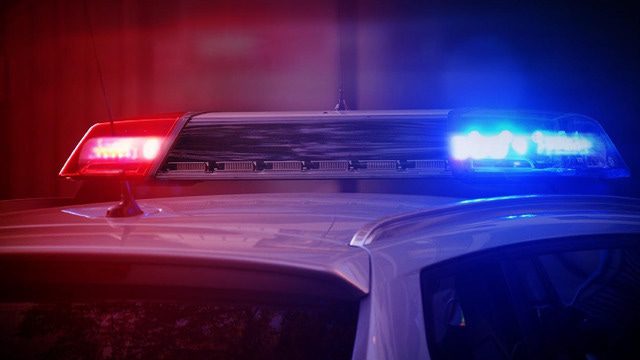
POLICY WIRE — ALBUQUERQUE, N.M. — It wasn’t the roar of lowrider engines echoing off the Sandia Mountains, nor the distant rumble of freight trains crossing the Rio Grande, that pierced Albuquerque’s Thursday evening tranquility. Instead, a more pedestrian, yet acutely tragic, sound rent the air: the harrowing aftermath of a traffic collision. Northbound Coors Boulevard, a vital artery bisecting the city’s sprawling northwest quadrant, became a scene of somber utility — a temporary morgue, a trauma bay, and a poignant reminder of urban mobility’s often-unseen human toll.
Behind the headlines of flashing lights and police tape, a single motorcycle incident at Coors and Irving — an intersection countless commuters traverse daily, often with a hurried indifference — left one person deceased and another grappling with injuries at a local hospital. It’s a stark, almost brutal, punctuation mark on the city’s ongoing, often unacknowledged, dialogue with its own infrastructure and the relentless pace of modern life. And this isn’t an isolated incident; it’s a recurring motif in the urban tapestry.
Albuquerque, like many Sun Belt cities, has expanded outward, privileging vehicular throughput over pedestrian or cyclist safety for decades. The consequences, though often statistical, occasionally manifest with brutal clarity on its asphalt veins. Police Chief Harold V. Quintana, addressing a recent public forum on road safety initiatives, shot back at critics who suggest mere enforcement is the panacea. “We’re seeing a disquieting uptick in vehicular fatalities across the metro area,” Quintana averred, his voice gravelly with experience. “And it’s not just statistics on a page; it’s families fractured, futures obliterated. Our officers are on the front lines of what’s, fundamentally, a public health crisis.”
This incident, while locally circumscribed, resonates with a broader, more existential quandary facing American cities: how to balance the demands of rapid transit with the inherent fragility of human life. At its core, it speaks to policy decisions made decades ago — choices that prioritized expansive roadways and high-speed corridors, effectively embedding risk into the very fabric of daily commutes. Albuquerque’s unique car culture, perhaps best exemplified by its vibrant lowrider spectacle, underscores a deep-seated relationship with the automobile — a bond that brings both freedom and, tragically, peril.
So, what’s to be done? Councilwoman Elena Montoya, a vocal proponent of Vision Zero initiatives, didn’t mince words in a recent interview. “Infrastructure investment isn’t just about smooth asphalt; it’s about life and limb,” Montoya contended, her tone unwavering. “We’ve got to prioritize pedestrian safety, cyclist routes, and traffic calming measures – things like narrower lanes and more visible crosswalks – not just focus on speed throughput. It’s a systemic problem, requiring systemic solutions, — and frankly, we’re behind the curve.” She wasn’t wrong. New Mexico, for example, recorded 463 traffic fatalities in 2022, a slight decrease from the prior year but still a grim tally for a state of just over 2 million people, according to data from the New Mexico Department of Transportation.
📄 POLICY WIRE WHITEPAPER PUBLISHED: PAKISTAN'S NATIONAL SECURITY POLICY PRIORITIES
👉 READ BY CLICKING HEREStill, the immediate aftermath of such incidents invariably triggers a wave of local grief — and introspection. The Bernalillo County Sheriff’s Office confirmed the motorcycle’s involvement, a detail that often conjures images of vulnerability on the open road. Motorcycles, while offering unparalleled freedom, account for a disproportionately high percentage of traffic fatalities. You know, despite representing only a fraction of registered vehicles (a sobering reality for enthusiasts).
While a single crash in Albuquerque reverberates through its immediate community, it mirrors a far broader, often unacknowledged global crisis. Developing nations, from Pakistan’s bustling urban centers to India’s chaotic highways, grapple with exponentially higher per-capita road fatalities, often exacerbated by rapid urbanization, inadequate infrastructure, and nascent regulatory frameworks. The World Health Organization (WHO) has consistently highlighted low- and middle-income countries as bearing the brunt of these preventable tragedies, underscoring a universal imperative for robust public policy that transcends borders. It’s a reminder that safe passage isn’t merely a local concern; it’s a fundamental human right, globally unevenly distributed.
What This Means
This latest tragedy on Coors Boulevard isn’t merely a localized police blotter entry; it’s a significant inflection point for Albuquerque’s urban policy discourse. Economically, repeated road closures and sustained traffic congestion — a direct consequence of such severe incidents — impede commercial flow and productivity, costing the city unquantified millions in lost time and fuel consumption. The long-term societal costs, including healthcare burdens and the erosion of public trust in infrastructure safety, are even more substantial. Politically, the pressure mounts on city leadership to move beyond reactive measures. Calls for dedicated funding for pedestrian and cyclist infrastructure, alongside rigorous enforcement of speed limits and distracted driving laws, will undoubtedly intensify. It’s not just about redesigning intersections; it’s about fundamentally reshaping how Albuquerque views its streets: as public spaces to be shared safely, not just conduits for rapid transit. Failure to act risks further eroding the public’s sense of security, fostering a climate where the journey itself becomes an anxious gamble, rather than a routine traverse.