


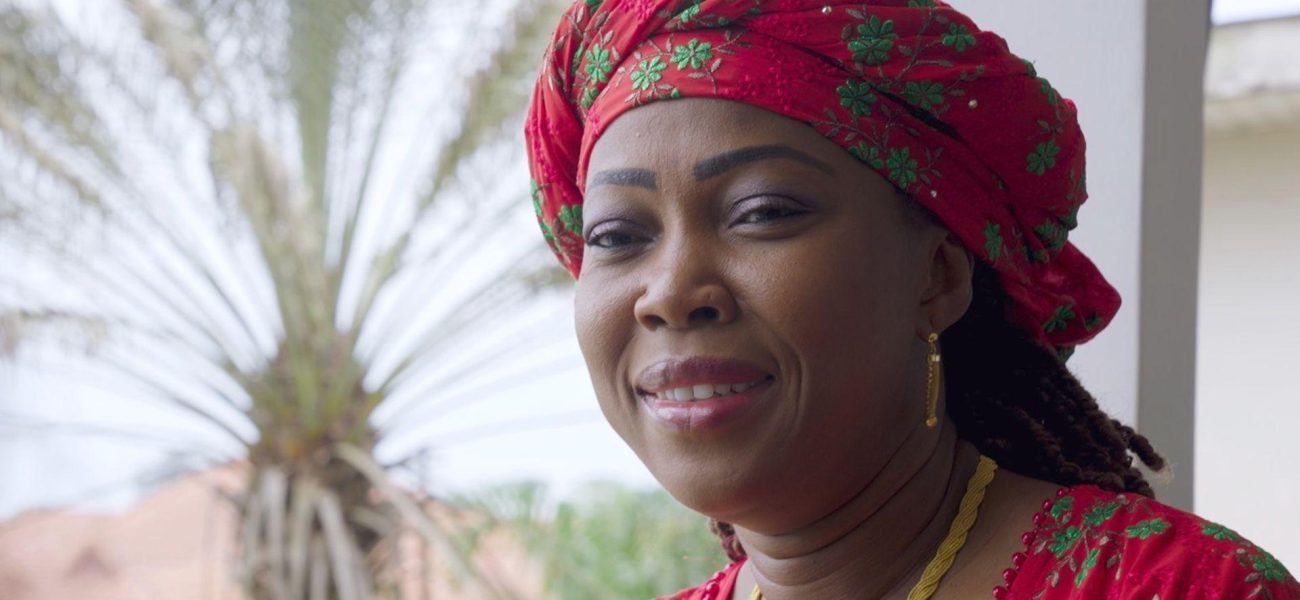
Freetown’s Unlikely Ascent: From Child Bride to State House, A First Lady’s Reckoning
POLICY WIRE — Freetown, Sierra Leone — The air in State House, heavy with the scent of jasmine and the hushed murmurs of diplomatic courtesies, feels like a universe away from the dusty crossroads...

POLICY WIRE — Freetown, Sierra Leone — The air in State House, heavy with the scent of jasmine and the hushed murmurs of diplomatic courtesies, feels like a universe away from the dusty crossroads where Madam Fatima Maada Bio once dodged a predetermined, crushing fate. One might look at her today, poised — and articulate, and see only the elegance. But beneath that polished surface hums a current of raw defiance, born from a youth that was anything but idyllic.
It’s an unspoken narrative, mostly. You don’t often hear First Ladies speak frankly about escaping forced unions before their teens—fleeing to relatives, battling an early marriage that felt more like a prison sentence to an elder, less-than-charming spouse. But that’s precisely her origin story, a stark beginning that puts her current advocacy for women and girls in Sierra Leone into sharp, unsettling relief.
And boy, has she taken that fight up. Her current initiatives, like the ‘Hands Off Our Girls’ campaign, aren’t just political slogans; they’re echoes of her own brush with institutionalized patriarchy. This isn’t just about charity or photo ops. It’s about fundamentally reshaping a society where, for far too long, the rights of young girls have been an afterthought, disposable items in complex familial economies. It’s gritty, real work, carving out change in stubborn social rock.
“She isn’t just a figurehead; she’s a force,” stated Dr. Fatmata Bangura, Sierra Leonean Minister for Gender — and Children’s Affairs, recently at a regional summit in Abuja. “Her past fuels a fire we desperately need for women’s empowerment, for protecting our daughters. It’s an authentic mission, — and it resonates deeply within communities, you know?”
Her ascent, unconventional by any measure, speaks volumes about both her personal resolve and the subtle shifts—sometimes glacial, sometimes seismic—occurring in African political landscapes. To rise from such a challenging backdrop to marry a national leader — and actively shape public policy? It’s not just inspiring; it’s a policy statement in itself, delivered with every handshake and every impassioned speech.
The parallels across regions are uncanny, too. Even as Sierra Leone grapples with entrenched traditions of child marriage and gender-based violence, other nations, especially those with similar societal pressures, face analogous struggles. Think Pakistan, or various communities across South Asia. According to a UNICEF report, globally, one in five young women aged 20-24 were married before their 18th birthday, with significant proportions of these marriages occurring in both Sub-Saharan Africa and South Asia, highlighting a shared, urgent developmental challenge. That’s a tough statistic, isn’t it? Because it tells you these issues aren’t isolated.
This isn’t just a story of personal triumph, either. It’s an object lesson in political viability — and the surprising utility of a difficult past. Her personal history grants her a legitimacy that mere political credentials can’t buy, particularly when addressing issues of social justice and women’s rights.
📄 POLICY WIRE WHITEPAPER PUBLISHED: PAKISTAN'S NATIONAL SECURITY POLICY PRIORITIES
👉 READ BY CLICKING HEREBut the road’s always bumpy, especially when you’re trying to shift centuries-old norms. Her journey hasn’t been without its detractors, nor its fair share of media scrutiny—some of it deserved, much of it a predictable pushback against a woman who refuses to simply ‘play the part.’ She’s often been painted as outspoken, perhaps too much so for the staid confines of a First Lady’s office. One could argue, though, that it’s precisely that frankness that’s cut through the bureaucratic haze and started getting things done.
Dr. Amira Khan, Director of the African Centre for Policy Studies, put it plainly in an interview with Policy Wire. “Her narrative hits home across West Africa, where these battles for women’s rights are far from over. It’s a reminder that change often starts with extraordinary individuals, yes, but it’s the tenacity—the stubborn refusal to be quiet—that truly moves the needle. And frankly, that sort of energy can shake up the system profoundly.” Khan, you’ll remember, has extensive experience tracking geopolitical shifts, like the strategic convergence between Egypt and Pakistan, noting that cultural diplomacy, even through a first lady, plays a crucial role.
What This Means
Madam Bio’s position isn’t merely ceremonial; it’s become a significant—some might even say calculated—element in Sierra Leone’s broader diplomatic and social development agenda. Politically, her vocal advocacy elevates Sierra Leone’s standing in international dialogues concerning gender equality and human rights, aligning the nation with progressive global norms, even if the domestic implementation remains a work in progress. Economically, empowering women, especially by preventing child marriage, has tangible benefits. It boosts educational attainment, improves health outcomes, and increases female participation in the workforce, all of which contribute to GDP growth and poverty reduction. Her personal history, raw as it’s, makes her a compelling advocate, someone who doesn’t just understand the statistics but has lived the pain. This gives her platform a heft that boilerplate policy statements simply can’t achieve. It’s an often-overlooked dimension of soft power—the compelling personal story—used to drive a national policy push. It says: look, if she can beat it, so can we. And that’s a powerful message, locally — and internationally.