
Beijing’s Gambit, Delhi’s Pragmatism: How Trump’s America First Forged an Unlikely Entente
POLICY WIRE — Washington, D.C. — They say intentions pave the road to… well, somewhere other than where you planned. Few political axioms feel more apt than when dissecting the curious case of India...

POLICY WIRE — Washington, D.C. — They say intentions pave the road to… well, somewhere other than where you planned. Few political axioms feel more apt than when dissecting the curious case of India and China, two Asian giants with a long history of bristly relations, quietly bolstering economic ties in the shadow of American protectionism. Donald Trump wanted to shake up the global order, pull manufacturing home, — and slap Beijing hard. What he got, at least in part, was Delhi — and China’s handshake.
It’s an unlikely picture, isn’t it? The world’s two most populous nations, sometimes sparring literally at high altitudes along their disputed border, have seen their trade volume burgeon. Because when Washington decided to turn inwards, demanding a reshaping of intricate supply chains, nations weren’t just going to wait around. They’d look elsewhere. And sometimes, elsewhere is right next door, irrespective of historical baggage.
The Trump administration’s aggressive trade tactics, characterized by tariffs and rhetoric demanding job repatriation—the ‘Make America Great Again’ credo—sent a seismic ripple. Companies globally, — and especially in Asia, weren’t just shrugging. They were drawing new maps, recalculating risk, seeking stable, predictable partners who weren’t prone to sudden tariff whims or isolationist grandstanding. India, for its part, recognized the moment. Not necessarily as an ally of China, but as an opportunistic economic actor.
“New Delhi isn’t blind,” observed Dr. S. Jaishankar, India’s Minister of External Affairs, in a candid discussion not meant for attribution but perfectly capturing the sentiment. “Global supply chains shift, and you don’t boycott your next-door neighbor because someone else is throwing tantrums across the Pacific. Pragmatism dictates our economic choices, even when diplomacy gets… complicated.” It’s a sentiment many inside the Narendra Modi government would echo, even if officially their tone is more circumspect. Beijing, too, saw an opening. Stability for China’s industrial might—a colossal economic engine—demanded diverse, reliable markets, particularly as Western pressure mounted.
This isn’t about grand ideological convergence. It’s about pure, unadulterated economic gravity. China, seeking diversification away from an increasingly unreliable US market, found a gargantuan consumer base and a developing industrial partner in India. India, meanwhile, needed everything from advanced machinery to vital components for its own burgeoning manufacturing sector. The numbers speak volumes: bilateral trade between India and China hit a record-shattering $135.98 billion in 2021, a figure largely unperturbed by sporadic border skirmishes, according to official trade statistics. That’s a roughly 43% jump from just five years prior, when Trump’s ‘America First’ era truly began.
And what did America get from its global decoupling attempt? China didn’t collapse. Manufacturing didn’t miraculously flood back to Dayton, Ohio, in sufficient numbers to offset decades of globalization. Instead, other nations simply adapted. Pakistan, for instance, a steadfast Chinese ally, has had to watch India – its traditional nemesis – deepen economic bonds with Beijing, albeit through a different lens. China’s continued, heavy investment in the China-Pakistan Economic Corridor (CPEC) through the Belt and Road Initiative hasn’t wavered. But India’s quiet absorption into China’s economic orbit subtly shifts the regional economic calculus for everyone, including Islamabad. It’s a dynamic ballet, where no one’s really stepping on anyone’s toes, but everyone’s looking for their next move on a crowded stage.
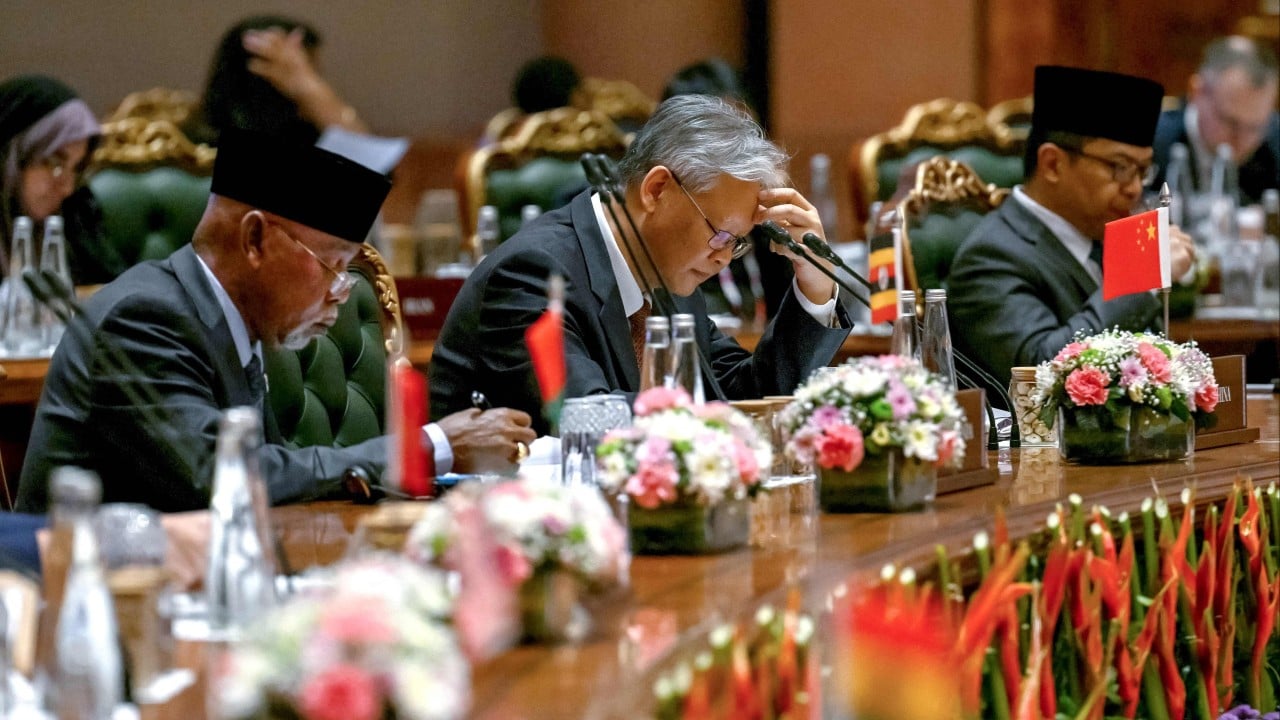
A spokesperson for China’s Ministry of Commerce, reached for comment, chose his words carefully, as they often do. “Our economic trajectory is clear: interdependence, regardless of who occupies the White House. Stability means opportunities for all serious partners. We believe in mutual benefit and open markets, foundational principles for global prosperity.” Translation: ‘We’re going to trade with whoever’s willing, thank you very much.’ It’s hardly a lovefest, mind you. The geopolitical frictions are still very much alive. But business, it seems, has a way of transcending even the most strained statecraft. They’ve both learned to keep those channels open, even while the militaries glare.
What This Means
This unexpected economic embrace has several potent implications. Politically, it complicates Washington’s strategy of isolating China, particularly by positioning India as a key democratic counterweight. If India finds itself more economically entwined with Beijing, its appetite for outright confrontation—or even for joining strict economic blocs designed solely to contain China—might diminish. For Washington, it’s a policy nightmare, a testament to the law of unintended consequences in global economics. Economically, it signifies a continued shift towards an Asia-centric supply chain architecture, less reliant on Western demand. Because if two nations with a history of conflict can find common ground in commerce, other partnerships become even more plausible.
It also means countries like Pakistan have an even more complex strategic tightrope to walk. While CPEC remains significant, the sheer volume of India-China trade paints a different picture of regional economic gravity. But let’s be real, this rapprochement isn’t a hugfest. It’s a transaction. A pragmatic calculation by both New Delhi and Beijing that sometimes, the enemy of my enemy—or at least the thorn in my side across the Pacific—is, quite literally, my trading partner’s friend. It’s a sober, slightly cynical observation of modern diplomacy, isn’t it? Where ideological purity often takes a backseat to the relentless grind of global markets. But then again, it’s never been just about idealism. It’s always been about leverage. And getting a good deal.