

Shadows of Fortune: Allegations Against Bolsonaro Son Ignite Brazil’s Political Volcano
POLICY WIRE — Brasília, Brazil — The air in Brasília, thick with political maneuvering and that inescapable tropical humidity, lately carries a familiar scent: the distinct whiff of alleged undue...

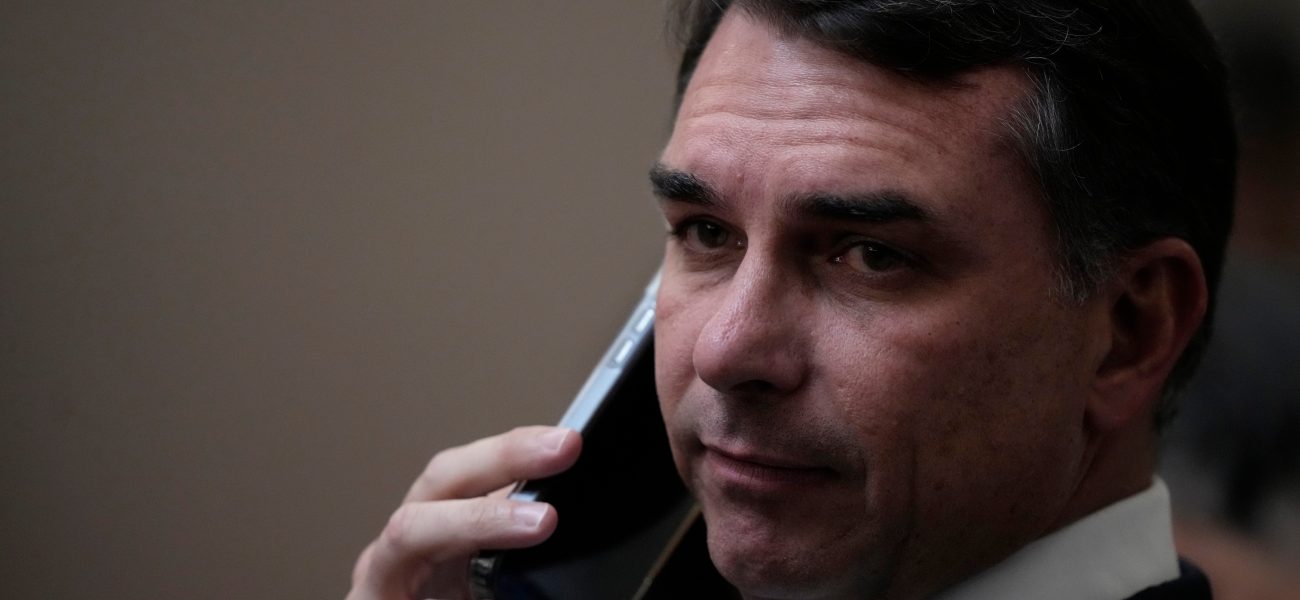
POLICY WIRE — Brasília, Brazil — The air in Brasília, thick with political maneuvering and that inescapable tropical humidity, lately carries a familiar scent: the distinct whiff of alleged undue influence. It’s not the faint odor of some distant, forgotten scandal. No, this one’s closer, sticking fast to a name Brazil knows all too well. Flávio Bolsonaro, a man whose surname alone grants him significant, if sometimes fraught, political capital, now finds himself in a rather uncomfortable position—swatting away claims that could leave an indelible, grimy mark on his presidential ambitions.
The eldest son of former president Jair Bolsonaro, he’s, predictably, denying wrongdoing. But this claim isn’t just abstract chatter, some whispers in the gilded halls. It’s the stark assertion that he—a sitting senator and a top-job contender—reportedly asked a prominent banker for millions. What for? Well, the precise reasons remain annoyingly murky, swirling amidst his vehement “denials” that, to any veteran observer, sound almost rehearsed (as they so often do, don’t they?). And it’s a real problem, plain — and simple.
“This whole thing? It’s an absurd smear campaign, utterly baseless,” Bolsonaro told a small gaggle of journalists, his voice betraying a hint of practiced irritation. “My family has always been an open book when it comes to finances, especially concerning my political life. This is just cynical political theater, funded by those who frankly fear real change and my trajectory.” He insists whatever conversations occurred were entirely legitimate, a private financial matter with no public bearing. But because when you’re a Bolsonaro and you’re talking about millions with a banker, well, it rarely stays private for long.
The story broke just as Flávio was quietly (or as quietly as a Bolsonaro can be) positioning himself for a future presidential run. But these kinds of stories have a nasty habit of clinging, don’t they? And in a country like Brazil, where political integrity often feels like an oxymoron, the optics of a public figure seeking what sounds like a massive personal favor from a powerful financier aren’t great. They’re downright dreadful, actually.
Opponents aren’t holding back, naturally. “These allegations, if substantiated, don’t just hint at impropriety; they scream about a system potentially rigged for the privileged few,” said Senator Renan Calheiros, a seasoned political operator and no stranger to political sparring himself. “No one, not even those born into political dynasties, is above Brazil’s laws. The public deserves—and frankly demands—a complete, unvarnished investigation.” And that’s exactly what’s percolating in certain corners of Brasília.
But the reverberations from such scandals aren’t confined by national borders, you know. Just look to places like Pakistan, for instance, where similar tales of political families facing scrutiny over alleged illicit wealth or influence-peddling crop up with unsettling regularity. The dynamic—the constant public questioning of who’s benefitting, at whose expense—it’s a shared global phenomenon. These allegations hit hardest in nations where public institutions already struggle with perception, where the people already assume the deck is stacked against them. Brazil, like so much of South Asia and parts of the Muslim world, isn’t immune to that corrosive cynicism, especially when power is so tightly held.
And for Bolsonaro, these allegations drop at a really inconvenient time. He’s navigating the often-treacherous waters of post-presidency politics, trying to maintain the family’s brand while his father—Jair—remains a polarizing, sometimes legally embattled, figure. But this isn’t his father’s scandal. This one’s his own. Transparency International’s 2023 Corruption Perception Index, for instance, rated Brazil at 36 out of a possible 100, ranking it 104th out of 180 countries. It’s a clear signal of ongoing public concern about political integrity, and stories like this do nothing to move that needle in a positive direction, do they? It’s a statistic that simply can’t be ignored.
📄 POLICY WIRE WHITEPAPER PUBLISHED: PAKISTAN'S NATIONAL SECURITY POLICY PRIORITIES
👉 READ BY CLICKING HEREIn fact, this type of news just further cements a deep-seated distrust. For Brazil, a nation that has endured its fair share of seismic political graft revelations (Operation Car Wash still stings, remember?), another round of suspicions centered on its leading political families isn’t just unwelcome; it’s genuinely debilitating for public morale and institutional credibility. It really does make you wonder if anyone truly learns anything from history. Perhaps they just hope we don’t.
What This Means
Politically, this incident throws a considerable wrench into Flávio Bolsonaro’s emerging presidential aspirations. He can deny all he wants, but the mere existence of these claims injects an immediate, unsavory narrative into his public persona. It weaponizes the family name—once an asset of defiance—into a potential liability, resurrecting ghost stories of corruption that often cling to Brazilian political elites. For a potential future candidate, facing scrutiny over alleged dealings for millions before even formally launching a campaign isn’t exactly a springboard, is it?
Economically, persistent allegations of impropriety, especially concerning high-profile figures, don’t exactly inspire investor confidence. International capital hates uncertainty; it really despises the perception of a capricious, potentially corrupt, regulatory and political environment. If key figures in future governments are seen as playing fast — and loose with financial ethics, it signals higher risk. It slows investment. For a developing economy that craves stability, this is precisely the kind of chatter Brazil absolutely doesn’t need to foster.
But more broadly, this episode highlights the chronic fragility of institutional trust within Brazil’s vibrant, yet often bruised, democracy. Every fresh allegation against a political dynasty member reopens old wounds, reinforcing the cynical belief that rules are for some, but not for all. It can even lead to broader discontent, not unlike what one observes with the struggles for institutional integrity in countries grappling with similar issues, for example, the intricate challenges calculating a new phase of proxy in Pakistan. For Brazil, these sorts of allegations aren’t just a headline—they’re an erosion of the foundational trust that allows a society to function. It leaves ordinary citizens wondering: Who exactly benefits when powerful families navigate the murky waters of wealth and influence? And it’s never a comforting thought, is it?