


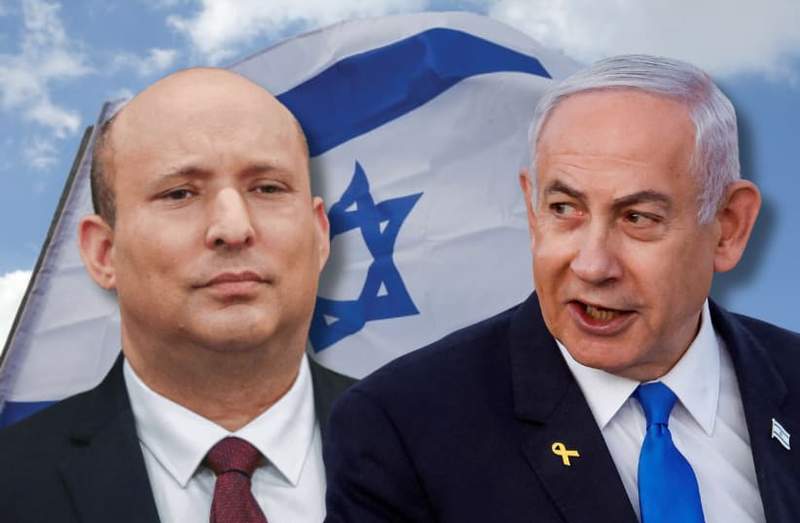
Political Tremors: A New Dawn Looms Over Netanyahu’s Enduring Reign?
POLICY WIRE — Tel Aviv, Israel — The desert sun sets daily over Jerusalem, but it rarely signals calm in Israel’s fractious political landscape. Lately, it feels less like a setting and more like a...

POLICY WIRE — Tel Aviv, Israel — The desert sun sets daily over Jerusalem, but it rarely signals calm in Israel’s fractious political landscape. Lately, it feels less like a setting and more like a permanent eclipse for some, while others see a flicker of fresh dawn. After years of the political firmament largely revolving around one man—Benjamin Netanyahu—new constellations are forming, or at least, threatening to.
Because Israel’s political life has, for so long, been a relentless dance around ‘Bibi’—his charisma, his controversies, his unparalleled staying power. But what if the music suddenly changed, or the floor itself began to shift? A recent political projection has whispered just that, indicating a surprising realignment capable of knocking the seasoned leader from his perennial perch. It isn’t just about another coalition; it’s about a potential, very real, re-jigging of power dynamics that has analysts scrambling.
Naftali Bennett, often viewed as the younger, perhaps less charismatic, conservative challenger, might just have found his moment. His political career has seen its share of ups and downs—even a turn as Prime Minister. But this time, it’s different. The speculative entry of former IDF Chief of Staff Gadi Eisenkot into a joint ticket with Bennett’s party, supposedly under Yair Lapid’s Yesh Atid umbrella, appears to be the catalyst. This isn’t merely another permutation of electoral math; it’s a direct challenge to the fundamental premise that Netanyahu remains the undisputed gravity well of Israeli politics. A recent survey from a leading Israeli polling firm, Statnet, projects that such a merged list could potentially secure upwards of 28 seats in the 120-member Knesset, marginally outperforming Netanyahu’s Likud party’s estimated 26 seats. That’s not a tremor; it’s a low rumble, folks, from beneath the bedrock of Israeli politics.
“We’re not just offering an alternative,” Bennett’s spokesperson, speaking anonymously, was quoted saying recently. “We’re offering a viable path forward that focuses on true national unity, not endless personal agendas.” But for Netanyahu, the notion seems, predictably, a phantom threat. “The Israeli people know who they can trust to keep them safe and prosperous,” Prime Minister Netanyahu retorted during a recent press gaggle, dismissing the chatter as “speculative polling antics fueled by wishful thinking.” He added, “They’ve tried to replace me before. Didn’t work out too well, did it?”
The murmurs from Jerusalem often reverberate across the wider region. Changes in Israel’s leadership are never purely internal. Consider how Israel’s foreign policy—its stances on Palestine, Iran, or engagement with the Abraham Accords—sends ripples from the Persian Gulf to the shores of the Indian Ocean. A leadership change, even a subtle one, could tweak diplomatic overtures or hardened positions, influencing the strategic calculus in Ankara, Riyadh, and yes, even Islamabad. Pakistani foreign policy watchers, for instance, track these internal shifts carefully. While direct relations are nonexistent, the ripple effects on regional stability, perceived American foreign policy leanings, and the broader Muslim world’s approach to Middle East affairs can’t simply be ignored. The complex diplomatic dance around Israel extends far beyond its immediate neighbors, creating unexpected alliances and tensions.
And because the sheer predictability of Netanyahu’s dominance has, in itself, become a source of frustration for many voters and international observers, even a whisper of his dethronement carries weight. It suggests an electorate perhaps tired of the endless political churn and looking for a genuine pivot, not just a slightly different shade of the same old mess. Eisenkot’s military background provides a much-needed injection of perceived gravitas and security credibility—something voters historically covet—to Bennett’s already right-leaning nationalist platform. It’s a compelling, if unholy, alliance designed to appeal to both center-left and moderate-right segments of the disillusioned populace.
What This Means
This isn’t just about who sits in the prime minister’s chair; it’s about the very temperament of Israel’s leadership. A Bennett-Eisenkot-Lapid amalgam would likely project a more centrist, less overtly confrontational, but still resolutely security-first image to the international community. Domestically, it could bring a momentary lull to the ceaseless political infighting, perhaps even allowing for a focus on economic reforms and societal cohesion—topics that often get drowned out by existential security debates and personality clashes. But it wouldn’t be easy; the differences between these figures run deep, held together, for now, by the singular ambition to unseat Netanyahu. Their policy platforms, especially concerning judicial reform, Palestinian relations, and economic priorities, remain a patchwork, presenting significant governance challenges should they actually succeed. any perceptible softening, real or imagined, in Israel’s hardline stance under a new guard could re-ignite debates or shifts in strategic alliances throughout the Muslim world and Asia, with nations adjusting their own diplomatic postures accordingly.