


The Absurdity of the Chalk Line: A Baseball Standoff Explores the High Cost of Obscure Regulation
POLICY WIRE — Chicago, Illinois — The modern spectacle of professional sports isn’t just about athletic prowess; it’s a meticulously engineered theater, governed by volumes of rules as dense as...

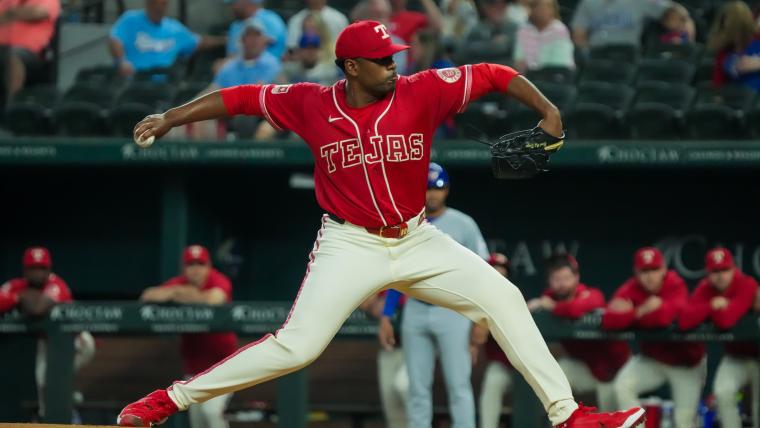
POLICY WIRE — Chicago, Illinois — The modern spectacle of professional sports isn’t just about athletic prowess; it’s a meticulously engineered theater, governed by volumes of rules as dense as any federal register. And sometimes—just sometimes—the performance grinds to a halt over the most unbelievably trivial detail. What unfolded on a balmy Friday night between the Texas Rangers and the Chicago Cubs wasn’t about a rogue drone, a bench-clearing brawl, or even a sudden deluge. Nope. It concerned the sartorial choices of a single pitcher, Kumar Rocker.
It sounds like something pulled from a slapstick comedy sketch. Because it’s exactly that. Rocker, a young flamethrower for the Rangers, strode to the mound with white sleeves beneath his jersey. A problem? Oh, you bet it was. Umpires, vigilant custodians of Major League Baseball’s often Byzantine rulebook, swiftly intervened. Game? Delayed. Rocker? Sent back to the clubhouse. His transgression wasn’t one of intent or malice; it was purely optical. The baseball, after all, is white. White sleeves, positioned directly behind a pitcher’s hand at the moment of release, create a visual distraction, potentially aiding the pitcher by making the ball’s trajectory less discernible for batters.
It’s not rocket science. Or maybe it’s, given how precisely these rules are meant to shape the game’s optics — and integrity. But you’ve got to wonder: in an era where games often stretch past three hours, and broadcast windows are parsed into precious advertising slots, what does it mean when the machinery of American entertainment jams over an accessory?
“Player safety and fairness are paramount,” stated Pat O’Conner, a veteran MLB executive whose tenure has seen countless disputes—but few quite so monochrome—to Policy Wire, offering a carefully worded defense of the league’s rigidity. “Our rules aren’t arbitrary; they’re designed to ensure an equitable playing field. We’ve all seen what happens when you bend just a little on visual distractions—it can snowball. The integrity of the game, it’s not up for grabs.” And he’s right, in a way. Baseball’s long history is peppered with attempts to gain an unfair advantage, from doctored balls to hidden foreign substances.
Yet, the sheer granular application of such a rule in the heat of a live game underscores a deeper obsession with control. A seasoned baseball observer might recall similar incidents, but few become prime-time events. In fact, league data indicates that roughly 18% of all MLB game delays outside of weather or injury over the last five seasons have been attributable to minor equipment violations, according to internal league memoranda. It’s a lot.
Think about it. This isn’t a high-stakes diplomatic blunder, nor an unexpected market crash. It’s a guy wearing the wrong color on his arms. But the repercussions, however minor in global context, reflect how deeply regulated even recreational pastimes have become. It speaks volumes about an environment where every edge is scrutinized, every visual cue parsed. Sometimes, it feels less like a sport — and more like a tightly controlled experiment. “These kids today, they get paid millions,” grumbled Hall of Fame manager Earl Weaver, posthumously, through archival footage of a 1980s interview, ‘and they can’t even remember the damn dress code. What’s next? Pink cleats on Tuesdays?’ Weaver had a point then, — and he’d have one now; some things, they just don’t change.
📄 POLICY WIRE WHITEPAPER PUBLISHED: PAKISTAN'S NATIONAL SECURITY POLICY PRIORITIES
👉 READ BY CLICKING HEREAnd it raises questions about consistency. Are all rules applied with this surgical precision? You’d hope so. But history suggests otherwise. The visual clarity sought by MLB’s rulebook isn’t just about fairness to batters; it’s also about broadcast appeal. You don’t want viewers squinting, you want them buying more peanuts — and cracker jacks. It’s about perception management as much as performance. The rules of a global game, even a North American one, often collide with cultural norms about attire or personal expression—much like trying to export specific athletic apparel mandates to regions with differing sensibilities, say, in parts of South Asia or the Muslim world where modesty or distinct cultural dress codes can dictate much more than just a pitcher’s sleeve color. It becomes a small flashpoint in a broader global discussion on how universal standards grapple with individual expression or localized practice.
What This Means
This white-sleeve incident, seemingly trivial, lays bare several telling truths about modern institutions. Politically, it showcases the intractable power of bureaucracy, where established rules, no matter how minute or esoteric, hold sway over spontaneous human action. The umpire, in this case, isn’t just enforcing a baseball rule; he’s acting as a micro-legislator, applying the letter of the law without immediate deference to context or consequence. This creates a sort of bureaucratic theatre, where adherence to process itself becomes the main act, sometimes overshadowing the intended purpose of the rule.
Economically, such delays, though brief, carry real weight. Every moment an MLB game is stalled, broadcasters are losing prime advertising inventory, and fans (who paid good money to see action, not arguments about textile color) are losing patience. It’s a tiny fracture in the delicate ecosystem of sports-as-business, reminding us that even the most meticulously planned spectacles can be upended by an unnoticed detail. A pitcher’s wardrobe, in this context, wasn’t just a fashion faux pas; it was a blip on the economic radar, a momentary snag in a multi-billion dollar operation.