


Beyond the Rubble: Pakistan’s Persistent Unrest Claims Another Market, Raising Deeper Questions
POLICY WIRE — Islamabad, Pakistan — Across Pakistan’s teeming urban sprawl, the daily hum of commerce—the haggling for fresh produce, the ceaseless thrum of rickshaws, the pervasive aroma of...

POLICY WIRE — Islamabad, Pakistan — Across Pakistan’s teeming urban sprawl, the daily hum of commerce—the haggling for fresh produce, the ceaseless thrum of rickshaws, the pervasive aroma of street food—often plays out against a more sinister, background hum: that of perennial insecurity. It’s a low frequency tremor most have learned to live with, until it isn’t. When the mundane gives way to sudden, deafening chaos, leaving a trail of ash, mangled livelihoods, and shattered lives, that familiar thrum becomes an undeniable roar.
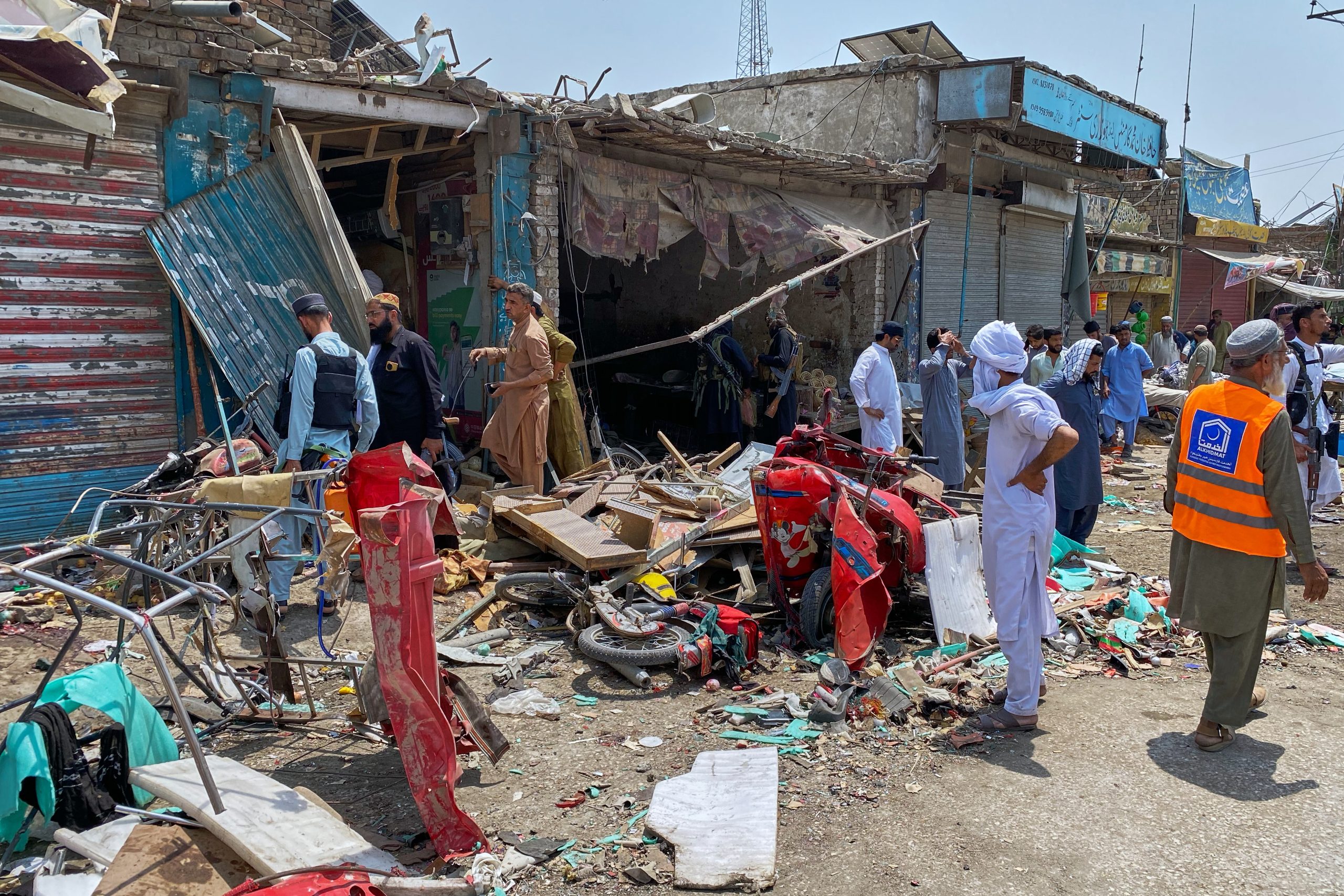
That roar ripped through a busy market in, what officials are now confirming was, a deliberate act of terror. Not a natural disaster, mind you, but something far more insidious, far more human in its making. It ripped through the ordinary fabric of a Tuesday afternoon, obliterating lives — and leaving at least nine people dead. Scores more, we’re told, nursed gruesome wounds, their bodies testament not to misfortune but to malevolence. This wasn’t some remote tribal outpost, either; this was a marketplace where families shop, where futures are dreamt up, however modest. Its precise location isn’t just a coordinate; it’s a cruel illustration of how pervasive this menace has become.
And so, the ritual begins. Condemnations from the government, solemn vows to bring the perpetrators to justice, and an outpouring of grief from a public already stretched thin by economic strain and chronic uncertainty. “This senseless act of barbarism against innocent civilians won’t deter our nation’s resolve,” declared Pakistan’s Interior Minister, Mohsin Naqvi, his words echoing sentiments heard too many times before. “We won’t rest until we’ve dismantled these terrorist networks, root — and branch. It’s an obligation to our fallen countrymen, and to our future.” But one has to wonder, privately, if that resolve isn’t occasionally just bone-weary.
Because the numbers tell a grim tale, don’t they? Pakistan has seen a disturbing uptick in militant activity. According to the Pakistan Institute for Conflict and Security Studies (PICSS), the country recorded a staggering 781 terrorist attacks in 2023, resulting in over 1,000 deaths—a significant escalation from previous years. It isn’t just a few rogue elements. This is organized, strategic brutality. It targets public spaces, precisely because it aims to sow maximum fear and instability, to unravel the already fragile confidence in governance.
The geopolitical chessboard, meanwhile, remains a complicated affair. Pakistan, sitting at the crossroads of South Asia — and the Muslim world, can’t catch a break. The volatile situation in Afghanistan next door often bleeds across the porous border, feeding radical groups within its own territory. It’s a cruel game of whack-a-mole the authorities are forced to play. But it’s also a deep source of international consternation, — and not a small bit of economic grief for Islamabad.
Dr. Sara Ahmed, a respected regional affairs analyst from the National Defence University, offered a stark, though unsurprising, assessment. “This latest incident, it’s not just a standalone tragedy. It’s another grim pulse in the broader pattern of regional instability, a constant pressure point on Pakistan’s already struggling economy and security apparatus.” She paused, her voice weary. “You can’t build investor confidence, you can’t stabilize a society, when daily life carries such a high, arbitrary price tag of terror. It impacts everything—from foreign policy to the price of basic commodities for the average citizen.”
It’s not just about what blows up, but what it does to everything around it. Pakistan, you see, finds itself in a peculiar bind, strategically important but domestically fraught. Its security challenges are inextricably linked to its neighbors—the complexities with Afghanistan, the persistent tension with India, and its deep, complicated ties across the wider Islamic world. The world might turn a blind eye, caught up in its own headline dramas, but for Pakistan, this is the very air they breathe. These weren’t just casualties in a marketplace; they were, in a very real sense, casualties of a system—a geopolitical system, a security system, an economic system—that hasn’t quite figured itself out yet. The borders bleed, and then the markets burn.
What This Means
This market attack isn’t just another horrific statistic; it’s a raw nerve exposed for Islamabad. Politically, it amps up pressure on the government to demonstrate effectiveness, to prove it can protect its citizens. Public trust, always a tenuous commodity, takes yet another hit. Because when security falters in basic spaces like a market, folks start wondering about the state’s capacity to do… well, anything much. Internationally, these events feed into a narrative of instability, making Pakistan a trickier prospect for foreign investment and alliances. Global powers, already skittish, will view such incidents through a lens of ‘can they manage their own house?’
Economically, it’s a sucker punch. Markets are the lifeblood of urban economies, aren’t they? Disrupt them with terror, and you disrupt supply chains, you deter shoppers, you undermine small businesses—the backbone of any developing economy. Investors, local and foreign, are acutely sensitive to security risks; explosions like this send them running for safer shores. The human toll extends beyond immediate casualties, rippling through families who’ve lost breadwinners or face insurmountable medical bills. It stunts growth, drains resources into security instead of development, and makes the uphill climb out of economic precarity even steeper. The long shadow of the Taliban’s resurgence and the region’s inherent volatilities only exacerbates this vulnerability, locking Pakistan into a cyclical pattern of security challenges hindering economic progress. It’s a feedback loop, vicious — and unforgiving.