


Australia’s Fiscal Tightrope: Canberra’s Gamble to Tame Inflation While Appeasing the Masses
POLICY WIRE — Canberra, Australia — The theatrics, naturally, unfolded precisely as scripted. A meticulously crafted budget, unveiled beneath the harsh glare of national attention, intended to convey...

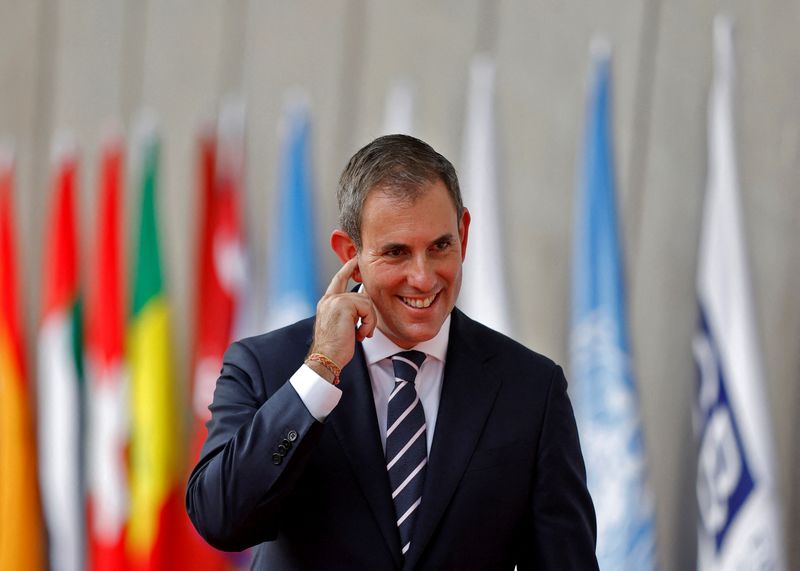
POLICY WIRE — Canberra, Australia — The theatrics, naturally, unfolded precisely as scripted. A meticulously crafted budget, unveiled beneath the harsh glare of national attention, intended to convey a singular message: fiscal rectitude. But listen closely, and you can almost hear the nervous creak of the tightrope wire beneath Treasurer Jim Chalmers’ carefully polished shoes. Australia, it seems, isn’t just battling persistent inflation; it’s locked in a psychological struggle against public cynicism, one where every dollar allocated—or withheld—is a political tightrope walk.
It’s a peculiar thing, the national budget. Not just a collection of numbers, mind you, but a grand narrative spun to calm anxieties, stimulate hope, and, in a country obsessed with its property market and superannuation, offer a sliver of financial solace. This year’s edition, however, feels less like solace — and more like a tactical retreat, disguised as bold reform. Because the cold, hard reality is this: Canberra needs to keep money from flowing too freely, lest prices skyrocket further, but it also can’t appear to be pinching pennies too tightly, not with an election cycle looming.
The government’s pitch? A delicate blend of targeted cost-of-living relief, mostly for households struggling the most, and strategic investments in what it calls ‘future-proofing’ sectors. Things like clean energy — and skills training got a nod. But this isn’t an economy that needs a dramatic jolt. Not really. The underlying objective, acknowledged or not, is to gently cool an overheated economy without throwing it into the deep freeze. Inflation, though cooling, remains stubbornly above the Reserve Bank’s preferred 2-3% target, clocking in at 3.6% in the latest Consumer Price Index (CPI) figures released by the Australian Bureau of Statistics for the March quarter. That’s an inconvenient truth, isn’t it?
“We’re threading a needle here,” Treasurer Chalmers was reportedly overheard telling a handful of senior colleagues during a pre-briefing session, a rare moment of candour in a usually tight-lipped administration. “Australians expect us to tackle cost of living pressures today, but they also demand a sustainable economic future. We’re laying the groundwork, making those tough calls that will pay dividends over the next decade, not just the next news cycle.” It’s a line, of course, that politicians have rehearsed for generations. But is it genuinely felt?
Opposition figures, unsurprisingly, weren’t buying it. “This budget is a missed opportunity, a Band-Aid when we need major surgery,” fumed shadow finance minister Jane Hume in a pointed media appearance. “They’re tinkertoying around the edges with minimal relief, while real families face mortgage stress and escalating grocery bills. Where’s the substantial reform? Where’s the genuine fiscal discipline needed to truly rein in inflation?” It’s the typical push-and-pull of parliamentary politics, designed for maximum soundbite impact rather than serious debate.
And so, Australia’s policymakers find themselves in an awkward spot, trying to preach prudence while simultaneously doling out selective sweeteners. There’s genuine fear, especially among older generations, of losing economic gains forged over decades. This plays out, too, in Australia’s foreign policy calculations. A stable, robust economy at home helps project strength abroad, underpinning relationships and allowing Canberra to exert its influence. It’s not just about domestic policy; it’s about strategic heft in the Indo-Pacific, where competing narratives are all the rage.
📄 POLICY WIRE WHITEPAPER PUBLISHED: PAKISTAN'S NATIONAL SECURITY POLICY PRIORITIES
👉 READ BY CLICKING HEREConsider, for instance, the broader implications for the Muslim world or South Asian nations. A booming Australian economy means more opportunities for skilled migration, stronger trade relationships for things like Australian resources or agricultural products, and even collaborative research initiatives. Economic buoyancy here translates to economic currents felt across the globe—something often lost in the local budget frenzy. Or, conversely, economic uncertainty in Australia contributes to a more fragile global outlook, potentially impacting remittances, investment flows, and even humanitarian aid towards countries like Pakistan, a nation grappling with its own relentless economic and political volatility. The world, after all, isn’t an archipelago of isolated economies. For some of Canberra’s economic mandarins, the challenge of securing economic stability feels almost like a struggle for the nation’s narrative itself. But you’ve got to balance the books, right?
What This Means
Politically, this budget is an elaborate tightrope walk, as mentioned. It attempts to project competence and responsibility without alienating segments of the electorate already struggling with cost-of-living pressures. The Labor government wants to appear fiscally responsible enough to reassure financial markets and the Reserve Bank, potentially alleviating pressure for further interest rate hikes, while also providing just enough relief to quell public discontent.
Economically, the impact will be incremental. It’s not a radical overhaul, but rather a slow turning of a very large ship. The budget’s modest surplus (projected, naturally, by the Treasury itself) will offer some headline relief, but the underlying inflationary pressures are systemic. They won’t just evaporate with a few targeted handouts. Long-term structural challenges remain, like housing affordability — and workforce productivity. If inflation remains sticky, expect more pain for borrowers. The government is gambling that these smaller, more considered measures will cool things down without triggering a recession, a rather optimistic outlook, some analysts would say. It’s a calculated risk, betting on subtle shifts over dramatic declarations.