

Post Indian Aggression: Pakistani Nation Rallies Behind Its Army
The heart wrenching images of innocent children killed in the horrific attacks on 7th May 2025 by India have been circulating across social media since yesterday. These images devastated the...

The heart wrenching images of innocent children killed in the horrific attacks on 7th May 2025 by India have been circulating across social media since yesterday. These images devastated the Pakistani nation, becoming a powerful call for unity and national solidarity. Despite the country’s political, social, economic, and cultural diversity, and often minor internal disagreements, Pakistan has stood united against Indian aggression, rallying in support of its armed forces.
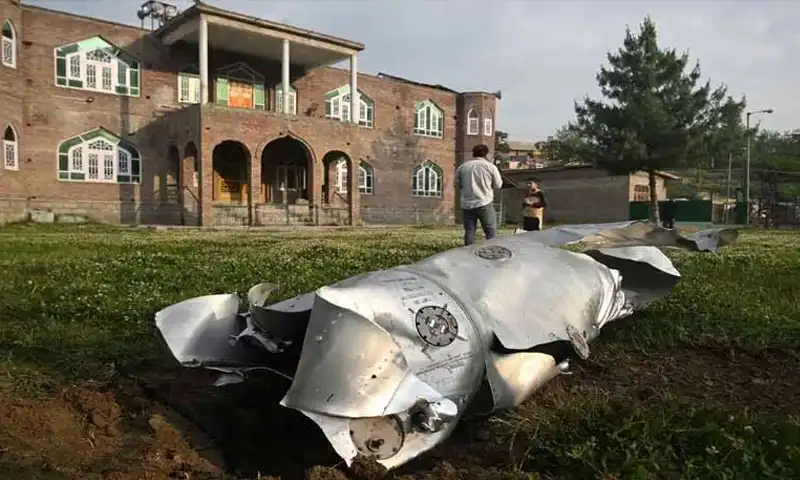
While Pakistani civilians were peacefully asleep, India launched a cowardly and unjustified aggressive attack, targeting civilian areas including mosques, homes, and residential neighborhoods. These were not military units nor were they terrorist hideouts. These were places where families lived, where children laughed and played, and where lives were tragically lost.
India once again tried to justify its actions by falsely claiming it was targeting “terrorist sites”. However, where is the evidence? Just like in the aftermath of the Pahalgam attack, there is no proof, only baseless accusations for fulfillment of political interests. No terrorists were killed in this attack, because there were none. What occurred instead was the murder of innocent civilians, mostly women and children. This is not new, it is part of a recurring pattern, especially under the BJP government, where military actions are used as political tools, often to evoke nationalism and win votes during election season.
The ideology of Hindutva and the growing Islamophobia in India, propagated by the BJP, continue to fuel such aggression. These attacks are not about security. They are about electoral gains, achieved at the cost of innocent Pakistani lives. Yet, India’s cowardness achieved the opposite of what it intended to achieve. It didn’t break us, it brought us together.
Across Pakistan, people from all walks of life, despite their differences, rose as one nation. The nation that was internally divided found unity in tragedy and threat of foreign enemy. From Karachi to Khyber, social media exploded with support for the armed forces, tributes to the martyrs, and expressions of outrage against Indian aggression. In Khyber Pakhtunkhwa, for example, massive rallies were held in Peshawar’s Khyber Bazaar, the Khyber District, Tank, and Bisham. These events drew people from every segment of society including business leaders, students, activists, religious scholars, tribal elders, and local officials. At the historic Bab-e-Khyber in Jamrud, a powerful protest march was led by tribal leaders and local authorities. The community united in rejecting the cross-border violence while celebrating the bravery and competence of Pakistan’s military. “Tribal communities have always been the nation’s first line of defense”, tribal leaders declared at the event. “We stand united with our brave soldiers and will never tolerate threats to Pakistan’s sovereignty”. Similarly, the Institute of Peace and Conflict Studies at the University of Peshawar, under the leadership of Dr. Jameel Chatrali, organized a large student-led demonstration. The air echoed with passionate slogans of Pakistan Zindabad and Pakistan Army Paindabad. Similar rallies were held in educational institutions and public squares across the country.
While the armed forces stood at the border, Gen Z took to social media to showcase support. Memes, jokes, satire, and roasts aimed at India and its leadership became a means of morale-boosting, trust building, and unity. The nation showed no signs of mourning rather it responded with resilience. From Instagram to Twitter, from Facebook to TikTok, Pakistanis used humor and digital creativity to stand up to the psychological warfare, misinformation campaigns, and Indian propaganda. Stories and feeds were filled with images of support, respect, and admiration for the Pakistan Army. Videos showing soldiers comforting displaced children, delivering aid, and praying with civilians served as reminders of who the real protectors of the nation are.
Pakistani celebrities also shared their opinions. Statements from prominent figures like Mahira Khan and Hania Aamir, both of whom have large Indian followings, made headlines. Their firm support for the Pakistan Army resonated not only within Pakistan but also internationally, showing that Pakistan’s stance isn’t just institutional, it is deeply personal and the people stand firmly with it. The response from the entertainment industry and public figures demonstrated that national defense is not only the responsibility of those in uniform rather it is a collective duty. Everyone should know that Pakistan is not Gaza. We are a sovereign, nuclear state with a capable, disciplined, and competent military. Our army has faced decades of challenges, both internally and externally, and continues to rise with unmatched professionalism. More importantly, our strength does not only lie in weapons, it lies in the spirit of our people.
📄 POLICY WIRE WHITEPAPER PUBLISHED: PAKISTAN'S NATIONAL SECURITY POLICY PRIORITIES
👉 READ BY CLICKING HEREIndia’s attempt to break us has backfired. Instead of putting fear in our hearts and minds, it ignited an even stronger bond between the people and their defenders. Instead of dividing us, it reminded us of what unites us, our faith, our flag, and our shared future. Modi’s continued policy of using anti-Pakistan narratives and violence to manipulate voters should be called out by the global community. The world must not remain silent while innocent lives are lost in a political game. No election victory is worth the blood of children. No ideology should justify the killing of innocents. Pakistan has spoken, not just in words, but in actions, in protests, in rallies, in social media campaigns, and in unshakable support for our armed forces.
India must note very carefully: Pakistan’s strength lies not just in its nuclear weapons, but in its people who are resilient, united, and brave. Also, we may have been asleep when the bombs fell, but we are wide awake now.
Author