


Before the Whistle: Britain’s Sporting Grits Defy the Dawn for Women’s Football Dream
POLICY WIRE — Brighton, UK — Forget the stadium roar for a moment. Forget the pristine pitches, the multi-million-pound contracts, or the manicured theatrics of elite sport. Long before any ball was...

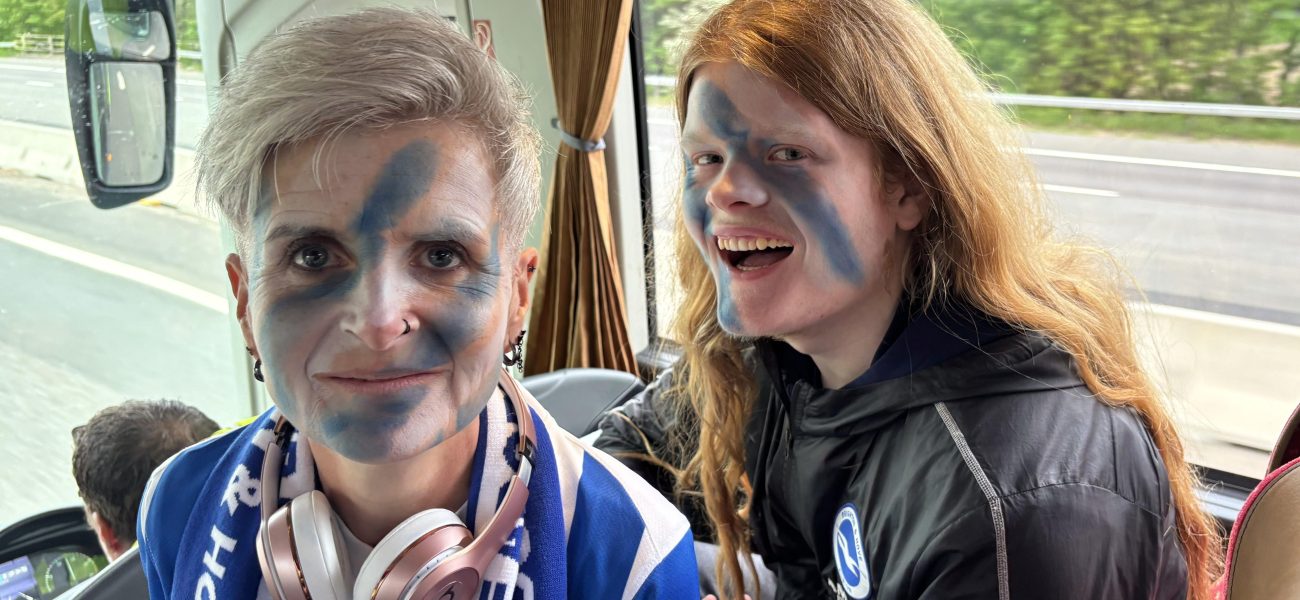
POLICY WIRE — Brighton, UK — Forget the stadium roar for a moment. Forget the pristine pitches, the multi-million-pound contracts, or the manicured theatrics of elite sport. Long before any ball was kicked, before the sun had even hinted at breaking over the English Channel, the true heart of Brighton & Hove Albion Women’s Football Club was already on the move. They weren’t players; they were the faithful, bundled onto a coach at an ungodly 5 AM, embarking on a four-hour pilgrimage to Merseyside for an FA Cup semi-final. Because for this burgeoning corner of the sporting world, the glamor often lies less in the result, and more in the sheer, unvarnished act of showing up.
It’s a scene that’s oddly emblematic of the broader struggle — and quiet triumph of women’s professional sport. There’s a dedication that feels almost old-school, a raw, uncompromising commitment from both players and supporters alike. They weren’t jetting off; they were riding a bus to a rugby league stadium, which for some reason, had become the neutral battleground. This isn’t Wembley yet, not for the semi-final at least. And that stark reality — the humble venue, the pre-dawn starts — speaks volumes about where women’s football still stands, even as it inches closer to the mainstream.
Sam Sleeman-Boss, one of the stalwarts on that dimly lit bus, reportedly claimed the night felt like ‘Christmas Eve.’ One can almost taste the bitter irony. Christmas Eve, perhaps, for a particular breed of sporting romantic. A Christmas Eve where the big gift might just be a bus seat, a lukewarm coffee, — and the fervent hope of progression. But their hope? It was certainly tangible.
“This isn’t just about football; it’s about community spirit, about our city’s identity on a national stage,” stated Councillor Eleanor Vance of Brighton City Council, whose office has watched the club’s female contingent grow with keen interest. “These fans represent the heart of what we build here, a resilience we can all draw from.” She’s not wrong. It’s the kind of bedrock support that sustains institutions when the bright lights fade.
The dedication, frankly, is staggering. Brighton, with its famously progressive streak and bohemian spirit, embraces its women’s team with an intensity mirroring that given to its men’s Premier League side. They’d beaten Arsenal 2-0 in the quarter-final, a genuine upset, suggesting a hunger that belies their sixth-place standing in the Women’s Super League (WSL).
But what does this all mean on a wider canvas, especially beyond Britain’s green — and pleasant lands? Well, think about the nascent women’s sports scene in, say, Pakistan. While cricket still dominates— and will for the foreseeable future — the struggle for recognition, resources, and even basic infrastructure for women’s football in South Asia often makes a 5 AM bus ride look like a luxurious charter. In places like Karachi, female athletes battle against deeply ingrained social norms and economic realities for every small win, for every game that gets played. The passion is universal; the playing field is anything but. That shared, understated devotion, that unglamorous grind for something you believe in — it transcends borders, from Merseyside to Multan.
According to UEFA’s latest figures, women’s football participation has surged by 40% across European federations over the past five years. And that’s a hard number, directly from the source, demonstrating this isn’t merely a niche interest anymore; it’s a rapidly expanding market, even if the travel logistics remain decidedly un-Ligue 1.
The sentiment from Charlie Little, another early-morning traveler, perfectly encapsulated the nervous energy. “If we get to Wembley, I don’t care what happens in that game; we’re at Wembley. But if we lost this one, it would be depressing. I’d be distraught.” And there it’s—the brutal honesty of the fan. That emotional leverage. They’re buying into the dream, yes, but also footing the bill (literally) for the ride.
Aisha Rahman, a spokesperson for the FA Women’s Super League, summed it up concisely. “The sheer dedication of these supporters—waking before dawn, traveling cross-country—it’s what drives women’s football. It proves the growing market, the undeniable passion. Investment isn’t just a charity; it’s a strategic necessity.” She isn’t wrong. They’re making the business case through sheer willpower. It’s hard to ignore such steadfast consumers.
What This Means
The gritty narrative of Brighton’s women’s FA Cup campaign—culminating in an unglamorous but utterly devoted pre-dawn exodus of fans—reflects the complex, evolving landscape of professional women’s sports. Economically, this unyielding fan loyalty demonstrates a tangible, albeit still undervalued, market. Their commitment, financial and otherwise, justifies increased corporate sponsorship and broadcasting rights, propelling the league further into profitability. For years, narratives of women’s sports have hinged on moral imperatives or equality mandates. But increasingly, as these scenes show, it’s about a viable economic model built on authentic passion. Politically, the ascent of women’s teams like Brighton often correlates with local pride and community identity, giving civic leaders, like Councillor Vance, a new, positive platform. It’s not just about sport; it’s about shifting societal norms, encouraging broader participation, and creating new heroes. The subtle message here is clear: investment in women’s sports isn’t merely an allocation of funds, it’s a bet on burgeoning markets and social progress, mirroring even the intricate economic plays seen in other burgeoning global sports markets. (Consider how Jaipur’s desert mirage of IPL wealth contrasts with this grassroots hustle.) The game on the pitch is one thing; the socio-economic implications are quite another. Because it turns out, the fight for a fairer game, a bigger pie, starts before dawn, on a coach, somewhere near an old Amex Stadium.