

Sunderland’s Success Paradox: When Mid-Table Isn’t Quite Enough
POLICY WIRE — London, UK — Imagine this: You’ve got a job, you’re pulling your company out of the financial weeds, catapulting it to new heights, and solidifying its position in an...

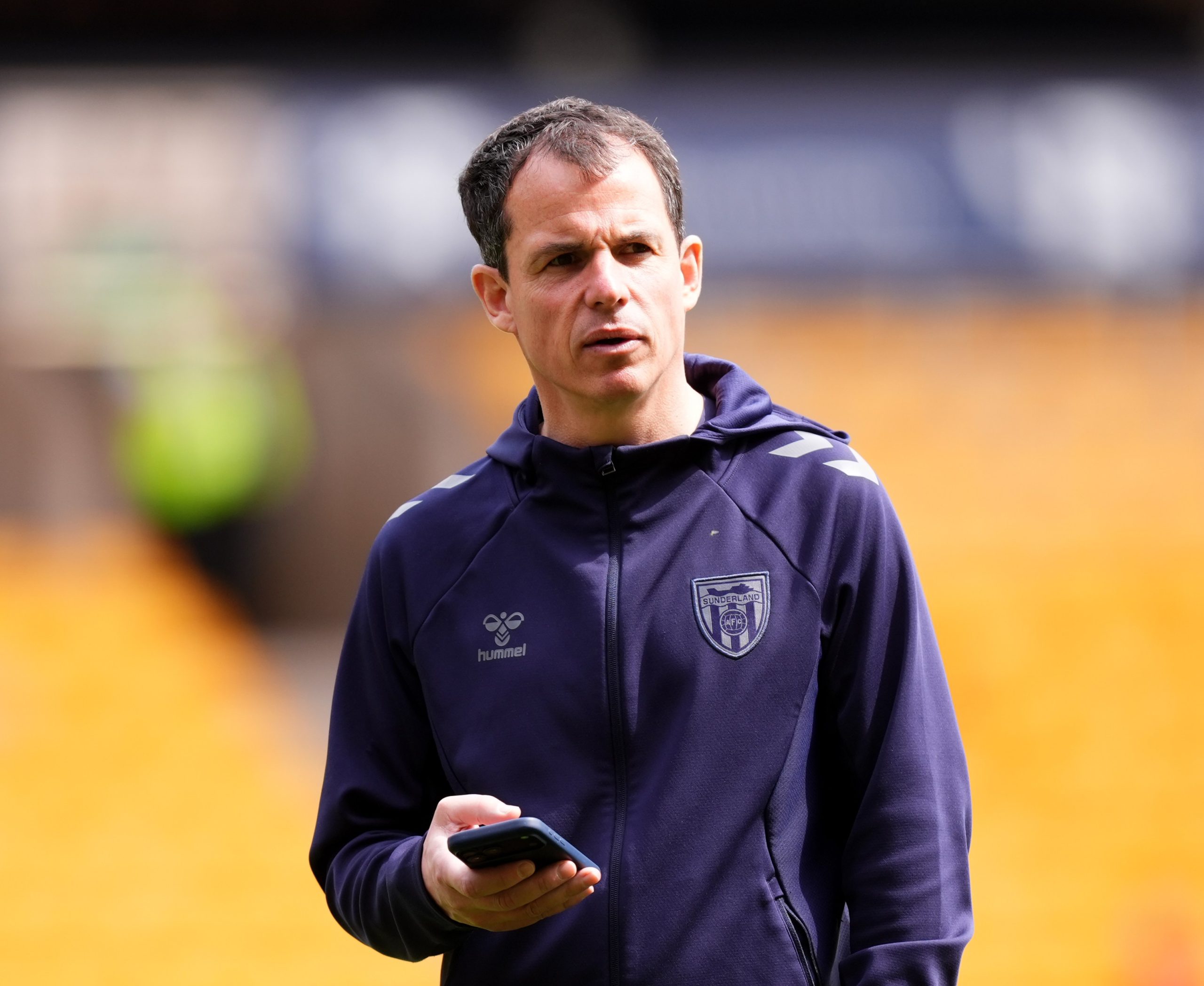
POLICY WIRE — London, UK — Imagine this: You’ve got a job, you’re pulling your company out of the financial weeds, catapulting it to new heights, and solidifying its position in an elite market. And then, well, the rumblings start. That’s the absurd, yet utterly predictable, world of modern football, perfectly epitomized by the strange whispers surrounding Sunderland AFC manager Régis Le Bris. He’s taken the club from the Championship’s murky depths to established Premier League solvency within two short years—a feat many would hail as nothing short of miraculous. Yet, the air on Wearside is thick with speculation, suggesting his job, remarkably, isn’t secure.
It’s enough to make a seasoned observer shake their head. Le Bris isn’t just treading water; he’s engineered a club-defining transformation. Cast your mind back just twenty-four months: Sunderland were scrapping it out, finishing 16th in the Championship. Now, they’re comfortably mid-table in England’s top flight, with top-half dreams still flickering—maybe even a cheeky shot at European football. They’ve secured their Premier League status for another season with three games left to play. Nobody, not once, has looked nervously over their shoulder at the relegation abyss. And still, the knives are, metaphorically speaking, being sharpened.
But that’s football for you. A relentless, often irrational beast fueled by short-term memories — and an insatiable hunger for the next big thing. In a climate where stability is a relic—Watford, a prime example, churned through four managers in this same two-year span and are now reportedly eyeing their fifth—Sunderland has been a surprising island of calm. Le Bris, by month’s end, joins an exclusive cohort of Sunderland head coaches to survive two full seasons. It sounds like progress, doesn’t it? A club finding its footing, building something lasting.
“We’ve got a clear long-term vision for Sunderland, and that includes disciplined growth and sustained improvement across the board,” remarked Kyril Louis-Dreyfus, the club’s chairman, during a recent shareholders’ brief. He didn’t explicitly name Le Bris, but his emphasis on stability hinted at a quiet endorsement, perhaps a plea for patience in an impatient arena. Because when you consider the state of affairs at some other historically prominent clubs, Sunderland’s ascent seems less like a miracle and more like smart, consistent management. Just last season, according to FIFA’s Global Transfer Report 2023, the global transfer market for men’s football reached an unprecedented $9.63 billion, reflecting a culture that often believes throwing money at problems (or hiring new management) is the only path.
However, the internal narrative isn’t quite as straightforward. It’s an open secret that the club’s power brokers, Louis-Dreyfus and sporting director Florent Ghisolfi, operate on a ruthless principle: if an upgrade is possible, they’ll make it. They’ve demonstrated this with previous sporting directors — and players. “Our mandate is perpetual assessment and aiming for marginal gains at every level,” Ghisolfi explained when pressed about future personnel decisions, reflecting a colder, calculated approach to club development. “No position, coaching or otherwise, is ever immune from scrutiny if we believe there’s a clearer path to even greater competitive advantage.”
The murmurs aren’t just from fringe elements; they’re tied to a few rough patches this season. A couple of games without a win, a dip in form. And suddenly, for a fanbase accustomed to the emotional roller coaster of Championship football, it’s seen by some as a catastrophic failure. Is it arrogance, fueled by their sudden upward mobility, or merely evidence that expectations, like an over-inflated balloon, have expanded too rapidly? It’s probably a bit of both.
Think about the intense pressures faced by coaches of national teams in, say, Pakistan. Failure to perform on the cricket pitch or in football tournaments, even with limited resources, can trigger public outcry and swift sackings—echoing the same raw, emotional demands for immediate gratification we see in the Premier League, just with a different cultural backdrop. It’s a shared global phenomenon, this craving for instant victory. The pressures and the passion, from Dhaka to Durham, can be remarkably similar.
What This Means
The potential removal of Régis Le Bris from Sunderland’s helm isn’t merely a football story; it’s a stark case study in the pathologies of modern organizational leadership and public perception. Economically, this relentless pursuit of “better”—even when “good” is clearly working—speaks to a larger market impatience. Corporations often reward short-term shareholder value over long-term strategic growth, mirroring the football fan’s clamor for immediate silverware over gradual club building. The political implication lies in the disconnect between measurable progress — and emotive public sentiment. Le Bris represents steady, demonstrable progress, yet a segment of the “electorate”—the fanbase—prioritizes the feeling of inevitable, ceaseless escalation. It’s a cautionary tale about how perceived stagnation, even after monumental achievements, can undermine genuinely effective leadership. If Sunderland’s ownership decides to part ways, it sets a chilling precedent: stability, it seems, isn’t a goal; it’s merely a temporary state before the next revolution. This constant turnover stifles organic development, burns out talent, and often, ironically, leads right back to where they started. The grass, they’ll likely discover, isn’t always greener.
Nobody’s saying Le Bris is beyond criticism. Of course, he isn’t. But realistically, given Sunderland’s current rung on the football ladder—their actual “food chain” position—how many managers are out there who are genuinely better, available, *and* willing to take the job? Not many. You’ve got a guy who’s earned a top-half Premier League finish (potentially), a healthy fifteen points above the drop zone, and he’s outperforming clubs with far longer tenures in the top flight. That, in my book, isn’t failure; it’s the foundation for something great. But the ones with their fingers on the trigger, the club’s leadership, will make the ultimate call. They’ll be shaping not just Sunderland’s future, but sending a clear message about what “success” really means in the modern game.