


Albuquerque’s Illogical Divide: Criminalizing Sleep, Rising Joblessness, and a Rock-and-Roll Distraction
POLICY WIRE — Albuquerque, United States — Policy, much like an arid desert wind, sometimes swirls up odd combinations. Consider this week: municipal leaders here decreed that sleeping on a public...

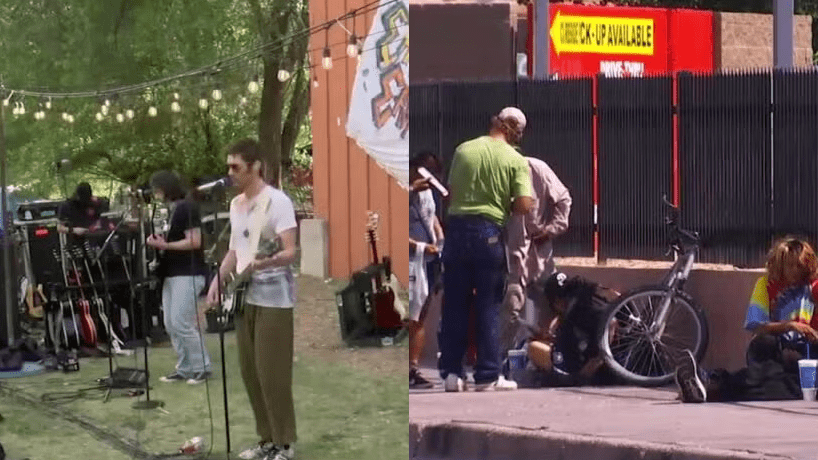
POLICY WIRE — Albuquerque, United States — Policy, much like an arid desert wind, sometimes swirls up odd combinations. Consider this week: municipal leaders here decreed that sleeping on a public sidewalk is now a breach of civic order— punishable by fines, even jail time, should one feel particularly inclined to test the boundaries of a ‘designated service and safety zone.’ Meanwhile, the state’s jobless rate, it turns out, is quietly inching upwards. And just to round out the civic paradox, an ‘All-American’ rock band blew into town for a pop-up concert, offering thousands a momentary, loud reprieve from the city’s pressing, often uncomfortable, realities.
It’s a peculiar tableau, isn’t it? One arm of the city government —the City Council, specifically—just waved through its “Enhanced Service and Safety Zone Ordinance,” effectively criminalizing the very act of existing without means on public thoroughfares. And then there’s the quiet whisper from the state’s Department of Workforce Solutions: unemployment figures for New Mexico have crept up to 4.8% in March, a noticeable climb from 4.1% a year prior. For context, the national average idles at 4.3% for the same period. They’re telling us more folks are looking for work, or rather, not finding it. It’s a tale of two Albuquerques, perhaps. One that wishes its problems would simply disappear, and another that’s grappling with the slow, gnawing certainty of economic stagnation.
“We’ve heard the calls from residents and businesses for more order, more safety in our public spaces,” Council President Mark Wernicke stated, his voice a steady drone across the morning news. “This isn’t about targeting the vulnerable; it’s about ensuring access for everyone and maintaining public health standards. It’s a pragmatic solution, not a punitive one.” You know, for people who happen to have homes. But critics aren’t buying the neat framing.
Because while officialdom tinkers with bylaws concerning where one can, or cannot, simply *exist*, the darker side of communal trust played out in a local courtroom. Former John Adams Middle School teacher Patrick Corr stands accused of sexually assaulting teen girls. A female victim, trying to provide emotional testimony on Thursday morning, was reportedly overwhelmed—a panic attack, they said—and refused to continue. Her courage, or rather, the trauma that broke it, halted the proceedings. It reminds you that some battles, the ones fought in a witness box, leave far deeper scars than any municipal decree could hope to mend. This is the stuff that haunts a community long after the headlines fade.
And speaking of things that defy neat packaging, the economic narrative isn’t helping. State labor department figures paint a picture of a job market under strain. “While we’ve seen growth in certain sectors, New Mexico’s economy is sensitive to broader national shifts,” commented Sarah Khan, chief economist for the state’s Economic Development Department, trying to project a semblance of controlled optimism. “We’re continually investing in new industries to diversify and stabilize our workforce, but the March numbers remind us that we’ve got work to do.”
Then, suddenly, rock and roll. The All-American Rejects —yes, those guys— pulled off a surprise concert in Albuquerque’s South Valley. Thousands descended on a barn, of all places, for a pop-up performance as part of their “house party tour.” A brief, raucous interlude of pure, unadulterated escapism. A band plays on as the city navigates its contradictions. It’s a surreal, almost ironic footnote to a week packed with complex human dilemmas — and bureaucratic fixes.
What This Means
Albuquerque’s actions this week paint a stark picture of a city attempting to manage complex social issues with decidedly blunt instruments. The new sidewalk ordinance, designed to enforce a sanitized vision of urban space, could well exacerbate existing homelessness by displacing, rather than solving, poverty. It’s a familiar tactic seen globally— from certain European cities to even bustling metropolises like Karachi, Pakistan, where public order priorities often clash with the realities of an informal economy and a significant street population. These laws, while framed in terms of ‘safety’ and ‘hygiene,’ frequently criminalize poverty itself, making life for the unhoused an endless cycle of fines and fear, rather than offering meaningful pathways to stability. The rise in unemployment then adds another layer of grim precarity, hinting that more people might find themselves teetering on the edge of the very social condition the city council is trying to legislate out of public view. Albuquerque’s bureaucratic ballet continues, but the impact on its most vulnerable citizens remains a sobering question. This legislative move may streamline the appearance of order but risks fracturing the social fabric further, creating deeper distrust between civic institutions and the populations they ostensibly serve. It also distracts from the broader economic challenges facing the state, making headlines with enforcement rather than with comprehensive socio-economic development.
The juxtaposition of this legislative push with the rising unemployment figures is telling. It’s a one-two punch that suggests less a coordinated strategy for growth and welfare, and more a reactive push for aesthetic civic tidiness in the face of underlying malaise. And the city’s climate future? Well, that’s another storm brewing entirely, requiring more than just bans. But that’s a tale for another dispatch, after the rock music fades and the quiet hum of policy decisions reasserts itself in the Land of Enchantment. For now, the notes from the All-American Rejects echo, a momentary distraction from the grim rhythm of policy decisions impacting actual lives.