

India’s Night Strikes and Pakistan’s Response
To create a threat and extract pressure on its adversary, the Modi government has a record of using belligerent rhetoric and force diplomacy. Well, recent events have exposed the flaws in that...

To create a threat and extract pressure on its adversary, the Modi government has a record of using belligerent rhetoric and force diplomacy. Well, recent events have exposed the flaws in that approach. India promptly accused Pakistan of the Pahalgam event in Indian-controlled Kashmir, pursuing its now well-established habit of attributing responsibility even before any inquiry, as tensions in the region mounted. Pakistan responded, but this time with candour, honesty and diplomatic finesse, rather than with the same brute force. Through press conferences, international outreach and visible moderation, Islamabad laid bare New Delhi’s gratuitous aggression and underscored India’s propensity for belligerence. This shift was not only cemented on foreign shores, but even in India, people started questioning the authenticity and utility of their government’s eternal Pak-bashing.
In the face of rising domestic criticism and pressure to respond, the Modi government opted for escalation. In a classified operation codenamed Operation Sindoor, India launched 24 missiles from across the border into Pakistan, hitting air and ground targets the evening of 7 May. Nine sites were targeted, including densely populated civilian areas in Bahawalpur, Kotli, Muzaffarabad, and Muridke, across both mainland Pakistan and Pakistan-administered Kashmir. The strikes were designed to project power and deterrence, and they were carried out under the cover of darkness. But what unfolded was less a flexing of Indian muscle than a rapid-moving chapter in its own story.
The illusion of a knockout was quickly wiped away. The assault brought together the Pakistani military and the people, brought them together in resistance, not terror. Next morning, Lt Gen Ahmad Sharif Ch, DG ISPR, addressed a comprehensive press conference to the nation and the comity of nations. He called the Indian attack “a cowardly and unprovoked act of aggression” levelly but forcefully, stressing that the strikes had been entirely civilian and not useful for military purposes.
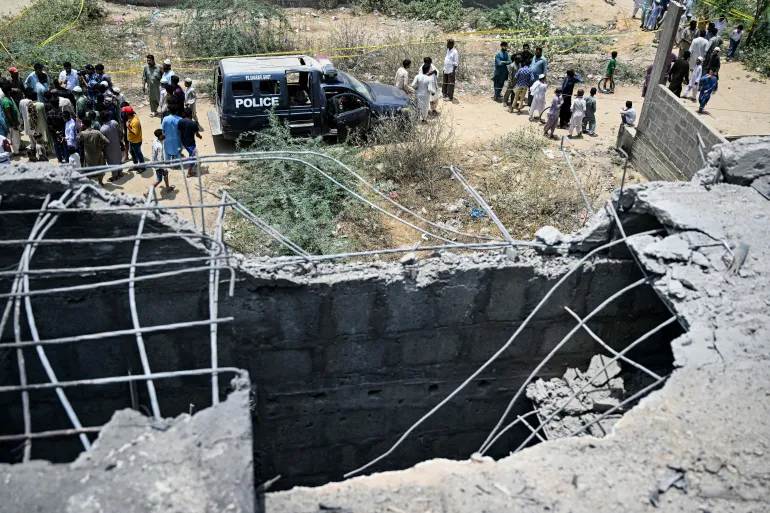
As many as 31 Pakistani innocent civilians, including mothers, children and old men, were martyred. Two toddlers perished in a missile attack on Subhanullah Mosque in Bahawalpur, and the murder of a 16-year-old girl and her 18-year-old brother was reported from Kotli. In another attack on Muzaffarabad’s Bilal Mosque, three civilians had been killed. Public infrastructure, residential buildings, and places of worship lay in ruins across the nine targeted areas, and 57 more people were injured, some seriously. Directing acts of violence against people and places of worship is specifically prohibited by the Geneva Conventions and the law of armed conflict, and these events in question alluded to in this story, are an affront to these accepted international standards.
India predictably cited counterterrorism as the reason behind the strikes, claiming that units had struck terrorist facilities meant for a Pahalgam tragedy. But there are no facts presented, no intelligence shared, and no foreign reporters there who could verify the purported “targets. Pakistan, on the contrary, let both domestic and international journalists visibly see the destruction themselves by granting them access to the affected areas. Blood-smeared mosque floors, bombed-out houses, and families who bore their loved ones’ remains were all documented in chilling aftermaths that were photographed and filmed. In the pictures, there was no room for doubt, these were peaceful residential streets, not hotbeds of insurgency.
Lieutenant General Chaudhry also announced that Pakistan appropriately responded immediately. IAF was brought down to its knees, losing five fighter jets, including a couple of Rafale fighters and a combat drone, which violated Pakistani airspace. Moreover, Pakistan’s capability and restraint were proven when response missile attacks were carried out against an Indian Army brigade headquarters near the Line of Control, causing a significant amount of destruction and no civilian casualties.
The DG ISPR reiterated Pakistan’s desire for peace but warned that massive force would be employed to counter any future attack. “We are prepared to defend our people and our territorial integrity at whatever cost, however, we do not want war,” he said. For sure, but we are stronger than their taunts.
Pakistan’s diplomatic wires sizzled off the battlefield. Diplomats from China, Russia, the United States, the United Kingdom, and France, who were given access to satellite images and information on the number of dead, were told by the foreign minister, Ishaq Dar, that the end had come when it could no longer guarantee the safety of foreign nationals. Further, the Ministry of Foreign Affairs lodged a proviso to the UN requesting the Security Council to register the violation of India of international law and its destabilizing activities in a region which is already unstable.
This is worth noting not only for India’s belligerence but also for Pakistan’s maturity. That kind of attack could have prompted tit-for-tat volleys across the border or an immediate escalation in years past. But Islamabad’s tactics this time have positioned itself as the responsible player on the global stage, by maximising the resort to diplomatic and legal routes even as it does not desist from the use of force if required. It could not be more different from the overtly combustible and opaque approach of New Delhi.
📄 POLICY WIRE WHITEPAPER PUBLISHED: PAKISTAN'S NATIONAL SECURITY POLICY PRIORITIES
👉 READ BY CLICKING HEREBut the Indian public is beginning to look beyond the language of war. In India, civil society voices and political commentators have started nudging some uncomfortable questions: Why was there no parliamentary discussion before the strikes? If the objective was to hit militants, why were only civilian areas targeted? What would be the implications of escalating hostilities with a neighbour that happens to own nuclear weapons?
Modi’s once vaunted government of strength and decisiveness now emerges as embattled and reactive, diplomacy for destruction, rhetoric for recklessness. And his fantasy of manufacturing some external menace upon which to hang his majesty, a distorting funhouse mirror rendering of his self-imagined regalness to help him through the next election, does not appear to be met. Here we are again, on the brink of disaster in South Asia. But this time, the world knows who shot first and who bled the most.
Author