

Old Trafford’s Echo: The VAR Verdict That Ignited a Global Debate
POLICY WIRE — Manchester, England — The roar, when it finally erupted at Old Trafford, wasn’t just for a goal; it was a defiant exhalation. A communal gasp, first, then an explosion of relief...

POLICY WIRE — Manchester, England — The roar, when it finally erupted at Old Trafford, wasn’t just for a goal; it was a defiant exhalation. A communal gasp, first, then an explosion of relief that only milliseconds of agonizing uncertainty can forge. It wasn’t the opening salvo in Manchester United’s tilt against Liverpool that truly held the theatre captive; rather, it was the forensic, digital inquest into Benjamin Sesko’s subsequent strike that captivated, and infuriated, observers worldwide. A goal, initially awarded, then placed under the harsh, unblinking scrutiny of VAR, leaving millions — from the packed stands to distant living rooms in Lahore — to ponder the arbitrary nature of ‘clear and obvious’ error.
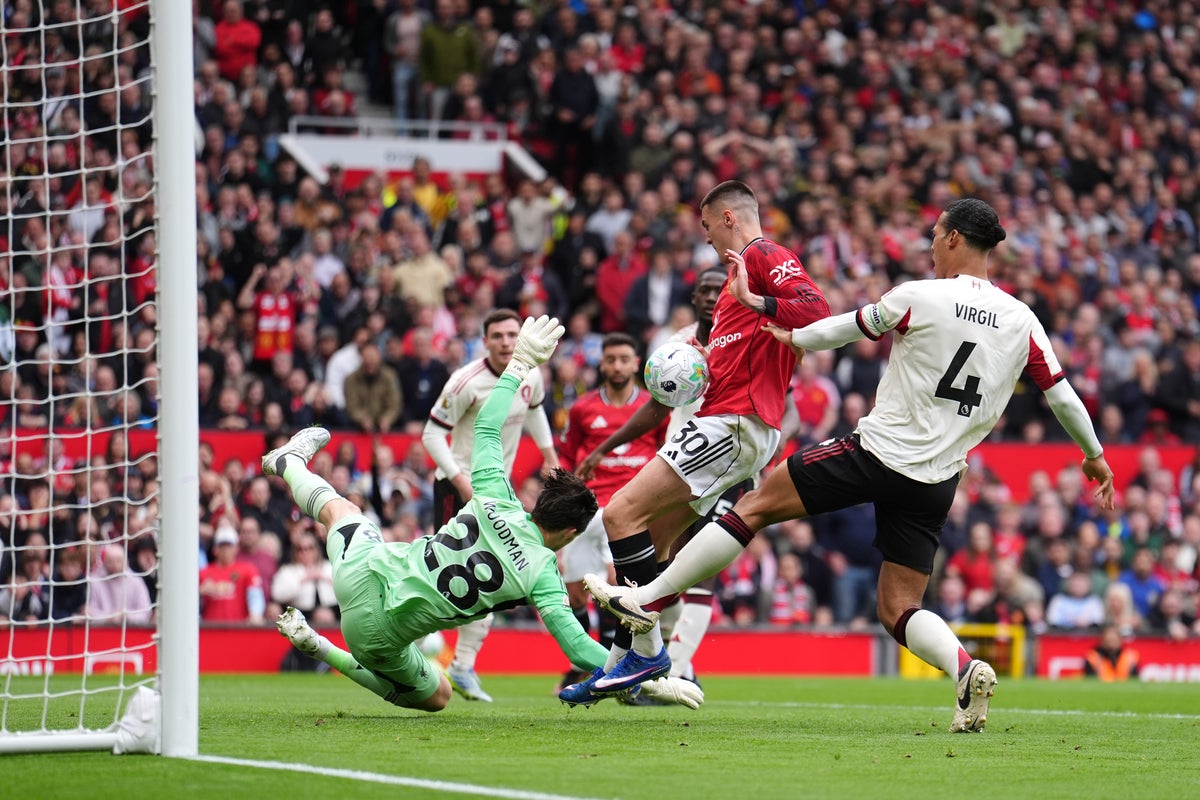
United had, indeed, initiated proceedings with a verve few had anticipated, Matheus Cunha deftly slotting home within the first six minutes. But it was the eighteenth-minute spectacle surrounding Sesko’s tally — a bouncing, caroming, somewhat undignified affair that ended with the ball trickling over Liverpool’s line — that became the day’s true talking point. Goalkeeper Freddie Woodman, in a desperate lunge, inadvertently batted the ball into the path of Sesko. What transpired next was a pinball sequence: ball ricocheted off the striker’s legs, then his chest, culminating in the controversial score. Immediate, universal suspicion: a handball. And, sure enough, the ubiquitous VAR graphic materialized, signaling another interlude of collective breath-holding.
Multiple angles, replays slowed to a glacial crawl, appeared on the stadium screens. Some suggested no contact with Sesko’s left hand; others seemed to betray the faintest graze of fingers. For nearly three minutes — an eternity in the rapid-fire world of top-flight football — the decision hung in the air, a digital sword of Damocles. Then, Stuart Attwell, the VAR official, delivered his verdict: goal allowed. The Premier League Match Centre later articulated the official stance on X, formerly Twitter, conveying that there was “no conclusive evidence that Sesko handled the ball before scoring.” This rationale, while technically adhering to protocol, didn’t placate everyone. It rarely does, does it?
“While we appreciate the passion surrounding such pivotal moments, our protocols are explicit,” a Premier League spokesperson, speaking anonymously due to strict media guidelines, later opined to Policy Wire. “The threshold for overturning a referee’s on-field decision demands clear and obvious error; absent that, the original call prevails.” A perfectly rational, if somewhat unfeeling, explanation for a sport so intrinsically tied to raw emotion. But that’s the rub with VAR: it seeks surgical precision in a game built on chaotic flow, often leaving a trail of justifiable frustration in its wake.
Still, the disquiet echoes far beyond England’s shores. The Premier League, a behemoth of global sports entertainment, commands an audience that stretches from the pubs of Manchester to the crowded cafes of Dhaka. Its controversies, consequently, are not contained. “It’s baffling, frankly. You have this technology, countless replays, and still, the gray areas multiply,” shot back a visibly exasperated Jürgen Klopp, Liverpool’s manager, during his post-match press conference. “We train for precision, for moments of brilliance, only to have them overshadowed by a debate about an inch, a pixel, or a phantom touch. It’s not helping the game’s integrity, is it?” His lament isn’t unique; it’s a recurring chorus among managers and fans alike, grappling with technology’s imperfect integration into sport.
And these decisions, make no mistake, carry profound financial weight. Both Manchester United and Liverpool are locked in a gladiatorial struggle for Champions League qualification – a golden ticket to European football’s most lucrative club competition. Securing a spot there can mean an influx of upwards of £50 million in prize money and broadcast revenue, not counting enhanced sponsorship deals and player attraction. A single goal, a single VAR judgment call, can shift these immense sums. The Premier League’s global broadcasting rights alone are projected to exceed £10 billion for the 2025-28 cycle, with a significant portion stemming from burgeoning markets in Asia, including Pakistan, where millions fervently follow every twist and turn. The legitimacy of decisions, therefore, isn’t just about sporting fairness; it’s about safeguarding a multi-billion-dollar global enterprise.
What This Means
At its core, this latest VAR brouhaha underscores the persistent tension between objective technology and subjective human interpretation in high-stakes environments. While VAR was introduced to eliminate egregious errors, it often simply shifts the point of contention, replacing outright blunders with endless philosophical debates over marginal calls. For institutions like the Premier League, maintaining confidence in the officiating — even when controversial — is paramount to its commercial viability and brand integrity globally. Every disputed call resonates through fan bases — and betting markets alike. Economically, such marginal calls can have monumental ripple effects, dictating club revenues, transfer market power, and even managerial job security. Politically, if one considers the ‘politics’ of sport, trust in the governing bodies and their technological tools is constantly being eroded by these seemingly arbitrary distinctions. The game’s global appeal, extending even to countries like Pakistan where local sports infrastructure benefits indirectly from the Premier League’s economic might, relies on a perception of fairness. When that perception falters, it isn’t just a club’s fortunes that are affected; it’s the very fabric of an interconnected global entertainment empire.
Ultimately, the match ended in a 2-2 draw, Liverpool staging a spirited comeback after falling 2-0 behind. Dominik Szoboszlai pulled one back, — and Cody Gakpo equalized. But the final score, while pivotal for both clubs’ top-four aspirations, will likely be a secondary footnote to the indelible image of a referee tracing a square in the air, ceding authority to a distant screen, and allowing a goal that will be debated for weeks to come. It’s a testament to football’s enduring capacity for drama — and its frustrating dance with progress.