


Red Raiders’ Strategic Masterclass Exposes Florida’s Thin Bench in Super Regional Drama
POLICY WIRE — Gainesville, Florida — Sometimes, the cleverest gambit isn’t about raw power; it’s about unsettling a Goliath with an unexpected twitch. Florida’s softball Gators...

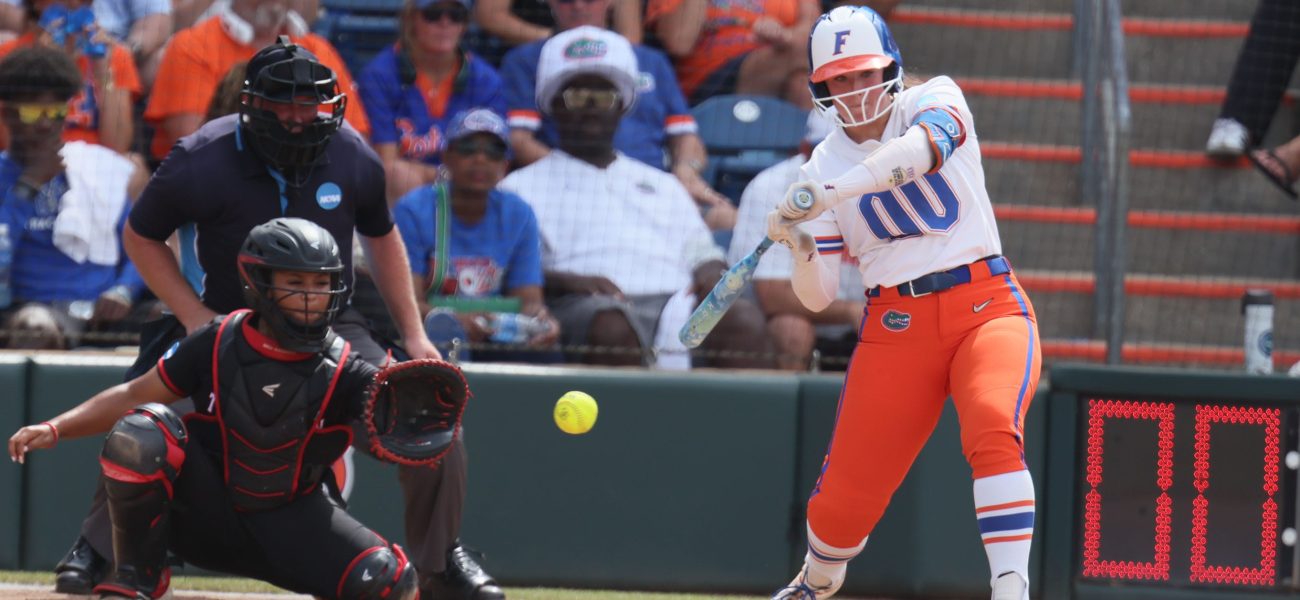
POLICY WIRE — Gainesville, Florida — Sometimes, the cleverest gambit isn’t about raw power; it’s about unsettling a Goliath with an unexpected twitch. Florida’s softball Gators found that out the hard way, not simply ‘running out of gas’ against Texas Tech, but succumbing to a masterclass in psychological warfare and strategic pitching. Their championship dreams evaporated—gone, just like that—when an unconventional, almost cheeky, Red Raider rotation pulled the rug right out from under them in a Super Regional showdown.
Nobody saw it coming, — and maybe that’s the point. Texas Tech Head Coach Gerry Glasco, faced with the Gators’ potent offense and a rain delay that must’ve felt like an eternity, decided to get cute. He deployed a dual-pitcher system that looked less like a baseball game — and more like a high-stakes chess match. Alternating Kaitlyn Terry and NiJaree Canady, sometimes within the same inning, he kept Florida’s batters perpetually off-balance, throwing different looks, different speeds, and different pressures. It was a dizzying performance, frustrating to watch for anyone not rooting for the Red and Black, but brutally effective. Florida, loaded with hitting talent, went from seven runs in two frames to a donut-hole zero in the final three, leaving a collective groan echoing through Katie Seashole Pressly Stadium.
But let’s be straight: while the Red Raiders’ trickery certainly stole the show, the Gators’ ultimate defeat highlights a deeper, more systemic issue that often plagues formidable, but brittle, outfits: an over-reliance on a singular star and an alarming lack of robust support depth. Keagan Rothrock, Florida’s ace, gave it her all. She really did—fighting through extreme heat and dehydration just days before. And Coach Tim Walton made no bones about it. “We lost, — and shoot, I hate it more than anything, but we played out butts off,” he quipped, praising his team’s grit. “I’ve seen a lot of teams fold early, but we had a lot of grit.” Indeed, Rothrock carried the team on her back for much of the season, but even titans have limits. Her struggle in Sunday’s decisive game, after two prior exhausting outings, exposed the gaping chasm between her elite performance and the subsequent relief options.
Because, when Rothrock couldn’t slam the door—and no one, not even a future pro, can be invincible indefinitely—Walton had to turn to Leah Stevens and Allison Sparkman. Both struggled, allowing a combined eight runs as Texas Tech put the game out of reach. That’s the cold, hard reality of sports, — and politics: you’re only as strong as your deepest bench. Glasco, by contrast, boasted about his strategic luxury. “I got two All-Americans. If I could make the move from pitcher to pitcher on a hot, muggy day, that could play into our advantage,” he said. That’s what you call options, my friends. Options Florida just didn’t possess after Ava Brown, their hoped-for No. 2, was sidelined by a knee injury back in February. A devastating blow, no doubt, but the harsh truth is, a contender can’t afford to crumble from one setback.
What This Means
The sudden, disorienting loss of a key player or a crucial resource—like Florida’s second pitcher—is a scenario frequently played out on the global stage. It speaks to the perils of ‘single-point-of-failure’ dependencies that national strategies often flirt with. Think about nations, particularly those in resource-constrained environments such as Pakistan or various South Asian economies, which might heavily lean on one strategic asset, be it a particular trade route, a singular military capability, or an indispensable diplomatic ally. This makes them acutely vulnerable to asymmetric attacks or unexpected tactical maneuvers from adversaries who might lack overt strength but excel in cunning and flexibility.
📄 POLICY WIRE WHITEPAPER PUBLISHED: PAKISTAN'S NATIONAL SECURITY POLICY PRIORITIES
👉 READ BY CLICKING HEREThe Red Raiders’ tactical subversion—alternating pitchers to disrupt rhythm—is akin to a smaller state using innovative cyber warfare or diplomatic outflanking to confound a larger, more conventionally powerful opponent. Such strategies don’t rely on brute force, but on exploiting structural weaknesses and creating ‘perplexity’ for the decision-makers on the other side. Economically, this mirrors the risks for emerging markets banking on one primary commodity or industry. According to the World Bank’s latest economic report on South Asia, nations with diversified economic bases show 4.5% greater resilience against external shocks than those reliant on single sectors. Florida’s singular ace, while magnificent, left them exposed. It’s a stark lesson for any entity, whether a sports team or a government, that relies too heavily on one ‘superstar’ to weather every storm.
And so, as the dust settles, the ‘what-if’ questions will dog Coach Walton — and his team. What if Brown had stayed healthy? What if they’d found another arm? It’s easy to dismiss these as mere athletic woes. But really, it’s a policy failure. It’s a resource allocation problem, plain — and simple, dressed up in cleats and a catcher’s mask. The ability to pivot, to deploy varied solutions when the primary plan hits a snag—that’s the mark of true strategic depth. Florida had immense talent; they certainly had grit. But when push came to shove, when their star began to flicker under relentless pressure, the cupboard, for all its potential, was bare. They’ll celebrate a fine season—a team with the smallest Division I roster reaching within a game of the WCWS is something—but the feeling that they might’ve clinched it, had they only had that crucial second option, will gnaw at them for a long, long while. It always does, doesn’t it, when your plan has a single fuse? For more insights into how national vulnerabilities can be exposed, see our piece on ‘The Scrutiny Game’.