


Silent Kill: Tiny Drone, Monumental Shot, Reordering Europe’s Skies
POLICY WIRE — Tallinn, Estonia — It wasn’t a sleek fighter jet, nor some advanced surveillance aircraft buzzing the sensitive edges of NATO territory. This was far humbler: a cheap,...

POLICY WIRE — Tallinn, Estonia — It wasn’t a sleek fighter jet, nor some advanced surveillance aircraft buzzing the sensitive edges of NATO territory. This was far humbler: a cheap, off-the-shelf drone, the sort you’d pick up for a few hundred bucks online. But when Estonia’s border guards decided to blow it out of the sky, they weren’t just taking aim at a rogue gadget. They fired a warning shot felt across Europe, establishing a stark, new precedent for how even the smallest violations of sovereign airspace will be handled.
Because that’s the deal now, isn’t it? The lines are blurrier than ever. A toy from Amazon can carry a package, or perhaps, a threat. Tallinn isn’t messing around. For a nation that knows intimately the feeling of having larger neighbors cast long shadows, defending its territorial integrity isn’t just policy—it’s instinct. The drone, an unidentified intruder, drifted from Russia into Estonian airspace. Down it went. No debate, no second guesses. Just a crack, a plummet, — and a clear message.
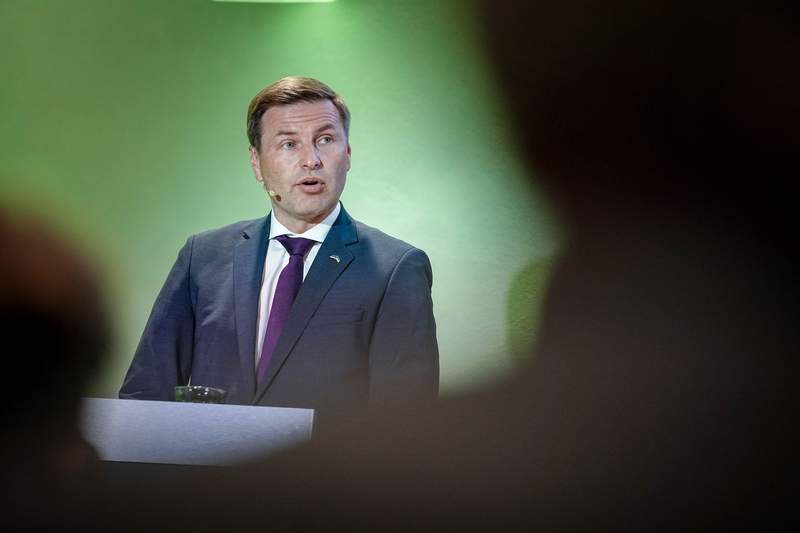
“We can’t tolerate these aerial intrusions, no matter how innocuous they may appear on the surface,” Estonian Defense Minister Hanno Pevkur reportedly told local media, his tone unwavering. “Our airspace is ours. Period. Every incursion will be met with the appropriate response.” His sentiment isn’t just about this one incident; it’s a firm declaration from a nation nestled uncomfortably close to a resurgent, unpredictable Russia. They’ve seen what happens when boundaries are tested. And they’re not interested in letting some plastic whirly-thing be the next slippery slope.
But consider the asymmetry. A relatively inexpensive drone triggering a sophisticated, perhaps equally expensive, counter-measure. This kind of tech proliferation means small, agile, and often untraceable devices are complicating established protocols for air defense everywhere. And that’s what truly gives strategists sleepless nights. It’s not just about what a drone carries today, but what it *could* carry tomorrow, or what larger provocation it might be a precursor to. That single incident just cranked up the geopolitical thermostat a notch, signaling that Europe’s periphery isn’t taking chances.
“This isn’t an isolated incident, it’s a symptom of a larger, global shift,” remarked Dr. Asifa Kamal, a specialist in unmanned aerial systems at Islamabad’s Centre for Geopolitical Studies. (We’re talking drones here, and she knows her stuff.) “While the drone might seem trivial to some, for a frontline state like Estonia, it symbolizes the ubiquitous and persistent surveillance challenges that are becoming a regular feature in conflict zones from Ukraine to the fringes of Balochistan. Pakistan, for instance, grapples with airspace violations daily, often from more sophisticated platforms, but the core principle of defending sovereign skies remains absolute. The cost-benefit analysis of shooting down a $1,000 drone with a missile can be debated, sure, but the message itself is worth its weight in gold.” Her words resonate. We’re in a world where everyone’s looking for an edge, a peek, a subtle nudge across the red line. Just ask countries in the Indo-Pacific how they feel about uninvited aerial visitors. It’s a universal problem now.
And let’s not forget the sheer scale of the phenomenon. The global drone market size was valued at USD 30.6 billion in 2022 and is projected to hit USD 55.8 billion by 2030, according to Grand View Research. That’s a lot of flying machines, people, and a fraction of them are going to be operated by idiots, malcontents, or state actors playing proxy games.
It’s messy. Because if every nation follows Estonia’s lead—and why wouldn’t they?—we’re looking at skies that are far less permissive than they used to be, even for commercial or recreational flight, if it strays off course. But can you really blame them? The alternative seems to be a tacit acceptance of intrusion. And for sovereign states, that’s just not a palatable option.
What This Means
This wasn’t just some unfortunate accident; it’s a calculated escalation of what constitutes a threat in the modern age. Politically, Estonia’s swift response firmly aligns it with the no-nonsense posture of a NATO member protecting its boundaries, a direct challenge to any ‘grey zone’ probing from Russia. Economically, it signifies increased spending on anti-drone technologies. This incident validates those investments, potentially spurring a global boom in counter-UAV defense systems, a market set to explode in value. More importantly, it chips away at the historical convention of airspace integrity, showing that even the most minute, seemingly benign incursions carry weight. States now recognize they must not only define their borders on paper but actively defend every cubic meter of their aerial domain. That’s an expensive, potentially dangerous game for everyone. It makes you wonder how much more sensitive things will get if these small incursions keep happening, doesn’t it? The drone problem is only going to get bigger, not smaller. Shadow games, indeed, take many forms.