


Pixels and Poison: India’s Latest Viral Fiction Stokes Old Fires
POLICY WIRE — New Delhi, India — The internet, that grand arena of information, often feels less like a library and more like a bazaar on fire—a place where truths whisper and lies shout, often with...

POLICY WIRE — New Delhi, India — The internet, that grand arena of information, often feels less like a library and more like a bazaar on fire—a place where truths whisper and lies shout, often with dire real-world consequences. We’ve seen it time — and again, hasn’t everyone? A blurry clip, a sensational headline, — and suddenly, entire communities are at each other’s throats. It’s a recurring nightmare, especially in India, a country whose delicate social fabric—multihued and ancient—frays so easily under the heat of manufactured outrage.
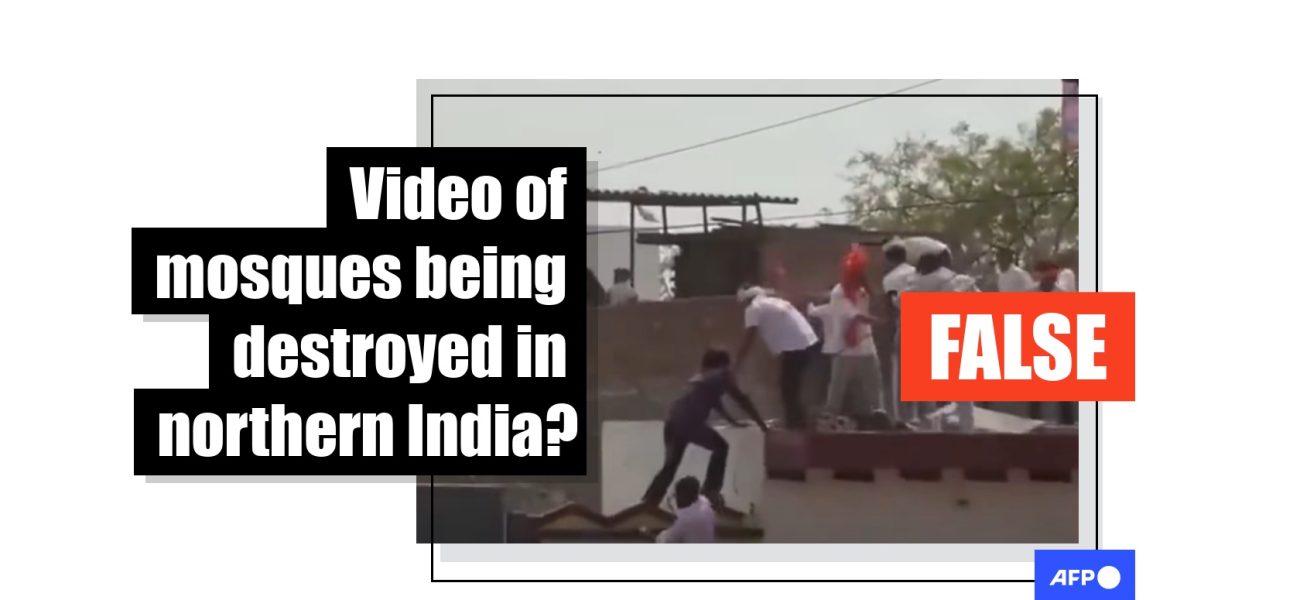
And so, it happened again. A video made its rapid, nefarious rounds recently, claiming to show a mosque being unceremoniously — brutally, some captions insisted — torn down by an angry mob during a Hindu festival. Social media accounts, ever hungry for clicks — and affirmation of pre-existing biases, devoured it whole. Users shared it. Politicians fulminated (on both sides, naturally). It built up quite a head of steam. The digital narrative, for a brief, terrifying window, solidified into what felt like fact. A mosque, demolished. In India. The story, well, it writes itself for certain audiences.
But here’s the kicker, the inconvenient truth for those who feast on outrage: it wasn’t a mosque. It wasn’t a demolition. The footage? It was, in fact, a common street brawl—a spirited, if somewhat chaotic, disagreement between festival participants. Just a fight. No sacred structures. No bulldozers. Simply humans behaving badly, captured on a phone, then repackaged and retitled by someone with a malicious streak, or perhaps just a profound disinterest in the actual facts of the matter. Imagine that. The entire crisis, born from a mundane dust-up, elevated to sectarian conflict by the touch of a keyboard.
“This disinformation campaign, it’s just another tired ploy by those who’d rather see division than progress,” fumed Rajeev Sharma, a prominent ruling party spokesperson, during a recent (and frankly, highly predictable) press briefing. “We see these elements, funded by external actors, trying to destabilize our nation. We’re wise to their games now.” He always says that. It’s the standard playbook: blame the external hand, ignore the internal fissures. It doesn’t inspire much confidence, does it?
Because the real problem, as Zahid Ali Khan, a well-known civil rights advocate, pointed out during a grim television interview, isn’t just the misinformation itself, it’s the fertile ground it finds. “We’re living in an age where a few pixels can turn peace into panic. The authorities, they’ve got to do more than just fact-check; they need to confront the architects of this discord—and question why our society is so ready to believe the worst about its neighbours,” Khan stated, his voice tight with frustration. He’s not wrong. The speed with which these lies catch fire—it speaks volumes about something rotten in the national conversation.
These sorts of incidents, though debunked, never truly vanish from the collective memory. They simply morph. They become another brick in the wall of grievance, another piece of supposed ‘evidence’ for the next generation of online agitators. And make no mistake, the ripple effects stretch far beyond India’s borders. Countries like Pakistan often seize upon such incidents, whether real or imagined, to fuel their own nationalistic narratives, painting a bleak picture of minority persecution next door. State-controlled media and government-affiliated social media accounts frequently amplify these stories, creating a self-reinforcing cycle of regional animosity that keeps South Asia on a precarious edge. You can’t tell me that isn’t dangerous. Just consider how often India finds itself topping charts for internet blackouts, with a staggering 116 incidents recorded in 2023 alone (Source: Access Now), primarily during periods of civil unrest or communal tensions – a heavy-handed tactic that speaks volumes about authorities’ struggles to control narratives. Digital Dynamite: Old Video, New Fires Stoke South Asian Communal Fault Lines indeed.
What This Means
This incident, small in its actual truth but enormous in its manufactured impact, reveals a deeper, more worrying fault line in India’s democratic and social architecture. It’s not just about a false video; it’s about a population conditioned to mistrust, primed for communal strife, and hyper-responsive to provocations that fit a convenient, polarizing narrative. Economically, this relentless cycle of misinformation erodes investor confidence, discourages tourism, and distracts from pressing developmental challenges. Politically, it empowers extremists on all sides, narrows the space for constructive dialogue, and turns elections into referendums on identity rather than policy. The ruling dispensation, while quick to condemn ‘foreign interference,’ often benefits from the very polarization these rumors generate, allowing them to consolidate their base. It’s a calculated risk, surely. For minorities, these debunks rarely offer true solace; the damage to trust — and safety, it’s already done. The threat of violence, it hovers. This kind of toxic digital environment, it effectively puts democratic principles—free speech, mutual respect—on a perpetual, agonizing treadmill.