


The Sunshine Deception: New Mexico’s Seemingly Mild Forecast Masks Deeper Anxieties
POLICY WIRE — Santa Fe, New Mexico — It’s a cruel kind of irony, isn’t it? As much of New Mexico braces for what’s ostensibly a pleasant, if punctuated, Memorial Day weekend –...

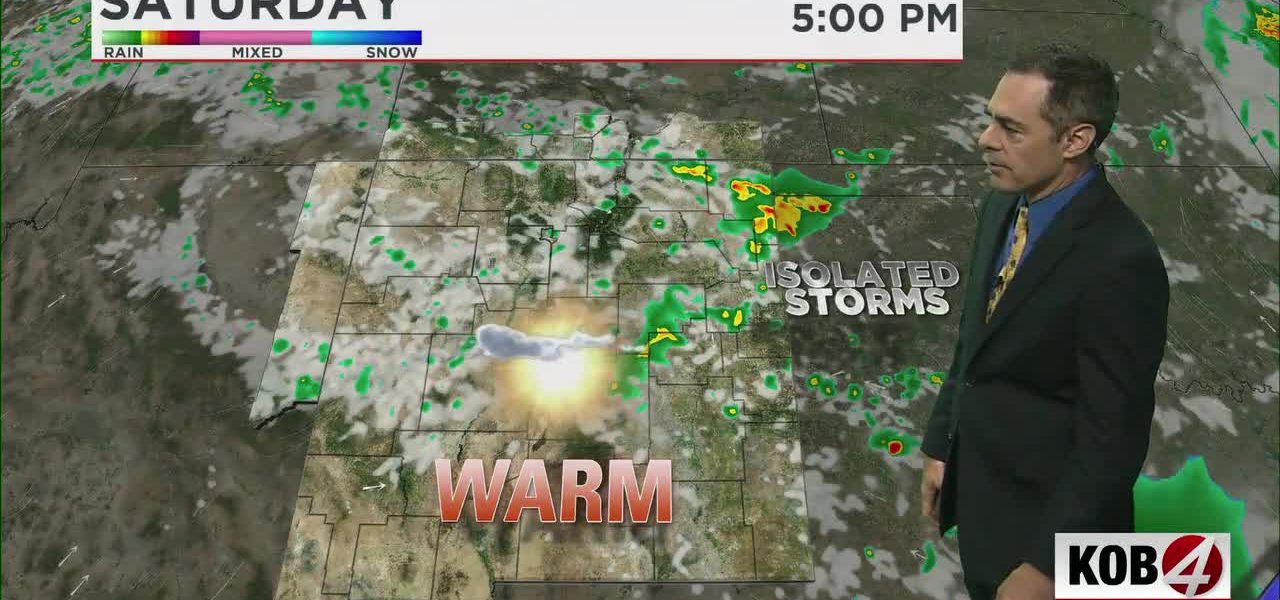
POLICY WIRE — Santa Fe, New Mexico — It’s a cruel kind of irony, isn’t it? As much of New Mexico braces for what’s ostensibly a pleasant, if punctuated, Memorial Day weekend – sunshine aplenty, isolated showers to break the heat, a few scattered storms in the eastern reaches – the state quietly, imperceptibly, holds its breath. This isn’t just about weekend plans, no sir. What reads like a standard weather advisory on local news sites is, in fact, a whisper of a much louder conversation, one about climate’s relentless shift and humanity’s often inadequate responses.
For most, it’ll be beach blankets — and BBQ smoke. The National Weather Service offers up ‘warm and dry through Sunday,’ then ‘isolated afternoon and evening storms may develop.’ Ah, ‘may develop’ – a delicious journalistic shrug that barely hides the complex dance of atmospheric pressure and human folly. Eastern New Mexico faces a ‘marginal risk of strong to severe thunderstorms’ Friday and Saturday, promising ‘frequent lightning, gusty winds and large hail.’ Sounds almost biblical, doesn’t it, for a forecast barely stirring the local newspaper’s inside pages? Western and central regions? Mostly ‘quiet.’ Like a ticking clock nobody bothers to listen to.
But the quiet. That’s the real story. Because that quiet – those brief reprieves of warmth, those ‘isolated’ incidents – they lull us. They tell us everything’s alright, that nature’s merely having a mild mood swing. And that’s a dangerous delusion, especially for a state grappling with water scarcity — and long-term drought trends. You can’t escape the science. The numbers are grim, really. According to a 2023 report from the University of New Mexico’s Bureau of Business and Economic Research, New Mexico’s average annual precipitation has declined by 10-15% since the mid-20th century, a statistic that tends to get lost amid debates about reservoir levels or almond crops.
“We can’t just react to the immediate; we’ve gotta look further out, decades even,” State Environmental Secretary Sarah Chen, a bureaucrat known for her relentless pragmatism, recently told Policy Wire, her voice tinged with the weary resolve of someone constantly shouting into a mild breeze. “These ‘normal’ weekends, they’re just moments in a much bigger, more chaotic narrative. The dry spells are longer, the deluges, when they hit, are more intense. It’s not just ‘weather’ anymore; it’s a symptom.”
Her words find a disquieting echo across continents. Think about the devastation that ravaged Pakistan just a couple of years back. Monumental floods, triggered by what meteorologists dubbed ‘monsoon madness,’ displaced millions, annihilated infrastructure, and — well, you get the picture. Here in New Mexico, we see ‘isolated’ storms; there, it was a cataclysmic reshaping of landscapes, an unfolding tragedy driven by altered weather patterns. The mechanisms differ, but the underlying anxieties, the fear of nature’s unpredictability, the human cost, they’re not so different after all. The consequences of climatic shifts, in their own terrifying ways, resonate from the Himalayas to the Sangre de Cristos.
But Governor Ben Carter, ever the politician, leans into a narrative of resilience. “New Mexicans are tough, resourceful. We adapt,” he boomed during a recent budget announcement, deftly sidestepping any talk of permanent shifts. “We’ve got the best scientists, the best engineers. We’ll manage our water, we’ll protect our communities. A little sunshine and a few storms? That’s just New Mexico. It’s what we do.” One almost expects him to propose a tax rebate for umbrellas. He’s talking about today, you see, not tomorrow, let alone the next decade.
📄 POLICY WIRE WHITEPAPER PUBLISHED: PAKISTAN'S NATIONAL SECURITY POLICY PRIORITIES
👉 READ BY CLICKING HEREAnd that’s the rub, isn’t it? The cheerful insistence on managing the symptoms rather than confronting the disease. These short-term forecasts, filled with talk of ‘scattered’ rain and ‘warm’ days, are less a picture of the future and more a convenient distraction from it. They’re pleasant little diversions, small talk to occupy us while larger forces, inexorable and indifferent, continue their work. Crisis isn’t always a dramatic explosion; sometimes, it’s a slow erosion, disguised as ordinary days.
What This Means
The seemingly innocuous weekend weather forecast for New Mexico, when viewed through a wider lens, underscores significant political and economic challenges. The dichotomy between Governor Carter’s reassuring rhetoric and Secretary Chen’s stark warnings highlights a systemic struggle to address long-term environmental threats, particularly climate change and water scarcity. Economically, prolonged periods of warmth, even with interspersed rain, impact agriculture — a significant sector in parts of the state. Diminished snowfall and altered rain patterns mean less water for irrigation, potentially threatening yields and raising operational costs for farmers and ranchers. This also impacts tourism, particularly winter sports, but also the broader appeal of the state’s natural beauty during traditionally drier seasons. Politically, the state’s leadership faces pressure to balance immediate constituent concerns with necessary, but often unpopular, policies to conserve water and prepare for a future defined by hotter, drier conditions and more intense, localized storms. The quiet acceptance of ‘normal’ weather patterns makes galvanizing public support for tough environmental regulations or infrastructure investments all the more challenging. It’s an exercise in political theater, where the pleasant facade of a weekend forecast covers complex, existential concerns. And when you ignore those concerns long enough, well, then the storms aren’t quite so isolated anymore.
Even abroad, countries like Pakistan, perpetually navigating the geopolitical chessboard, constantly lobby for aid and support to manage the consequences of global warming, a situation New Mexico leaders aren’t entirely unconcerned with. But they’re not talking about it at barbecues. Not yet. The casual predictions for the next few days – a chance of rain, some warm sunshine – these are almost a narcotic. They allow a brief respite from acknowledging that the land, the air, it’s all changing. Faster than we’d like. Because what’s really going on is a silent, unannounced restructuring, one sunny weekend at a time.