


Hoosier Dreams and Grit: Indiana’s Unsung Athletes Spark Local Pride
POLICY WIRE — Indianapolis, USA — Forget the glittering stadium lights of professional sports, for a moment. Don’t even glance at the staggering sums splashed across the global media for transfer...

POLICY WIRE — Indianapolis, USA — Forget the glittering stadium lights of professional sports, for a moment. Don’t even glance at the staggering sums splashed across the global media for transfer fees or multi-million-dollar contracts. Down in the heartland, specifically Southwestern Indiana, a far more fundamental drama unfolds weekly. It’s a contest not just of skill, but of pure, unadulterated grit – where the stakes are small-town bragging rights, and the heroes are still carpooling to practice. This isn’t about global power shifts, no. It’s about pitching shutouts, clearing hurdles, and smashing homers when the whole community knows your name, and your aunt probably baked the cookies for the team banquet.
Each spring, as the air thickens with humidity and the promise of summer, local papers like the Courier & Press roll out their ‘Athlete of the Week’ polls. Sounds quaint, doesn’t it? Almost anachronistic in an age obsessed with algorithms — and viral content. But these weekly acknowledgements, often overlooked by anyone beyond the immediate vicinity, tell a more profound story about the enduring spirit of American communities. They’re a snapshot, really, of relentless effort and understated achievement, reflecting hundreds of hours spent on dusty diamonds and worn-out tracks.
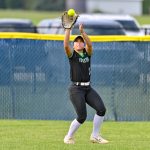
Take AJ Baggett, for instance. The North junior didn’t just throw a baseball; he masterfully navigated a lineup from Bloomington South, fanning thirteen over six innings. Or Brianna Barrix from Jasper, whose week read like a highlight reel: six hits in ten at-bats, a homer, a triple, two doubles, five RBIs, and then — as if that wasn’t enough — she pitched four scoreless innings. Because, you know, athletes in these parts, they don’t just specialize. They dominate across the board, patching up whatever gaps their team needs filled. And what about Pike Central’s Grant Boyd, pulling off a double sectional win in both long jump — and pole vault? That’s not just athleticism; it’s a stubborn refusal to be anything less than excellent.
It’s this kind of unwavering dedication that truly drives things. Coach Elena Ramirez, athletic director at North High, summed it up pretty well in a chat last fall: “We don’t just teach sports here; we teach grit. You see these kids, day in, day out, pushing limits – that’s the real story, isn’t it? It’s not always about the flashy scholarship; it’s about building character under pressure.” She’s not wrong. They’re shaping tomorrow’s electricians and teachers and community leaders, one double-play and personal best at a time.
The sentiment resonates even far beyond the Ohio River Valley. In many ways, the visceral pride towns here feel for their high school sports teams mirrors the intensity seen in, say, a Pakistani village rallying around its local cricket club. It’s that raw, unvarnished connection to identity and collective struggle, the sheer joy of watching ‘our own’ triumph against the odds. It’s a universal human trait, this longing for local heroes to rally behind. The stakes might differ dramatically between an IHSAA sectional final and, say, a pivotal match in the Pakistan Super League, but the core emotion? That’s startlingly similar. We’re talking about pride that runs bone-deep.
📄 POLICY WIRE WHITEPAPER PUBLISHED: PAKISTAN'S NATIONAL SECURITY POLICY PRIORITIES
👉 READ BY CLICKING HEREPrinceton’s senior Mallory Watt exemplifies this quiet heroism. A quadruple sectional champion in track events – 800, 1600, 3200 meters, — and anchoring the 4×400 relay. She doesn’t have the spotlight of an NBA star, but for Princeton, she’s a legend. Her performance, alongside Jack Wilbourne setting a new 800-meter record for Signature School (1:54.56 – the previous record stood since 2014, a tangible measure of excellence), reflects an unwavering commitment to push past perceived boundaries. That sort of relentless pursuit, it’s what defines these athletes, isn’t it?
But how do these localized triumphs play into broader civic life? Mayor David Chen, a vocal supporter of youth programs in the Evansville area, sees it as fundamental. “When our kids perform like this, it electrifies the whole town. It’s a collective win, a reminder of what we can achieve when we pull together,” Chen stated, highlighting the connective tissue that runs from the ball fields to city hall. Because, truly, a vibrant local sports scene often indicates a thriving, invested community. A burst of passion for local achievements can spark broader engagement. According to data from the Indiana High School Athletic Association, nearly 30% of high school students actively participate in varsity sports—a testament to the robust, albeit often unheralded, dedication to youth athletics that continues year after year. These small victories contribute to something bigger than mere sports; they cultivate a sense of shared purpose.
What This Means
The spectacle of ‘Athlete of the Week’ in places like Southwestern Indiana is more than just a public relations exercise. It’s an economic and social barometer. These events aren’t generating billions, no, but they’re generating intangible capital: community cohesion, youth development, and local identity. The consistent dedication required from these student-athletes translates directly into life skills. local businesses thrive on this activity—from sporting goods stores to family restaurants—forming an essential, if unmeasured, segment of regional economies. Political leadership often touts local sports successes as signs of civic health, demonstrating investment in future generations and public spaces. They’re not wrong to do so. For regions grappling with economic transitions or demographic shifts, a strong foundation in youth sports can be a surprisingly stable anchor, reflecting a shared commitment to communal well-being and the nurturing of nascent talent—a local kind of ‘nation-building’ in miniature. These contests don’t just crown a hero; they reaffirm a town’s enduring spirit, one home run or sectional record at a time. It’s a gritty revival, sometimes, beyond the boardrooms and national policy debates.