


Mumbai Indians’ Pyrrhic Triumph: A 50,000-Run Monument Amidst Playoff Peril
POLICY WIRE — Chennai, India — The confetti, had any been prepared, would surely have felt rather damp. Mumbai Indians, cricket’s veritable juggernaut, emblazoned their name into the annals of...

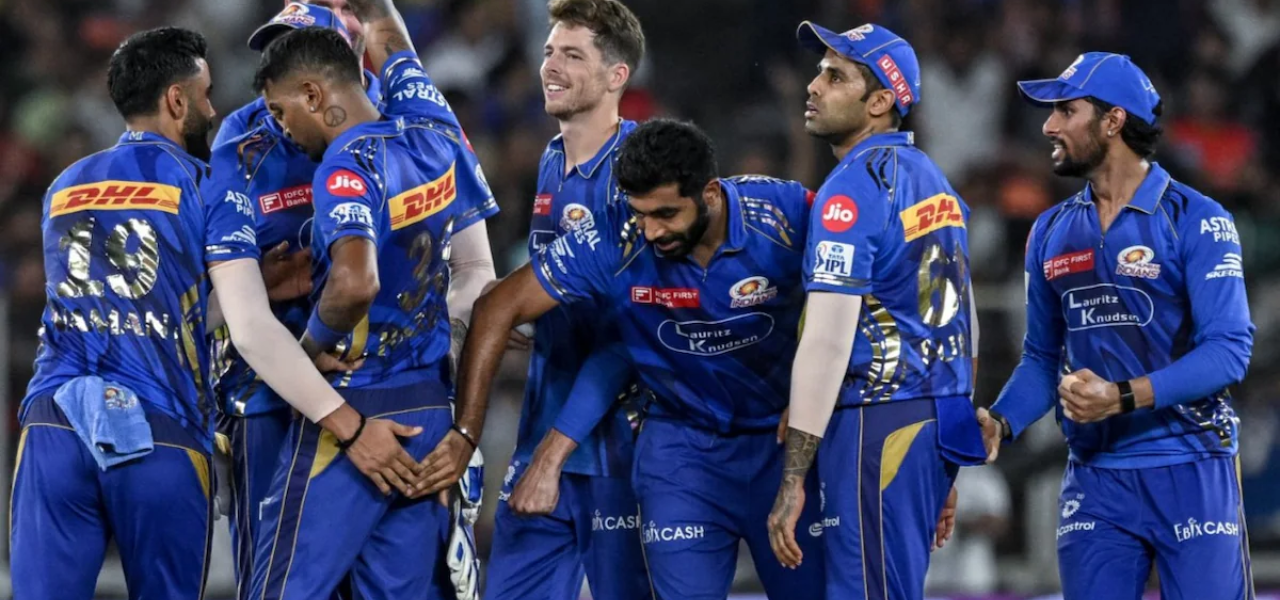
POLICY WIRE — Chennai, India — The confetti, had any been prepared, would surely have felt rather damp. Mumbai Indians, cricket’s veritable juggernaut, emblazoned their name into the annals of Twenty20 history on May 2, 2026, becoming the first franchise globally to transcend the once-mythical 50,000-run barrier. An extraordinary statistical feat, no doubt. Yet, it culminated in the most unceremonious fashion possible: a comprehensive drubbing by their arch-rivals, Chennai Super Kings, leaving their playoff aspirations teetering on a precipice.
It’s a curious thing, this modern sporting spectacle. A team reaches a monumental statistical juncture, an accumulation of raw power and sustained performance across hundreds of matches — an undeniable testament to their market hegemony and strategic consistency. And they do it in a match where they collapse from a promising start, posting a meager 159 for 7, utterly failing to capitalize on the very platform their historical run-getters had, presumably, built. Naman Dhir’s valiant 57, a lone beacon in a faltering innings, couldn’t obscure the stark reality: Mumbai Indians, despite their gilded past and financial might, were bested handily.
The M. A. Chidambaram Stadium bore witness to this peculiar dichotomy. Mumbai, needing 114 runs to reach the landmark, breezed past it in the 15th over of their innings, a moment quickly overshadowed by the ensuing middle-order capitulation. They had, in 308 T20 appearances — spanning 286 IPL fixtures and 22 Champions League Twenty20 contests — compiled 50,003 runs, a figure confirmed by official league statistics compiled by CricInfo. Somerset County Cricket Club, by comparison, trails with 48,244 runs from a comparable number of games, illustrating the sheer volume of cricket and batting prowess concentrated within the IPL’s most successful franchise.
And so, a record, yes, but a victory? Decidedly not. Chennai Super Kings, propelled by captain Ruturaj Gaikwad’s unbeaten 67 and Kartik Sharma’s steady 54*, chased down the target with the kind of clinical efficiency that Mumbai themselves once famously exhibited. It wasn’t just a loss; it was a league double, a psychological blow delivered to a team already feeling the pressure of a congested mid-table.
“This isn’t just about runs; it’s about the sustained economic engine T20 cricket has become, a testament to its global appeal and robust infrastructure,” asserted Arjun Desai, Director of Commercial Operations for the Board of Control for Cricket in India (BCCI), speaking earlier today. He positioned the milestone as a validation of the IPL’s business model and its capacity to foster long-term sporting enterprises. But his sentiment, while accurate in its broader economic assessment, felt a touch detached from the palpable disappointment of the Mumbai dug-out.
📄 POLICY WIRE WHITEPAPER PUBLISHED: PAKISTAN'S NATIONAL SECURITY POLICY PRIORITIES
👉 READ BY CLICKING HEREStill, the geopolitical undertones aren’t lost on observers across South Asia. “Records, particularly cumulative ones like this, are often more about longevity and financial staying power than sheer competitive supremacy in a given season,” offered Dr. Ayesha Khan, a renowned sports economist — and columnist for the Lahore-based Dawn. Her observation, delivered with customary precision, hints at the vast chasm separating the IPL’s financial ecosystem from other regional leagues. The Pakistan Super League (PSL), for instance, often struggles to retain its top talent against the stratospheric salaries offered in India, a disparity that often reduces it to a stepping stone rather than a destination. It’s a stark reminder of how market forces, often dictated by political stability and economic heft, fundamentally shape sporting narratives and team trajectories within the Muslim world and beyond.
What This Means
At its core, Mumbai Indians’ monumental 50,000-run achievement serves as a fascinating, if somewhat contradictory, bellwether for modern sports economics. It underscores the incredible financial firepower of the Indian Premier League, where sustained investment allows franchises to assemble and maintain high-performing rosters over decades — a luxury many national boards, let alone other T20 leagues, simply can’t afford. This hegemony isn’t just about cricket; it reflects India’s growing economic influence and its soft power projection through popular culture and sports. For every Rohit Sharma, Suryakumar Yadav, or Kieron Pollard who contributed thousands of runs to this tally, there’s a multi-million-dollar contract that underpins their commitment and availability. The ability to buy — and retain global talent, year after year, is what truly sets IPL franchises apart. It’s an economic model that both inspires and frustrates cricket boards in neighboring nations, who frequently see their best players lured away or their own leagues struggling to compete for viewership and sponsorship dollars. Ultimately, this milestone, achieved in defeat, symbolizes the complex interplay of commercial triumph, on-field performance, and regional sporting politics that defines T20 cricket in the 21st century.
Mumbai’s immediate concern, however, remains squarely on the playoff qualification. Their historic run-scoring prowess feels like cold comfort as they stare down the barrel of a potentially early exit. You don’t get bonus points for accumulated glory, it seems.