


Kyiv’s Long Arm Strikes Baltic Oil Port as Kremlin Retaliates with Deadly Barrage
POLICY WIRE — Kyiv, Ukraine — While the world’s gaze often fixes on the tragic daily toll within Ukraine’s borders, Kyiv’s operational reach — and its burgeoning audacity —...

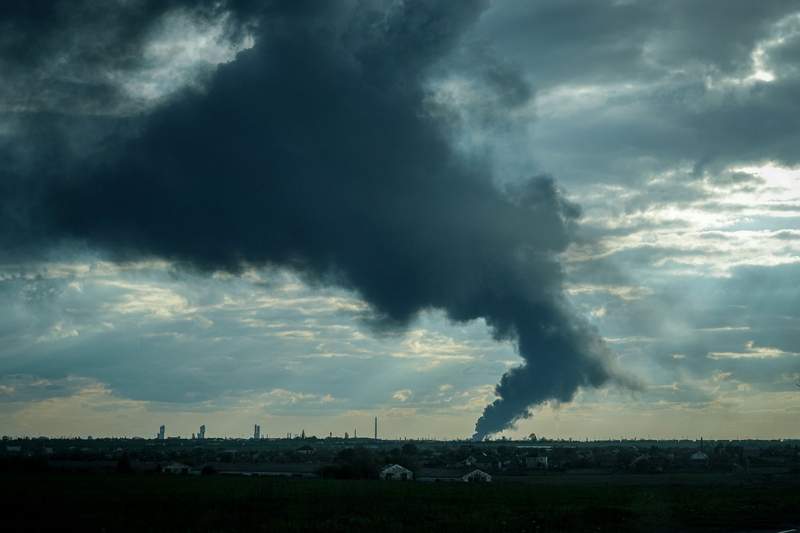
POLICY WIRE — Kyiv, Ukraine — While the world’s gaze often fixes on the tragic daily toll within Ukraine’s borders, Kyiv’s operational reach — and its burgeoning audacity — stretched far beyond this week, landing a potent, if symbolic, blow deep within Russian territory. Ukrainian drones, a weapon system increasingly central to this protracted conflict, targeted an oil terminal near St. Petersburg, rattling global energy markets — and prompting immediate, devastating Russian reprisals. It’s an unnerving escalation, isn’t it?
The audacious strike, reportedly on a critical energy hub along the Baltic Sea, underscored Ukraine’s capacity to project power, albeit asymmetrically, hundreds of miles from the front lines. Details remained hazy, as Kyiv rarely claims direct responsibility for such actions, yet the implied message was unequivocal: Russia’s economic lifeline isn’t untouchable. This wasn’t merely a tactical maneuver; it was a psychological broadside, a reminder that the Kremlin’s hinterland, too, is vulnerable to the conflict’s chilling winds.
And Russia’s response was swift, brutal, — and tragically familiar. Hours after the Baltic incident, a barrage of missiles — and drones slammed into Ukrainian cities. Three civilians, including a young child, were killed in what officials described as a merciless campaign targeting residential areas and civilian infrastructure. Homes were pulverized, lives extinguished – a grim, predictable echo of every preceding Russian aggression. This tit-for-tat dynamic, regrettably, has become the war’s enduring, tragic rhythm.
Ukrainian Defense Ministry spokesperson, Colonel Vitaliy Solovyov, shot back at the Kremlin’s narrative. “We won’t be deterred by their terror,” Solovyov asserted, his voice tinged with weary resolve. “For every civilian life they extinguish, for every home they shatter, Russia will feel the cost in ways they can no longer ignore. Our response will be asymmetric, but undeniably effective.”
But the Kremlin’s spin doctors, as always, had their own script. Maria Zakharova, spokeswoman for the Russian Foreign Ministry, declared with characteristic fire, “Kyiv’s reckless attacks on civilian infrastructure within the Russian Federation won’t go unanswered. They mistake our patience for weakness. These provocations only harden our resolve and justify the most decisive of countermeasures.” It’s a cyclical justification for what appears, to many observers, a relentless campaign of destruction.
Behind the headlines of destruction — and defiance, the economic tremors were palpable. The Baltic Sea is a vital artery for Russian oil exports, and even the threat of disruption can send ripples through the global market. While immediate impact on crude supplies wasn’t catastrophic, the incident served as a stark reminder of the geopolitical risks embedded in every barrel. Brent Crude futures, for instance, have shown consistent volatility, hovering around $83 per barrel this week, reflecting a market highly sensitive to any hint of supply constraint. (Source: EIA data, weekly average).
Still, for nations far removed from the immediate theater of war, like Pakistan, these faraway skirmishes carry tangible weight. Already navigating a delicate fiscal tightrope, any significant disruption to global crude supplies, even perceived, translates directly into higher domestic fuel costs – a precarious burden on an already strained populace. It’s a grim reminder that this isn’t just a European war; its tendrils stretch globally, influencing everything from the price of petrol in Karachi to the cost of wheat in Cairo. The ongoing blockade’s echoes persist elsewhere, but here, it’s energy that binds fates.
The intensifying shadow war between Kyiv and Moscow, particularly Ukraine’s willingness to hit targets deep within Russia, complicates Western calculations. While allies generally support Ukraine’s defensive efforts, there’s an understandable nervousness about attacks that could be interpreted as escalatory by Russia, potentially broadening the conflict’s geographic scope. It’s a tightrope walk for everyone involved.
What This Means
This week’s exchange represents a dangerous tightening of the vise. For Kyiv, demonstrating its long-range strike capability is crucial for morale and for proving to its Western benefactors that it can impose costs on Russia beyond the immediate front. It’s a strategic imperative, designed to compel Russia to reconsider its full-scale invasion by making its own rear vulnerable. Economically, these strikes, even if not critically damaging in isolation, contribute to an overall narrative of risk that can keep energy prices elevated, ultimately burdening consumers worldwide and destabilizing markets.
Conversely, the Kremlin’s brutal retaliation isn’t merely punitive; it’s designed to terrorize, to break Ukrainian will, and to signal to the West that any support for Ukrainian strikes on Russian territory will be met with intensified suffering for Ukrainian civilians. Politically, this escalatory cycle suggests a hardening of positions, making any diplomatic off-ramp even more elusive. Neither side seems prepared to de-escalate, meaning the war’s trajectory is set for continued, perhaps even more ferocious, attritional combat, with innocent lives invariably caught in the crossfire. We’ve seen this tragic play before, haven’t we? And it never ends well.