

Ancient Bones, Modern Fury: Rachel’s Tomb Explodes a Festering Stalemate
POLICY WIRE — Bethlehem, West Bank — There’s a particular kind of exhaustion that settles over the ancient landscape when history repeats itself with grim predictability. It’s not just the thud...

POLICY WIRE — Bethlehem, West Bank — There’s a particular kind of exhaustion that settles over the ancient landscape when history repeats itself with grim predictability. It’s not just the thud of the old-guard narratives, you see, but the sheer, grinding weariness of generations caught in an endless cycle. Take Rachel’s Tomb, for instance—a site revered across faiths, and just as routinely a flashpoint for fury. A recent incident, featuring a homemade explosive — and a swift police response, isn’t news because of the device itself. No, it’s news because it’s just another note in a familiar, agonizing symphony.
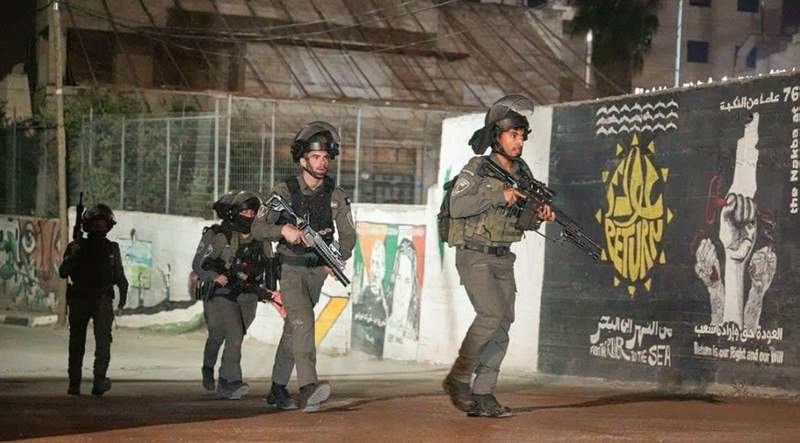
Israeli Police announced a short while ago they’d nabbed a 19-year-old Palestinian, suspecting he’d tossed a crude incendiary device toward the heavily fortified structure—or what some locals call Bilal ibn Rabah Mosque. He didn’t quite get it where he wanted, — and no one got hurt, thank goodness. But the act, small though it was, ripped a new seam in the already frayed fabric of a region that perpetually teeters on the edge of something far worse. It’s almost performative at this point, isn’t it? A young man, an improvised explosive, a site loaded with millennia of reverence and resentment—it’s a script we know by heart, one that barely warrants a raised eyebrow in some circles, which, frankly, is part of the problem.
“This incident underscores our non-negotiable commitment to securing our holy sites,” declared Police Chief Commander Erez Goldstein, his voice firm, echoing from Jerusalem, just a few kilometers away. “We won’t tolerate any attempt to disrupt peace or endanger pilgrims, regardless of their background. Our operational response was immediate, — and it was decisive. There’s simply no quarter for terror, period.” He sounded exactly like a man who’d delivered that line a hundred times before. And he probably has, bless his heart.
But the story doesn’t end there, of course. Across the checkpoints, in the dusty environs of Palestinian administration, a different tune played out. “These desperate acts,” remarked Ramzi Al-Hassan, a spokesperson for the Palestinian Authority, sounding both weary and defiant, “are a direct consequence of an occupation that denies our people basic dignity and hope. You fence people in, you suffocate their aspirations, what do you expect to bloom? Flowers? These incidents, regrettable as they’re, are merely symptoms of a deeper ailment: the absence of a political horizon.” It’s a sentiment many here, particularly the young, readily internalize.
And so, we arrive back at the same desolate crossroads. The cycles of violence—minor and major—are relentless. They don’t just happen in a vacuum, no matter how much some would like to believe they do. The United Nations Office for the Coordination of Humanitarian Affairs (OCHA), in its grim accounting, reported over 500 settler-related incidents of violence against Palestinians in the West Bank last year alone. A figure like that isn’t just a number; it’s a testament to the corrosive atmosphere, the daily pinpricks that keep the wound open, refusing to scab over. These arrests, these little bursts of amateurish violence, they’re the physical manifestations of that persistent, suffocating tension. It’s a constant, low-boil fever dream.
Beyond the immediate, geographical bounds, the echoes reverberate with particular sharpness in the broader Muslim world. From Islamabad to Jakarta, images and reports of alleged aggressions at sites deemed holy — not just in Jerusalem but anywhere under occupation, really — ignite powerful narratives of collective injustice. Pakistan, for one, often frames its foreign policy, at least partially, through the lens of Islamic solidarity, positioning itself as a defender of Muslim rights globally. So, a thrown incendiary device at a revered site near Bethlehem, even if minor in its physical impact, gets amplified. It adds yet another splinter to the wound, another argument in a very long, very heated debate about land, faith, and freedom. For many, it’s not just a local skirmish; it’s another chapter in a struggle that transcends borders and languages, feeding into the brutal economics of dashed dreams for an entire people.
What This Means
This incident, small in its tactical scope but mighty in its symbolism, solidifies the enduring impasse. Politically, it grants hardliners on both sides fresh ammunition. For the Israeli government, it’s proof that vigilant security — and zero tolerance are non-negotiable. For Palestinian factions, it becomes another data point, evidence of ongoing subjugation and the desperate measures it can breed. Don’t kid yourself, the world watches, albeit often with weary eyes. These constant provocations, however small, chip away at any residual hope for diplomatic breakthroughs. They harden positions, making compromise seem less like statesmanship — and more like capitulation.
Economically, this sort of sporadic violence, along with the subsequent security clampdowns, directly harms everyday people. Tourist revenue for Bethlehem—a city heavily reliant on Christian pilgrims—takes a hit every time conflict flares up, even minorly. Local businesses struggle, families tighten belts. It creates an environment where long-term investment shies away, favoring stability over the perennial volatility. But there’s more to it than just coin, isn’t there? The psychological toll is immense. The incident at Rachel’s Tomb isn’t just about an explosive; it’s a profound statement on a conflict that refuses to recede, a grim prophecy that the coming days will likely be as contentious and emotionally charged as all the days that came before. And that, frankly, is a terrifying thought for anyone seeking anything resembling peace in this ancient, troubled land.