

Beijing’s Quiet Power Play: Sodium-Ion Batteries Poised to Reshape Global Energy Stakes
POLICY WIRE — Hong Kong, China — Sometimes, the biggest shifts in geopolitics don’t scream from a podium; they hum quietly from a factory floor. We’re talking about something far more...

POLICY WIRE — Hong Kong, China — Sometimes, the biggest shifts in geopolitics don’t scream from a podium; they hum quietly from a factory floor. We’re talking about something far more mundane than military maneuvers or presidential proclamations. We’re talking about batteries. Specifically, Chinese battery giant CATL’s apparent plan for a new generation of energy storage.
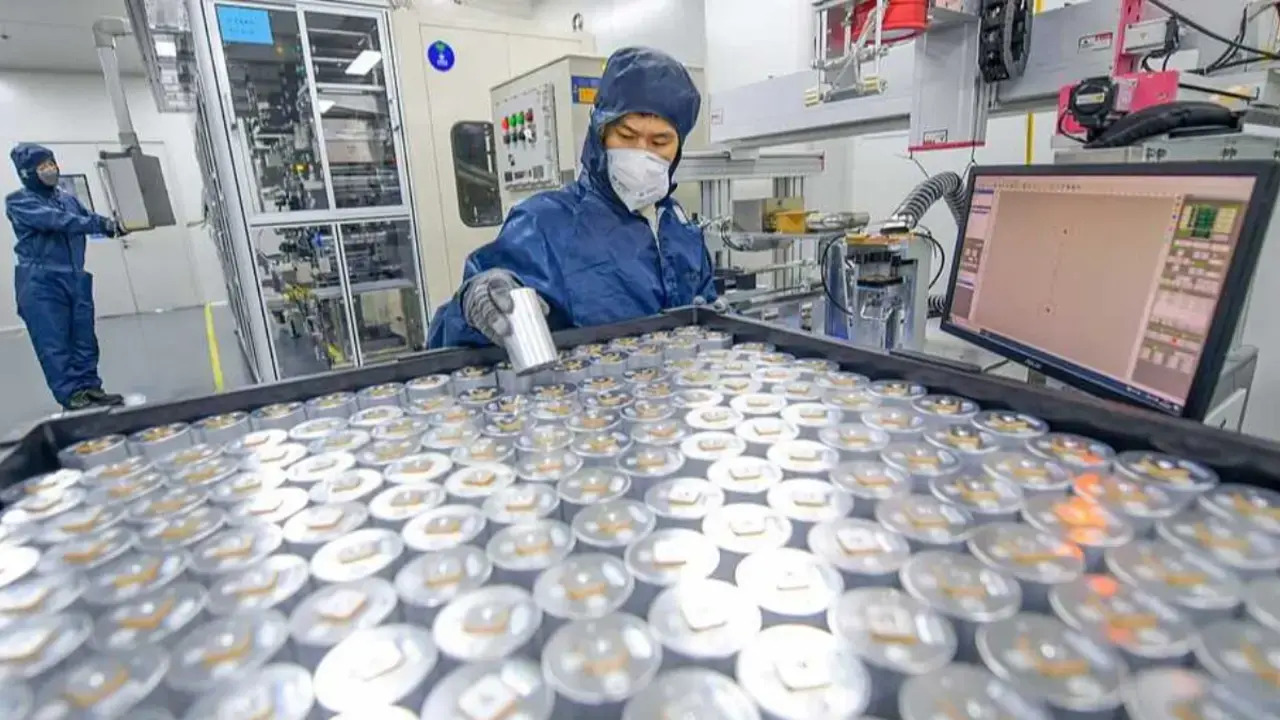
It’s an everyday item, right? You toss one when your flashlight dims, charge another for your phone. But CATL isn’t peddling AAA cells here. They’re on the cusp, so the chatter goes, of mass-producing sodium-ion batteries, a tech promising to loosen the global stranglehold of lithium. Think about it. This isn’t just a product upgrade; it’s an earthquake underneath resource politics, particularly for nations struggling with the high costs and limited access to critical battery metals. Within months, it seems this new paradigm could be upon us. And make no mistake, this silent revolution starts in China. [QUOTE_PLACEHOLDER]
Now, we’ve watched China’s relentless push to dominate global supply chains for years. They’ve built entire industrial ecosystems around rare earths, solar panels, — and now, batteries. For decades, the West—let’s be honest, we—got a bit too comfortable assuming innovation would always emanate from our labs. But Beijing didn’t just play catch-up; it leaped ahead in several key areas. The sheer scale of its manufacturing prowess, backed by strategic national policies, just isn’t something many can contend with.
Because, well, what’s a sodium-ion battery got that lithium hasn’t? Simple: sodium is everywhere. Literally. You find it in salt. Lots of it. That’s a stark contrast to lithium, which is concentrated in a few, politically volatile spots, primarily Chile’s arid plains and Australia’s mines. The raw material scarcity and environmental headache associated with lithium mining are pushing its prices through the roof. Last year, the average price of battery-grade lithium carbonate was approximately 23,300 U.S. dollars per metric ton, according to Statista. That kind of cost-saving potential from a common element is, frankly, astounding.
CATL—it’s short for Contemporary Amperex Technology Co. Limited—already owns a hefty chunk of the global EV battery market. They’re not just another player; they’re the big dog. Their move into sodium-ion isn’t some niche experiment; it’s a direct challenge to the entire global battery supply chain. Think of the downstream effects, the economic ripples. Developing countries, particularly those in the Global South with burgeoning energy demands but limited capital, might find this technology far more accessible and affordable. We’re talking about markets that haven’t been able to fully participate in the green energy transition due to prohibitive costs.
It’s also a play for energy independence, of sorts. While the global energy grid remains a tangled mess of geopolitical dependencies, diversifying battery chemistries means diversifying risks. If a nation can power its electric vehicles or store grid energy with materials it sources domestically, it suddenly has more leverage. That’s a significant factor for any country that wants to minimize external pressures—Pakistan, for instance, which faces acute energy security issues and has long sought diversified energy sources, could potentially benefit from cheaper, more abundant battery solutions. The nation’s strategic location, straddling South Asia and the Muslim world, often places it at the crossroads of competing global interests. Reducing reliance on high-cost, import-heavy components for its nascent EV infrastructure, for example, would be a welcome development. Or consider other Muslim-majority nations like Indonesia or Malaysia, pushing electric vehicle adoption; a cost-effective, ubiquitous battery tech simplifies their pathways considerably.
The implications aren’t lost on policymakers in Washington or Brussels. While they fret about raw material access — and industrial policy, CATL just keeps churning out next-gen tech. It’s a classic Chinese strategic move: develop quietly, scale aggressively, and then, only then, announce to the world that the game has changed. The principles of national sovereignty and economic autonomy—so often debated in terms of political systems—are here being subtly redefined by technological mastery.
What This Means
This isn’t just about cleaner cars; it’s about altering the fundamental energy landscape and potentially shaking up geopolitical allegiances. For nations with limited mineral wealth, the advent of commercially viable sodium-ion batteries offers a compelling path toward greater energy autonomy and reduced dependency on complex, costly global supply chains. It means potentially cheaper grid-scale storage solutions for intermittent renewables, smoothing out the transition to a greener economy even in places previously deemed too economically vulnerable. Because, you know, not every nation can afford to chase every scarce resource.
Economically, it poses a direct challenge to countries heavily invested in lithium mining — and processing. We’re talking potential market disruption, shifting fortunes. China’s long-term industrial policy goals—centered on achieving self-sufficiency in key technologies and then becoming the primary supplier to the rest of the world—are manifesting plainly here. They’re leveraging a common element to disrupt a strategic industry. And it’s not just a commercial win for CATL; it’s a strategic triumph for Beijing, consolidating its leadership in the global energy transition while potentially marginalizing competitors who clung too long to the old lithium-centric models. This move just solidifies China’s technological edge, reshaping the future energy map before anyone else has even finished drawing their own.