


Dust and Fury: New Mexico Braces as Arid Storms Foreshadow Global Climate Scramble
POLICY WIRE — ALBUQUERQUE, N.M. — It’s not the thunder itself that poses the most insidious threat here, but the dry, parched fury it whips from the ancient desert floor. Folks in the American...

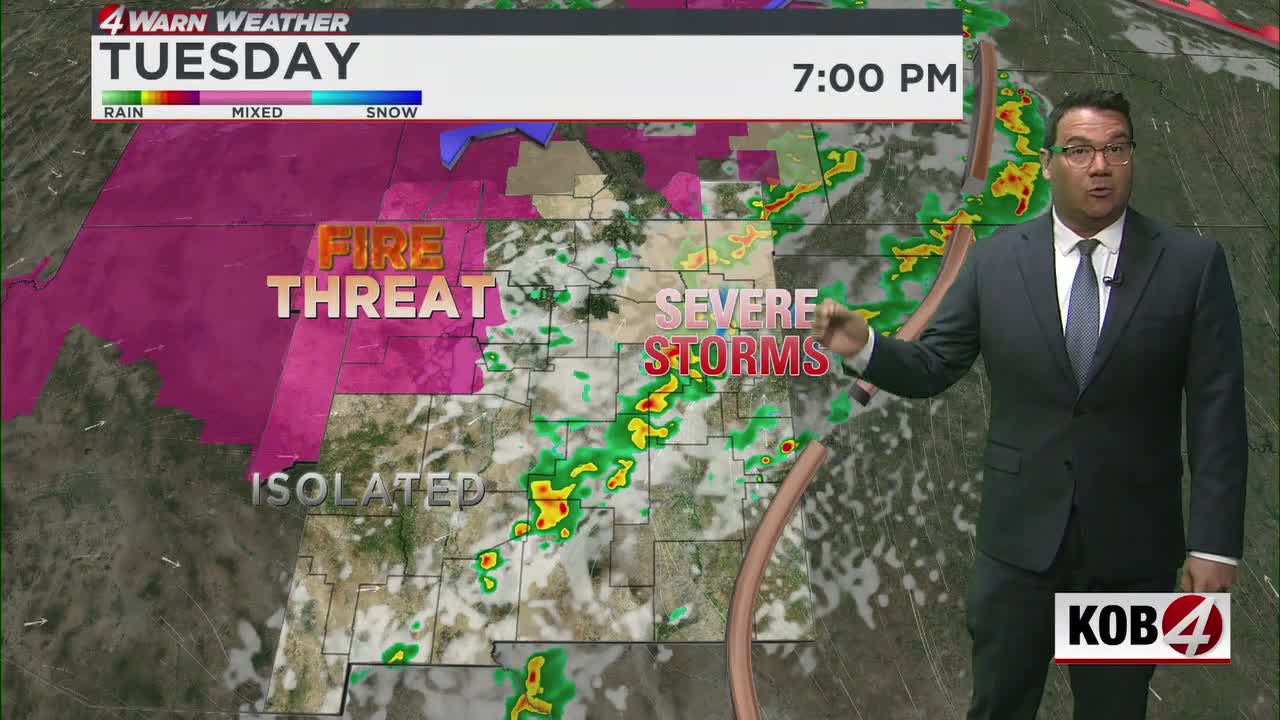
POLICY WIRE — ALBUQUERQUE, N.M. — It’s not the thunder itself that poses the most insidious threat here, but the dry, parched fury it whips from the ancient desert floor. Folks in the American Southwest know this dance all too well—a seemingly benign disturbance shifts, and suddenly you’re in a low-visibility maelstrom. Tonight, in northeast New Mexico, it’s not about copious rainfall; it’s about what the wind-borne particulate can do. You’ve got a severe storm risk building, carrying a promise of something far more disruptive than just a splash of water: 40 to 50 mph wind gusts, blowing dust and lightning tonight. And honestly, it’s not just a weather report; it’s a symptom, a small, grimy testament to a planet on edge.
A restless air current, hustling in from the southwest, brings high-based showers and a few thunderstorms across western and central New Mexico overnight. But don’t let the word showers fool you. That activity will bring very little rainfall but could produce gusty outflow winds, areas of blowing dust, frequent lightning and rapidly changing conditions. Consider the immediate human implications, beyond the fleeting inconvenience of a closed road. Because when vision drops to near zero on an interstate (imagine that at 75 mph), or power grids get slammed, we’re talking about real disruption, economic costs, and, frankly, genuine peril for unsuspecting drivers and residents. The National Atmospheric Hazards Center (NAHC) reported just last year that emergency service calls directly linked to severe blowing dust incidents in arid U.S. regions saw a 17% increase over the last five-year average, often leading to multiple-vehicle pileups. [QUOTE_PLACEHOLDER]
The bulk of this nocturnal ruckus will likely be near Gallup, Grants, Cuba, Farmington, Socorro and the Continental Divide—a swathe of geography already contending with its own infrastructural tightropes. Those few wind gusts could exceed 40 to 50 mph with the strongest cells, turning what feels like a nuisance into a bona fide threat to older power lines or even lightweight structures. It’s a quick, sharp punch from a usually stoic landscape.
Looking ahead, there’s a moisture surge planned. Low-level Gulf moisture will push northward into eastern New Mexico Tuesday, pushing dewpoints climbing into the 50s and lower 60s in Clovis, Portales, Tucumcari, Roswell, Artesia, Carlsbad and Hobbs. This confluence of moisture, the unrelenting afternoon heating—because temperatures will stay hot through midweek, we’re talking upper 80s to lower 90s in Albuquerque, mid 90s in Roswell and Carlsbad and upper 80s to lower 90s across much of eastern New Mexico—and a subtle disturbance aloft will cook up a favorable environment for thunderstorms. This creates the best chance for strong to severe storms in northeast New Mexico near Raton, Clayton, Springer, Maxwell, Des Moines and Capulin. So, from dust-choked roads to possibly hail-scarred fields—the week isn’t letting up.
This localized drama in New Mexico, believe it or not, mirrors anxieties far afield. Consider Pakistan, for instance, a nation no stranger to the fury of dust storms—called sand dhoonda in some parts—and sudden, violent weather changes. From Karachi to Lahore, urban infrastructure and rural economies frequently grapple with identical or worse impacts from extreme weather. Poor drainage, aging grids, — and vast stretches of vulnerable populations turn these events into major crises. We saw it just last spring, didn’t we, when massive dust storms swept across Balochistan, crippling transport and contributing to respiratory illnesses, drawing sharp parallels to our arid American southwest. It reminds us how intimately intertwined these climate-driven challenges are, connecting the quiet stretches of New Mexico to bustling bazaars halfway across the world. And it forces us to rethink what constitutes ‘resilience’ in the face of these relentless changes.
What This Means
The impending conditions in New Mexico aren’t just an inconvenience; they’re a micro-indicator of macro-trends in an era of climate volatility. First off, economically, these ‘dust-ups’ come with tangible costs. Damaged infrastructure, emergency services, healthcare strains from respiratory issues—they pile up, an incessant drain on state budgets already stretched thin. Policy-makers, especially those dealing with arid or semi-arid regions globally, need to acknowledge that this isn’t simply an act of nature. It’s an intensifying pressure on civil planning and public health systems that demands significant investment in mitigation and preparedness, not just reaction.
Politically, the continuous strain of extreme weather tests governance. When basic services are consistently disrupted, when people lose income due to impossible travel conditions, or when public health concerns spike, it erodes trust. That erosion—that quiet, everyday failure of predictable functioning—can become a source of considerable street pressure on administrative bodies. It might seem remote, but the cumulative effect of constant adaptation or recovery can foment deeper discontent. Think about it: a weather forecast here, with all its immediate peril, subtly underscores a global problem that requires an urgent, united policy front, far beyond state lines. We’re not just fighting bad weather; we’re fighting systemic vulnerability, everywhere.